

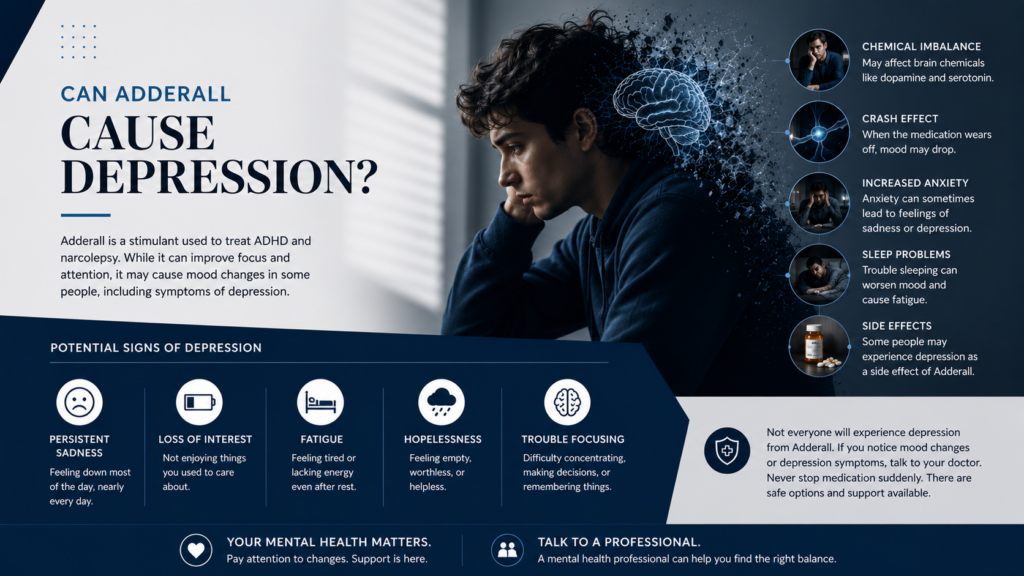
Adderall is a prescription stimulant made from mixed amphetamine salts. It is often prescribed to treat ADHD and narcolepsy. It affects brain chemicals linked to attention, energy, motivation, and alertness.
Depression is not always a direct result of taking Adderall as prescribed. Still, some people may develop low mood while using it. Others may notice depression when the medicine wears off or after they stop taking it.
The connection can depend on:
The dose you take
How long you have taken it
Whether you take it as prescribed
Your sleep and eating habits
Other medicines you use
Your personal or family mental health history
Whether you already have depression, anxiety, or bipolar disorder
A doctor or mental health professional can help decide whether Adderall is affecting your mood or whether another condition may be involved.
How Does Adderall Affect the Brain?
Adderall raises the activity of dopamine and norepinephrine in the brain. These chemical messengers help control focus, alertness, motivation, and the body’s stress response.
For a person with ADHD, this change may make it easier to finish tasks, control impulses, and stay organized. Some people also feel more energetic or confident while the medicine is active.
As the drug wears off, brain activity begins to return to its usual level. This shift may lead to a short period of fatigue, sadness, irritability, or low motivation. People sometimes call this an “Adderall crash.”
A crash is not always the same as clinical depression. However, frequent or severe crashes can affect emotional health and should be discussed with a healthcare provider.
Why Can Adderall Make You Feel Depressed?
There is no single reason Adderall may lead to depression symptoms. Several physical and emotional factors can play a part.
The Dose May Be Too High
A dose that is too strong may cause anxiety, restlessness, emotional numbness, or sleep problems. These effects can leave a person feeling drained or unhappy.
A high dose may also reduce appetite. Not eating enough can lead to low energy, headaches, mood swings, and trouble thinking clearly.
Never lower or raise your dose on your own. A prescribing doctor can review your symptoms and decide whether the dose or timing needs to change.
The Medication May Be Wearing Off
Some people feel fine while Adderall is working but feel sad or irritable as it leaves their system. This is often called rebound or a medication crash.
Signs of an Adderall crash may include:
Sudden tiredness
Low mood
Irritability
Hunger
Headaches
Trouble focusing
Loss of motivation
A strong desire to sleep
These symptoms may last for a few hours. If they happen often, the dose, timing, or type of medication may need to be reviewed.
Adderall May Disrupt Sleep
Stimulants can make it hard to fall asleep, mainly when taken too late in the day. Poor sleep can affect mood, memory, appetite, and stress levels.
After several nights of poor sleep, a person may begin to feel hopeless, emotional, or unable to enjoy normal activities. Sleep loss can also make existing depression or anxiety feel worse.
Tell your doctor if Adderall keeps you awake or changes your sleep schedule.
You May Not Be Eating Enough
Adderall can lower appetite. Some people skip meals without noticing how long it has been since they ate.
The brain and body need regular food to work well. Low blood sugar, poor nutrition, and dehydration may cause weakness, irritability, dizziness, and low mood.
Planning simple meals and snacks may help. However, ongoing appetite loss or weight loss should be reported to your doctor.
Adderall May Be Misused
Taking more Adderall than prescribed can cause a strong rise in energy and alertness. After the effects pass, a person may feel very tired, empty, or depressed.
Misuse may include:
Taking someone else’s medication
Taking extra pills
Using it to stay awake
Using it to lose weight
Crushing or changing how it is taken
Mixing it with other substances
Using it for a feeling of excitement or euphoria
Repeated misuse can raise the risk of dependence, mental health problems, heart problems, and serious withdrawal symptoms.
Can Stopping Adderall Cause Depression?
Stopping Adderall may cause depressed mood, especially after regular high doses or misuse. The current prescribing information for amphetamine products warns that stopping after prolonged use may lead to depression, fatigue, sleep changes, increased appetite, and unusual dreams.
Withdrawal symptoms may be stronger when a person stops suddenly. Possible symptoms include:
Depression
Extreme tiredness
Sleeping too much or too little
Anxiety
Irritability
Increased appetite
Poor focus
Low motivation
Strong drug cravings
Do not stop taking a prescription stimulant without speaking with the provider who prescribed it. Your provider may recommend a gradual dose change or another treatment plan.
How Long Does Adderall Depression Last?
The length of low mood depends on its cause.
A mild crash after a dose wears off may last a few hours. Mood changes caused by poor sleep or lack of food may improve after the body gets proper rest and nutrition.
Withdrawal symptoms may last several days or weeks, especially after frequent misuse or high-dose use. Some people may have depression that continues after the withdrawal period. This may mean they have a separate depressive disorder that needs treatment.
Seek an evaluation if sadness lasts most of the day, happens nearly every day, or continues for two weeks or longer. The National Institute of Mental Health lists lasting sadness, loss of interest, sleep changes, low energy, concentration problems, and thoughts of death among common depression symptoms.
What Are the Signs of Depression From Adderall?
Medication-related mood changes and major depression can look similar. A professional evaluation is the safest way to tell the difference.
Possible warning signs include:
Feeling sad, empty, or hopeless
Losing interest in hobbies
Feeling tired all the time
Sleeping too much or too little
Eating much more or less than usual
Feeling worthless or guilty
Becoming angry or irritable
Pulling away from friends and family
Having trouble making choices
Thinking about death or suicide
Pay attention to when the symptoms begin. Write down whether they happen after taking a dose, as the medicine wears off, or after missing a dose. This information may help your doctor understand the pattern.
Can Adderall Make Existing Depression Worse?
Adderall may worsen existing depression for some people, but it may improve daily function for others who have both ADHD and depression.
Untreated ADHD can cause stress, school problems, job problems, relationship struggles, and low self-esteem. When ADHD treatment works, these problems may improve. A person may then feel less overwhelmed or discouraged.
In other cases, stimulant side effects may increase anxiety, insomnia, appetite loss, or emotional changes. These problems may make depression harder to manage.
Make sure your prescriber knows about:
Past depression
Past suicidal thoughts
Bipolar disorder
Psychosis
Substance use
Current psychiatric medications
Family history of serious mental illness
A full mental health history helps the provider choose safer care.
Is It Depression or an Adderall Crash?
An Adderall crash usually follows the timing of the medication. It often starts when the stimulant wears off and may improve after food, rest, or sleep.
Depression is usually more constant. It may continue even on days when you do not take the medicine.
Signs of an Adderall Crash
Symptoms begin near the end of a dose
Sudden hunger or fatigue
Irritability that lasts a few hours
Trouble focusing when the medication wears off
Mood improves after rest
Signs of a Depressive Disorder
Sadness lasts for weeks
You lose interest in most activities
Your mood is low throughout the day
You feel hopeless or worthless
Daily tasks become hard to complete
Symptoms affect work, school, or relationships
You have thoughts of self-harm or suicide
A person can experience both a medication crash and a depressive disorder. Do not try to diagnose the cause on your own.
What Should You Do If Adderall Is Affecting Your Mood?
Contact the doctor who prescribed the medicine. Explain what you feel, when it started, and how long it lasts.
Your provider may review:
Your current dose
The time you take each dose
Immediate-release versus extended-release medicine
Sleep patterns
Eating habits
Other medications
Alcohol or substance use
Signs of depression, anxiety, or bipolar disorder
The provider may change the dose, adjust the schedule, recommend a different ADHD medication, or refer you to a mental health professional.
Do not take an extra dose to escape a crash. Do not use alcohol, sedatives, or other drugs to control the symptoms. These actions may make the problem more dangerous.
How Are ADHD and Depression Treated Together?
ADHD and depression often need a combined treatment plan. The right plan depends on which symptoms are most severe and how they affect daily life.
Medication Management
A qualified medical provider can review the benefits and risks of each medication. Some people need treatment for both ADHD and depression. Medication choices must be made carefully because stimulants can interact with certain drugs and health conditions.
Therapy
Therapy may help people understand mood changes, manage stress, build routines, and cope with negative thoughts.
Cognitive behavioral therapy may help a person:
Notice harmful thought patterns
Create better sleep habits
Plan daily tasks
Manage strong emotions
Improve problem-solving skills
Build healthier coping methods
Healthy Daily Habits
Daily habits do not replace medical care, but they may support recovery.
Helpful steps include:
Eating regular meals
Drinking enough water
Keeping a steady sleep schedule
Limiting caffeine
Avoiding alcohol and illegal drugs
Exercising in a safe way
Tracking mood and medication effects
Staying connected with supportive people
When Is Adderall-Related Depression an Emergency?
Get immediate help if you or someone you know has:
Thoughts of suicide
A plan to self-harm
Hallucinations
Severe confusion
Extreme agitation
Paranoia
Dangerous or violent behavior
Chest pain
Fainting
Trouble breathing
Call 911 or go to the nearest emergency room when there is an immediate danger. In the United States, you can also call or text 988 for crisis support.
Do not leave a person alone if they may hurt themselves. Remove medications, weapons, or other dangerous items when it is safe to do so.
Can Revival Mental Health Help With Depression?
Revival Mental Health provides support for people facing depression, medication-related mood changes, and other mental health concerns. Treatment begins with an assessment of your symptoms, health history, medications, and daily needs.
Your care plan may include therapy, psychiatric support, wellness services, and help for related conditions. The goal is to understand the full cause of your symptoms instead of focusing on only one medicine or diagnosis.
If Adderall appears to be affecting your mood, speak with the provider who prescribes it and seek a mental health evaluation. You do not have to wait for depression to become severe before asking for help.
Frequently Asked Questions
Can Adderall cause depression even when taken as prescribed?
It may cause mood changes in some people even when taken as prescribed. Low mood may be linked to the dose, a medication crash, poor sleep, appetite loss, or an existing mental health condition. Report new or worsening depression to your prescribing doctor.
Why do I feel sad when my Adderall wears off?
You may be experiencing an Adderall crash. As the stimulant effect fades, you may feel tired, hungry, irritable, or sad. Frequent crashes may mean your medication dose or schedule needs to be reviewed.
Can stopping Adderall suddenly cause suicidal thoughts?
Sudden withdrawal may cause severe depression in some people, especially after high doses, long-term misuse, or dependence. Seek urgent help for suicidal thoughts. Do not stop a prescribed medication without medical guidance.
Does Adderall permanently change your mood?
Most medication-related mood effects are not permanent. They often improve after a provider adjusts treatment or after withdrawal ends. However, lasting depression may be a separate condition that needs professional treatment.
Should I stop taking Adderall if I feel depressed?
Do not stop it on your own unless emergency medical professionals tell you to do so. Contact the prescribing provider as soon as possible. Sudden changes may worsen fatigue, depression, sleep problems, or ADHD symptoms.
Medical note: This article provides general education and does not replace advice from a licensed medical or mental health professional.