
Residential Treatment vs Psychiatric Hospital: What Is the Difference?
Choosing between residential treatment vs psychiatric hospital care can feel hard. Both options support people with serious mental health needs, but they serve different purposes.
A psychiatric hospital is often used during an emergency. Residential care offers longer support in a calm, home-like setting. Someone exploring anxiety treatment may need residential care when symptoms make daily life difficult but do not require emergency hospital services.
The right choice depends on the person’s safety, symptoms, medical needs, and ability to take part in treatment. A mental health professional can complete an assessment and recommend the safest level of care.
What Is Residential Mental Health Treatment?
Residential mental health treatment is a live-in program for people who need more support than weekly therapy can provide. Clients stay at the treatment center and follow a structured daily plan.
Residential programs focus on healing, coping skills, healthy habits, and long-term stability. Care may include:
Individual therapy
Group therapy
Family therapy
Medication support
Psychiatric care
Life-skills training
Wellness activities
Relapse prevention
Discharge planning
The setting is usually less clinical than a hospital. Bedrooms, shared living areas, outdoor spaces, and group rooms may make the program feel more like a community.
Residential care is still structured. Staff members are available throughout the day and night. However, the main goal is usually not emergency crisis stabilization. It is to help the person understand their symptoms, practice new skills, and prepare for life after treatment.
What Is a Psychiatric Hospital?
A psychiatric hospital is a medical setting for people facing an urgent or severe mental health crisis. It may be a stand-alone hospital or a special unit inside a general hospital.
Hospital care has a high level of medical supervision. Nurses, psychiatrists, doctors, therapists, and other professionals can observe the patient and respond to sudden changes.
A person may need psychiatric hospitalization if they:
Are at immediate risk of self-harm
May harm another person
Have severe suicidal thoughts
Are unable to meet basic needs
Are experiencing severe psychosis
Have dangerous manic symptoms
Need close medication monitoring
Have severe symptoms caused by substance use
Need emergency medical and psychiatric care
Psychiatric hospitals commonly provide counseling, group activities, medication, safety monitoring, and discharge planning. Hospital admission may be needed when a mental illness is severe or when someone is at risk of harming themselves or another person.
The first goal is safety. The hospital team works to reduce the crisis, evaluate symptoms, and decide what care should happen next.
Residential Treatment vs Psychiatric Hospital at a Glance
The biggest difference is the reason for care.
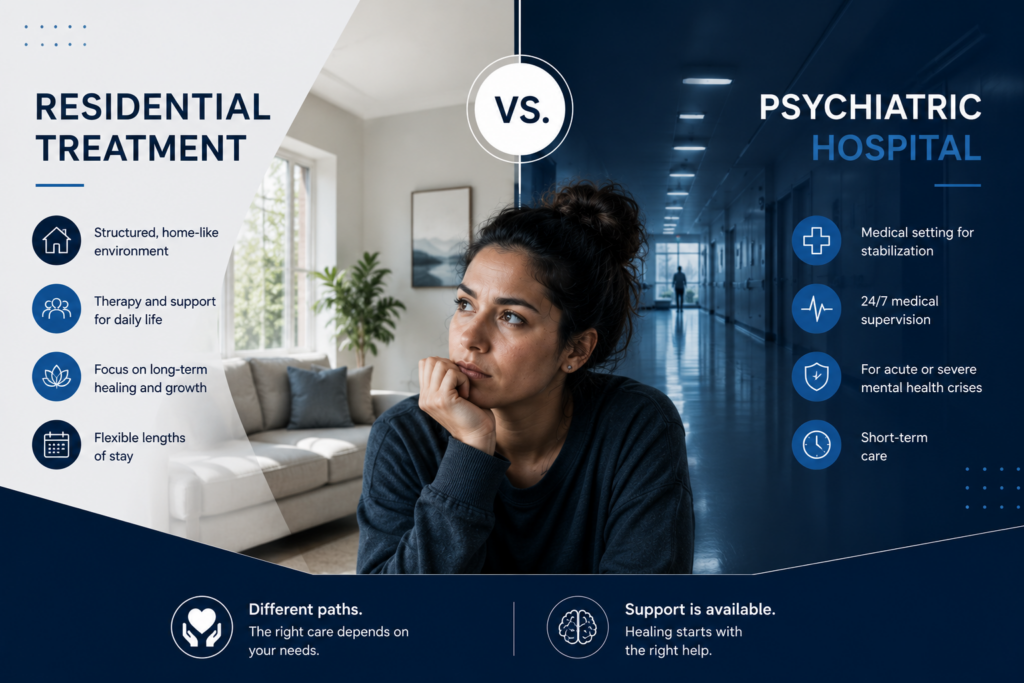
A psychiatric hospital treats an immediate mental health emergency. Residential treatment supports ongoing recovery after the person is safe and medically stable.
Main Goal of Psychiatric Hospital Care
The main goal is crisis stabilization. The hospital team may focus on:
Keeping the patient safe
Completing a psychiatric evaluation
Managing severe symptoms
Starting or changing medication
Watching for side effects
Restoring sleep or nutrition
Creating a safety plan
Planning the next level of care
Hospital treatment is often the first step during a serious crisis. It is not always meant to address every cause of the person’s condition.
Main Goal of Residential Treatment
The main goal is steady, long-term improvement. Residential care gives clients more time to work on:
Emotional regulation
Anxiety management
Depression symptoms
Trauma responses
Healthy relationships
Daily routines
Medication consistency
Communication skills
Stress management
Independent living skills
Residential treatment can help people move from short-term stabilization to lasting recovery.
How Do the Treatment Environments Compare?
The environment can affect how care feels each day.
Psychiatric Hospital Environment
Psychiatric hospitals are secure medical settings. Some units have locked doors, safety rules, limited personal items, and frequent staff checks.
These rules are meant to protect patients during a crisis. The environment may include:
Hospital rooms
Nursing stations
Medical equipment
Secure doors
Set visiting hours
Closely watched medication use
Frequent safety checks
Limited access to phones or personal items
Patients may share a room. They may also have less freedom to move around the facility.
Residential Treatment Environment
Residential care is usually more open and comfortable. Clients may have a private or shared bedroom, community dining space, group rooms, and places for exercise or quiet time.
There are still rules and safety steps. Clients must follow the schedule, attend treatment, take medications as directed, and respect the community.
The setting may feel less stressful for someone who is stable enough to take part in a longer program.
How Long Does Each Type of Care Last?
The length of care depends on symptoms, safety, insurance coverage, and treatment progress.
Length of a Psychiatric Hospital Stay
Psychiatric hospital stays are often brief because the goal is to manage the immediate crisis. Some people stay for a few days. Others may need several weeks if their symptoms remain severe.
A person is usually discharged when the care team believes the immediate risk has gone down and the person can safely move to another level of care.
The next step could include:
Residential treatment
A partial hospitalization program
An intensive outpatient program
Outpatient therapy
Medication management
Community support services
A clear discharge plan is important because recovery continues after a hospital stay.
Length of Residential Treatment
Residential programs commonly last longer than hospital stays. A person may stay for several weeks or several months.
The added time allows clients to practice skills instead of only learning about them. For example, a client can learn a grounding skill during therapy and then use it later when anxiety rises.
Treatment length may depend on:
The diagnosis
The severity of symptoms
Past treatment attempts
Medication needs
Family support
Housing stability
Progress in therapy
Insurance benefits
Discharge needs
Longer care does not always mean better care. The program should match the person’s needs and review progress often.
Which Setting Offers More Medical Care?
A psychiatric hospital provides the highest level of medical and psychiatric intensity.
Medical Support in a Psychiatric Hospital
Hospital patients may receive:
Around-the-clock nursing care
Frequent psychiatric evaluations
Emergency medication
Medical testing
Close suicide-risk monitoring
Treatment for severe withdrawal
Rapid medication changes
Help with serious sleep or eating problems
Crisis services are built to care for people with high-acuity symptoms, such as severe suicidal behavior, psychosis, mania, violence, intoxication, or withdrawal.
Medical Support in Residential Care
Residential programs may provide psychiatric visits, nursing support, medication management, and access to medical services. However, they are usually not equipped like hospitals.
Clients must often be medically stable before admission. A residential center may not be right for someone who needs emergency treatment, constant nursing care, or intensive medical testing.
What Does the Daily Schedule Look Like?
Both settings have structure, but the schedules serve different goals.
Daily Life in a Psychiatric Hospital
A hospital schedule may include:
Morning health checks
Medication times
Meetings with a psychiatrist
Short therapy groups
Meals and rest periods
Recreation
Visits with a social worker
Safety assessments
Discharge planning
The schedule may change based on the patient’s medical condition or behavior. Safety and stabilization come before long therapy sessions.
Daily Life in Residential Treatment
A residential schedule often includes more therapy and skill-building. A typical day may include:
Morning routine
Medication support
Goal-setting group
Individual therapy
Educational groups
Lunch and free time
Family sessions
Exercise or wellness activities
Evening reflection
Sleep preparation
The schedule gives clients repeated chances to practice healthy habits in a supportive setting.
Who Is a Good Candidate for a Psychiatric Hospital?
Psychiatric hospitalization may be appropriate when symptoms create an immediate danger or make basic daily care impossible.
A hospital evaluation may be needed when someone:
Has a suicide plan or intent
Has recently attempted suicide
Is threatening serious harm
Is severely confused or disconnected from reality
Cannot eat, sleep, or care for themselves
Has severe hallucinations or delusions
Is having an extreme manic episode
Needs urgent medication stabilization
Has a mental health crisis with a medical emergency
Do not drive someone to a distant treatment center during an active emergency. Call 911 or go to the nearest emergency department when there is an immediate threat to life or safety.
Who Is a Good Candidate for Residential Treatment?
Residential treatment may fit someone who is medically stable but still needs daily support.
Good candidates may include people who:
Have not improved with weekly therapy
Struggle to function at home, work, or school
Need a safe place away from daily stress
Have repeated mental health setbacks
Need more time after hospitalization
Have anxiety, depression, trauma, or mood symptoms
Need medication support and structured therapy
Can take part in groups and daily activities
Do not need emergency hospital care
Want to build skills before returning home
Residential care may also help when a person’s home setting makes recovery harder. Family conflict, isolation, poor routines, or a lack of support can increase symptoms.
Can Someone Move From a Hospital to Residential Care?
Yes. A psychiatric hospital and residential program can be parts of the same care path.
A person may enter the hospital during a crisis. Once the person is safe and medically stable, the hospital team may recommend residential treatment.
This step-down approach gives the person more time to:
Adjust to medication
Understand what caused the crisis
Build a safety plan
Learn coping skills
Work with family members
Prepare for work or school
Arrange outpatient care
Going directly home after a hospital stay may feel overwhelming. Residential care can provide a bridge between intensive hospital care and independent living.
How Do Admissions Work?
The admission process is different for each setting.
Psychiatric Hospital Admission
Hospital admission may begin through:
An emergency department
A crisis response team
A doctor or therapist
Law enforcement
A voluntary request for help
An involuntary safety hold
Rules for involuntary treatment vary by state. In general, it may be considered when a person presents a serious danger to themselves or others or cannot care for basic needs because of a mental disorder.
Residential Treatment Admission
Residential admission usually begins with a phone screening and clinical assessment. The team may ask about:
Current symptoms
Mental health diagnoses
Medications
Medical conditions
Suicide or self-harm history
Substance use
Past hospital stays
Previous treatment
Insurance coverage
Daily support needs
The program must decide whether it can safely meet the person’s needs. A referral to a hospital may be made if the person is too unstable for residential care.
How Do Families Take Part in Treatment?
Family support can help in both settings, but the level of involvement may differ.
Hospital visits may be limited by safety rules, patient consent, and short treatment timelines. Family members may speak with a social worker or join discharge meetings.
Residential programs often have more time for family work. Family sessions may teach loved ones how to:
Communicate without blame
Notice warning signs
Respond to a crisis
Support medication use
Set healthy boundaries
Reduce conflict at home
Help with the discharge plan
Family involvement should respect the client’s privacy and treatment goals.
How Do You Choose the Right Level of Care?
Start with safety.
A psychiatric hospital may be the right choice when there is an immediate danger, severe loss of control, or an urgent need for medical care. Residential treatment may be the better choice when the person is stable but cannot improve with outpatient services alone.
A professional assessment can look at:
Suicide and self-harm risk
Risk of harm to others
Psychosis or mania
Ability to complete basic tasks
Medical stability
Substance use
Medication needs
Treatment history
Home support
Ability to join therapy
Mental health treatment may involve therapy, medication, or both. The best plan should match the person’s current symptoms and level of risk.
How Revival Mental Health Can Help
Revival Mental Health provides structured care for adults who need more support than traditional outpatient therapy. Treatment can address anxiety, depression, trauma, mood disorders, and other mental health concerns.
The admissions team can review current symptoms, treatment history, safety needs, and recovery goals. If residential care is not the safest option, the team can explain why a different level of care may be needed first.
Choosing treatment is not about finding the program with the most services. It is about finding the setting that can safely meet the person’s needs today.
Frequently Asked Questions
Is residential treatment the same as a psychiatric hospital?
No. Residential treatment provides structured, live-in mental health care in a less clinical setting. A psychiatric hospital provides intensive medical and safety support during an urgent or severe mental health crisis.
Is residential treatment voluntary?
Residential treatment is usually voluntary. Clients agree to enter the program and take part in care. Psychiatric hospitalization may be voluntary or involuntary, depending on the person’s safety and state law.
Can residential treatment prevent hospitalization?
Residential care may help some people manage symptoms before they become an emergency. However, it cannot replace hospital care when someone is at immediate risk of suicide, violence, severe psychosis, or a medical emergency.
What happens after a psychiatric hospital stay?
The hospital team creates a discharge plan based on the person’s needs. The next step may be residential treatment, partial hospitalization, intensive outpatient care, weekly therapy, medication management, or community support.
How do I know which treatment setting is right?
A licensed mental health professional should complete an assessment. The decision should consider immediate safety, medical needs, symptom severity, daily functioning, treatment history, and the support available at home.
This article is for general education and is not a diagnosis or emergency-care plan. Call 911 or go to the nearest emergency department if someone is in immediate danger.