
If you are asking what is anhedonia, it means you may have trouble feeling pleasure or interest in things you once enjoyed. A favorite hobby may feel pointless. Time with friends may feel less rewarding. Even food, music, exercise, or reaching a goal may no longer feel good. Anhedonia is often linked with depression and other mental health conditions. Learning about mental health and treatment options can help you understand when a lasting loss of pleasure may need more support.
Anhedonia is more than having a bad day. It can affect many parts of daily life and may make it hard to feel motivated to do things that used to matter.
What Is Anhedonia?
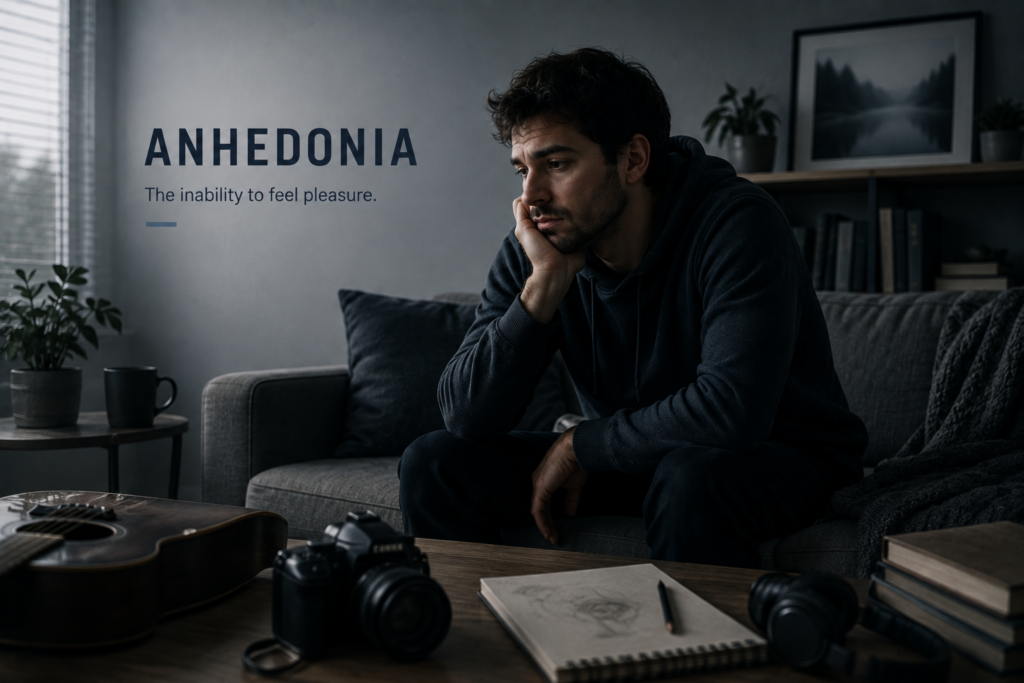
Anhedonia is a reduced ability to feel pleasure or interest.
A person with anhedonia may still do normal activities, but those activities may no longer feel rewarding. Someone may know that they used to enjoy seeing friends or listening to music, yet they cannot feel the same enjoyment anymore.
The word is often used by mental health professionals when talking about depression. Anhedonia is one of the main symptoms that may occur during a major depressive episode.
However, having anhedonia does not automatically mean a person has depression. Mental health professionals look at a person’s full set of symptoms, how long they have lasted, and how much they affect everyday life.
What Does Anhedonia Feel Like?
Anhedonia can feel different from person to person.
Someone may say:
“Nothing sounds fun anymore.”
“I don’t get excited about anything.”
“I still see my friends, but I don’t enjoy it.”
“My favorite music doesn’t make me feel good.”
“I finish things, but I don’t feel proud.”
“Food tastes fine, but eating isn’t enjoyable.”
“I know I should be happy, but I’m not.”
This inability to feel pleasure can be confusing because a person may remember what enjoyment felt like but have trouble experiencing it now.
What Are Common Anhedonia Symptoms?
Anhedonia symptoms often involve a clear drop in interest, enjoyment, excitement, or reward.
Some people notice changes in only a few areas. Others may feel less pleasure across most areas of life.
Losing Interest in Friends and Social Activities
A person with anhedonia may stop looking forward to seeing friends or family.
They may turn down invitations, leave events early, or spend more time alone. They might still care about other people, but social time may no longer feel enjoyable.
This is sometimes called social anhedonia.
A person may think, “I like these people, but being around them doesn’t make me feel good anymore.”
Losing Interest in Hobbies
Hobbies are often one of the first places people notice changes.
Someone who loved painting, gaming, hiking, gardening, reading, sports, or crafts may suddenly stop caring about those activities.
It may become hard to start them because the brain no longer expects the usual sense of reward.
Losing Pleasure From Food
Food can still taste normal while becoming less enjoyable.
Someone may eat because they know they need food rather than because they enjoy meals. Favorite foods may not create the same positive feeling they once did.
Changes in appetite can also occur with depression, so a mental health professional may ask about both appetite and enjoyment.
Music May Stop Feeling Rewarding
Music can create strong emotional and reward responses for many people.
With anhedonia, songs that once felt exciting, calming, or meaningful may seem flat. A person may stop listening to music because it no longer creates much pleasure.
Exercise May Feel Less Enjoyable
Exercise can provide feelings of accomplishment, energy, and enjoyment.
Someone experiencing anhedonia may still exercise but get little satisfaction from it. Others may stop because they no longer expect the activity to feel rewarding.
This loss of reward can make motivation even harder.
Intimacy May Feel Less Rewarding
Anhedonia can also affect romantic and physical intimacy.
A person may have less interest in affection, closeness, dating, or sexual activity. They may care deeply about their partner but have trouble experiencing pleasure from activities that used to feel rewarding.
Accomplishments May Feel Empty
Finishing a large project, earning praise, reaching a fitness goal, or solving a difficult problem normally creates some sense of reward.
With anhedonia, accomplishments may feel surprisingly empty.
A person might understand that something good happened but still feel little excitement or satisfaction.
How Is Anhedonia Connected to Depression?
Anhedonia is strongly linked with depression.
Major depressive disorder can involve either a depressed mood, a major loss of interest or pleasure, or both. A mental health professional may ask whether activities that used to feel enjoyable have become less rewarding.
This is why someone experiencing loss of interest depression symptoms may notice changes before they realize they are depressed.
They may first notice that:
They stopped calling friends.
Their hobbies feel like work.
They do not look forward to weekends.
Their favorite foods are less enjoyable.
Achievements no longer feel rewarding.
They have stopped planning fun activities.
Depression can also involve low energy, sleep changes, appetite changes, trouble focusing, hopelessness, guilt, slowed movement, or thoughts of death.
Not everyone with anhedonia has all of these symptoms.
What Causes Anhedonia?
There is no single cause of anhedonia.
Researchers often connect anhedonia with changes in how the brain processes motivation, reward, and pleasure.
Changes in the Brain’s Reward System
The brain uses several networks and chemical messengers to help people notice rewards and feel motivated to seek them.
Dopamine is one chemical involved in motivation and reward learning. However, anhedonia is more complex than simply having “low dopamine.”
Scientists study how several brain regions and systems work together during anticipation, motivation, and pleasure.
Changes in these systems may make rewarding experiences feel weaker than they once did.
Depression and Other Mental Health Conditions
Anhedonia is commonly associated with depressive disorders.
It can also occur alongside some other mental health conditions. Because similar symptoms can have different causes, diagnosis should be based on a full evaluation rather than one symptom alone.
Long Periods of Stress
Long-lasting stress may affect energy, motivation, sleep, and the brain’s reward response.
Someone under intense stress may gradually stop enjoying activities they once loved.
If the problem continues even when stress improves, it may be worth discussing the change with a mental health professional.
What Is the Difference Between Anhedonia and Boredom?
Boredom and anhedonia can look similar, but they are not the same.
Boredom usually means the activity in front of you is not interesting enough.
A bored person can often switch activities and find something enjoyable.
For example, someone may be bored watching television but become excited when a friend asks them to go to dinner.
With anhedonia, changing the activity may not solve the problem.
Dinner, television, friends, gaming, exercise, and other activities may all feel less rewarding.
A simple way to think about the difference is:
Boredom: “I don’t enjoy this activity.”
Anhedonia: “I don’t seem to enjoy much of anything anymore.”
What Is the Difference Between Anhedonia and Emotional Numbness?
Anhedonia and emotional numbness can overlap, but they describe different experiences.
Anhedonia is mainly about loss of interest and pleasure.
A person may still feel sadness, anger, fear, stress, or frustration while having very little ability to feel enjoyment.
Emotional numbness is broader. It often describes feeling cut off from emotions in general.
Someone who feels emotionally numb may have trouble feeling both positive and negative emotions.
The main difference is:
Anhedonia: Pleasure and interest are reduced.
Emotional numbness: Emotional experience itself may feel muted or distant.
Keeping this difference clear can help people better explain their symptoms to a mental health professional.
Can You Have Anhedonia Without Feeling Sad?
Yes.
A person can have anhedonia without feeling deeply sad.
This can make the symptom harder to notice.
Someone may say that they are not crying or feeling hopeless. Instead, everything simply feels less interesting.
They may continue working, studying, parenting, or completing daily responsibilities while feeling little reward from those activities.
This is one reason depression does not always look like constant sadness.
A major drop in pleasure or interest can also be an important symptom.
How Long Does Anhedonia Last?
Anhedonia can last for different amounts of time.
A short period of low interest may happen during stress, poor sleep, illness, grief, or exhaustion.
More concern may be needed when the loss of pleasure:
Lasts for weeks.
Keeps getting worse.
Affects several areas of life.
Makes relationships difficult.
Makes work or school harder.
Causes a person to stop caring for themselves.
Happens with other depression symptoms.
The length of the symptom is only one part of the picture. Its severity and effect on daily life also matter.
How Is Anhedonia Treated?
Treatment depends on what is causing the loss of pleasure.
There is no single treatment that works for every person.
A mental health professional may first ask about mood, stress, sleep, medications, substance use, physical health, relationships, and other symptoms.
Therapy May Help Restore Activity and Reward
Some forms of therapy help people slowly reconnect with meaningful activities.
For example, a therapist may help someone notice which activities used to provide enjoyment, connection, accomplishment, or purpose.
The person may begin adding small activities back into their routine even before motivation fully returns.
The goal is not to force happiness. It is to gradually rebuild opportunities for positive experiences.
Depression Treatment May Help
When anhedonia is part of depression, treating the depression may help restore interest and pleasure.
Treatment may include psychotherapy, medication, lifestyle changes, or a combination of approaches depending on the person’s needs.
Revival Mental Health can help people explore depression treatment when symptoms are severe, persistent, or interfering with daily functioning.
Healthy Daily Habits Can Support Recovery
Basic habits are not a replacement for professional treatment when symptoms are serious, but they can support mental health.
Helpful steps may include:
Keeping a regular sleep schedule.
Spending time outside.
Eating regular meals.
Doing gentle physical activity.
Staying connected with supportive people.
Creating a simple daily routine.
Setting small goals.
Reducing alcohol or drug use.
Tracking changes in mood and interest.
Starting small is often more realistic than trying to immediately return to every old hobby.
When Should You Seek Help for Anhedonia?
Consider talking with a mental health professional if you have lost interest or pleasure for several weeks or if the change is affecting your ability to function.
It may be especially important to seek support when anhedonia occurs with:
Ongoing sadness.
Hopelessness.
Severe anxiety.
Trouble sleeping.
Major appetite changes.
Withdrawal from loved ones.
Poor self-care.
Difficulty working or attending school.
Thoughts about death or suicide.
If someone is in immediate danger or may harm themselves, call 911 or go to the nearest emergency department. In the United States, people experiencing suicidal thoughts or a mental health crisis can also call or text 988 for crisis support.
Why Anhedonia Should Not Be Ignored
Anhedonia can slowly affect many areas of life.
Someone may begin withdrawing from friends because social time no longer feels rewarding. They may stop exercising, abandon hobbies, lose interest in relationships, or stop setting goals.
Over time, having fewer positive experiences may make a person’s world feel smaller.
Recognizing the symptom early can help someone understand that the problem may be more than boredom or a lack of motivation.
Anhedonia is a real mental health symptom, and improvement is possible when the underlying cause is identified and treated.
FAQs About Anhedonia
What is anhedonia in simple terms?
Anhedonia means having less ability to feel pleasure or interest in activities that normally feel rewarding. A person may stop enjoying friends, hobbies, food, music, exercise, intimacy, or accomplishments.
Is anhedonia always a sign of depression?
No. Anhedonia is strongly associated with depression, but it can occur for other reasons. Long-term stress and other mental health conditions may also affect a person’s ability to experience pleasure. A professional evaluation can help identify the cause.
Can anhedonia go away?
Yes. Anhedonia may improve when the condition causing it is treated. Therapy, depression treatment, healthy routines, social connection, and other forms of care may help depending on the person’s situation.
Is anhedonia the same as being emotionally numb?
No. Anhedonia mainly involves reduced interest and pleasure. Emotional numbness usually refers to feeling disconnected from a wider range of emotions. Someone with anhedonia may still strongly feel sadness, fear, anger, or stress.
How do I know if I have anhedonia?
Think about activities you used to enjoy. If friends, hobbies, food, music, exercise, intimacy, or accomplishments have stopped feeling rewarding for weeks, you may be experiencing anhedonia symptoms. A mental health professional can assess the symptom and help determine whether depression or another condition may be involved.