
Depression can change how you feel, think, sleep, eat, and handle daily life. Common symptoms include lasting sadness, low energy, loss of interest, sleep changes, and feelings of hopelessness. Some people also feel angry, worried, numb, or physically unwell.
If these signs are making life harder, learning about depression treatment in Orange County may help you understand your options. Depression is a real mental health condition. It is not a weakness, and you do not have to manage it alone.
What Are the Symptoms of Depression?
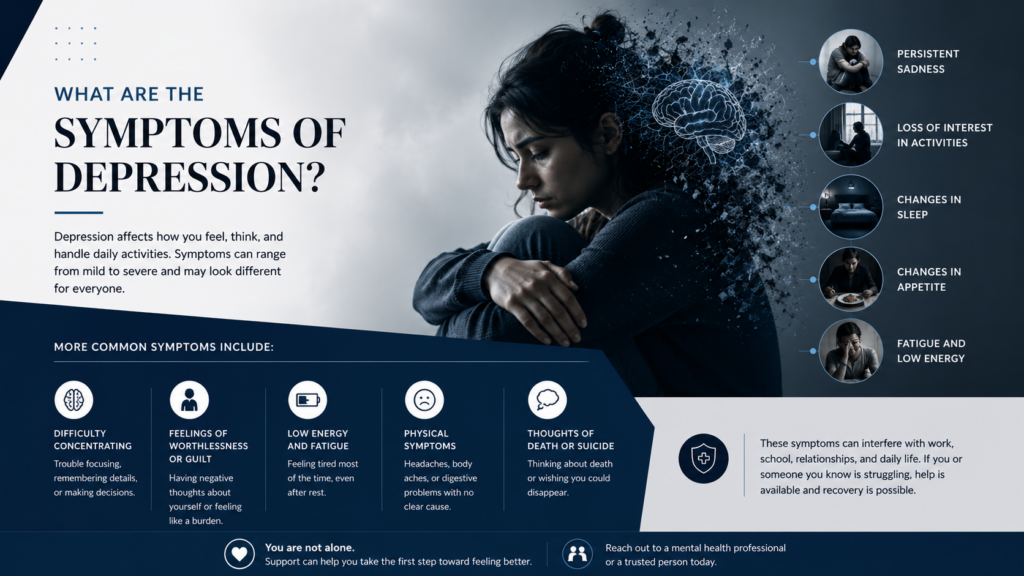
The symptoms of depression can affect your emotions, thoughts, body, and behavior. They may be mild at first or strong enough to make work, school, relationships, and self-care difficult.
Common signs of depression include:
Feeling sad, empty, or hopeless
Losing interest in activities you once enjoyed
Feeling tired most of the day
Sleeping too much or too little
Eating more or less than usual
Having trouble thinking or making decisions
Feeling guilty, worthless, or helpless
Becoming angry or irritated more easily
Pulling away from friends and family
Moving or speaking more slowly
Feeling restless or unable to sit still
Having thoughts about death, self-harm, or suicide
Depression does not look the same in every person. You may have several symptoms without feeling sad all the time. You may still smile, work, care for others, or attend social events while living with depression.
What Are the Emotional Symptoms of Depression?
Emotional symptoms are changes in how you feel. These feelings may last most of the day and return almost every day.
Lasting Sadness or Emptiness
A person with depression may feel deeply sad, empty, or emotionally numb. The feeling may seem to have no clear cause. It may also stay even when something good happens.
This is different from a low mood that passes after a difficult day. Clinical depression can last for weeks, months, or longer without treatment.
Loss of Interest or Pleasure
One of the main depression symptoms is losing interest in things you once enjoyed. This is sometimes called anhedonia.
You may stop enjoying:
Hobbies
Music
Exercise
Time with friends
Favorite foods
Intimacy
Family activities
Activities may feel like work instead of fun. You may also stop looking forward to future plans.
Feelings of Hopelessness
Depression can make the future seem dark. You may believe that nothing will improve or that treatment will not help.
These thoughts are symptoms of the condition. They are not proof that your situation cannot change.
Guilt or Worthlessness
You may blame yourself for small mistakes or events outside your control. You might feel like a burden or believe that others would be better without you.
These feelings can be very strong, even when friends and family tell you they are not true.
Irritability and Anger
Depression does not always appear as sadness. Some people feel angry, annoyed, or impatient.
Small problems may lead to strong reactions. You may argue more often, feel upset by noise, or become frustrated with people you care about.
What Are the Mental Symptoms of Depression?
Depression can affect the way your brain handles information. Tasks that once felt simple may become harder.
Trouble Concentrating
You may find it hard to focus on work, school, reading, or conversations. You might read the same sentence several times without understanding it.
Watching a show, following instructions, or finishing a task may also feel difficult.
Problems Making Decisions
Depression may make even small choices feel stressful. Picking what to eat, what to wear, or which task to do first can feel like too much.
Some people put off decisions because they worry about making the wrong choice.
Memory Problems
You may forget meetings, names, tasks, or parts of conversations. These memory problems can be linked to poor sleep, stress, and trouble focusing.
Memory changes can also come from other health conditions. A medical provider can help find the cause.
Negative Thoughts
Depression may cause repeated thoughts such as:
“Nothing will get better.”
“I cannot do anything right.”
“No one cares about me.”
“I am a burden.”
“There is no point in trying.”
These thoughts can feel true, but they are often shaped by depression. Therapy can help you notice and challenge harmful thinking patterns.
What Are the Physical Symptoms of Depression?
Depression affects more than mood. It can also cause real changes in the body.
Low Energy and Fatigue
You may feel tired after sleeping for many hours. Getting out of bed, taking a shower, cooking, or answering a message may take a great deal of effort.
This tiredness may not improve with rest.
Changes in Sleep
Depression can lead to different sleep problems, including:
Trouble falling asleep
Waking during the night
Waking earlier than planned
Sleeping for long periods
Wanting to stay in bed throughout the day
Feeling tired after a full night of sleep
Sleep problems can make other depression signs worse, such as low energy, poor focus, and irritability.
Changes in Appetite or Weight
Some people lose their appetite and eat very little. Others eat more than usual, especially foods that bring short-term comfort.
These changes may lead to weight loss or weight gain. A major appetite or weight change should be discussed with a healthcare professional.
Aches, Pains, and Digestive Problems
Depression may be linked to physical symptoms that do not have an obvious cause. These may include:
Headaches
Back pain
Muscle aches
Stomach pain
Cramps
Digestive problems
A heavy feeling in the body
Physical pain can also increase emotional distress, creating a cycle that is hard to break without support.
Slower Movement or Restlessness
Some people move, speak, or react more slowly during a depressive episode. Others feel restless and may pace, tap their feet, or struggle to remain still.
Friends or family members may notice these changes before the person experiencing them does.
What Are the Behavioral Signs of Depression?
Behavioral symptoms are changes in how you act, complete tasks, and connect with other people.
Pulling Away From Other People
You may avoid phone calls, cancel plans, or spend more time alone. Social interaction may feel tiring or stressful.
Isolation can provide short-term relief, but it may also make depression feel stronger over time.
Falling Behind on Daily Tasks
Depression can make basic duties feel overwhelming. You may struggle with:
Cleaning
Laundry
Personal hygiene
Paying bills
Work tasks
School assignments
Grocery shopping
Caring for pets
Difficulty completing these tasks does not mean you are lazy. Low motivation and fatigue are common symptoms of depression.
Changes in Work or School Performance
You may arrive late, miss days, make more mistakes, or have trouble meeting deadlines. Students may see their grades drop or stop taking part in class.
These changes may happen because depression affects energy, memory, focus, and confidence.
Using Alcohol or Drugs to Cope
Some people use alcohol or drugs to escape painful feelings or help themselves sleep. These substances may offer brief relief, but they can make depression symptoms worse.
Mental health and substance use concerns should be treated together when they happen at the same time.
How Long Do Depression Symptoms Last?
Everyone feels sad, tired, or stressed at times. A bad day does not always mean you have a depressive disorder.
A healthcare professional may look for symptoms that:
Last for at least two weeks
Happen most of the day
Occur nearly every day
Affect work, school, relationships, or self-care
Cannot be better explained by another condition
Major depression often includes a depressed mood or loss of interest, along with other emotional, physical, or thinking symptoms. Persistent depressive disorder may involve less severe symptoms that continue for a much longer period.
The National Institute of Mental Health explains that depression can cause serious symptoms that affect sleeping, eating, working, thinking, and other daily activities.
Can Depression Look Different in Different People?
Depression can affect anyone, but signs may change based on age, health, life events, and other factors.
Depression Symptoms in Men
Some men report sadness, but others show more anger, irritability, risky behavior, or substance use. They may work long hours or stay busy to avoid their feelings.
Men may also be less likely to talk about emotional pain or ask for help.
Depression Symptoms in Women
Women may experience sadness, guilt, low self-worth, sleep changes, and appetite changes. Hormonal shifts during pregnancy, after childbirth, or during menopause can also affect mood.
Postpartum depression is more serious than temporary mood changes after childbirth and should be evaluated by a professional.
Depression Symptoms in Teens
Teens with depression may appear angry, tired, sensitive, or withdrawn. Signs can include:
Falling grades
Sleeping too much
Losing interest in friends
Frequent physical complaints
Risky behavior
Feelings of worthlessness
Changes in eating habits
These behaviors should not always be dismissed as a normal part of growing up.
Depression Symptoms in Older Adults
Older adults may report physical pain, memory concerns, fatigue, sleep problems, or a loss of interest instead of clear sadness.
Depression is not a normal part of aging. Treatment can help older adults feel better and regain daily function.
MedlinePlus notes that depression may look different based on a person’s age, sex, and medical conditions.
What Conditions Can Look Like Depression?
Depression symptoms may overlap with other mental and physical health conditions. For example, fatigue, poor focus, sleep changes, and low mood may also be linked to:
Grief
Trauma and post-traumatic stress disorder
Thyroid conditions
Anemia
Chronic pain
Sleep disorders
Medication side effects
Alcohol or drug use
Vitamin deficiencies
A mental health or medical provider can review your symptoms, health history, medications, and daily habits. They may also order tests to rule out physical causes.
Do not try to diagnose yourself based on one symptom or an online checklist.
When Should You Seek Help for Depression Symptoms?
Consider speaking with a professional when symptoms have lasted two weeks, keep returning, or interfere with daily life.
You do not need to wait until depression becomes severe. Early support may make symptoms easier to manage.
A mental health evaluation may include questions about:
Your mood
Sleep and appetite
Energy levels
Daily responsibilities
Stressful events
Medical history
Alcohol or drug use
Thoughts of self-harm
Past treatment
Be honest about what you are experiencing. These questions help the provider understand your needs and recommend the right level of care.
How Is Depression Treated?
Depression treatment depends on the type and severity of your symptoms. A care plan may include therapy, medication, healthy routines, or a mix of approaches.
Therapy
Talk therapy gives you a private place to understand feelings, thoughts, and behaviors. Cognitive behavioral therapy may help you identify negative thinking and build healthier coping skills.
Therapy may also address trauma, grief, relationship problems, stress, or other concerns linked to depression.
Medication
A doctor or psychiatric provider may prescribe antidepressant medication. Medication can help improve mood, sleep, energy, and focus for some people.
Finding the right medication may take time. Do not start, stop, or change a prescription without speaking with your provider.
Daily Supportive Habits
Healthy habits are not a replacement for professional treatment, but they may support recovery. Helpful steps can include:
Keeping a regular sleep schedule
Eating balanced meals
Taking short walks
Spending time outside
Staying connected with supportive people
Breaking tasks into smaller steps
Avoiding alcohol and non-prescribed drugs
Following your treatment plan
On difficult days, choose one small action. Drinking water, opening the curtains, or sending one message can be a meaningful step.
What Should You Do During a Mental Health Crisis?
Thoughts about death, suicide, or self-harm are serious depression warning signs. Get immediate help if you feel unsafe, have made a plan, or believe you may hurt yourself.
In the United States, call or text 988 to reach the Suicide & Crisis Lifeline. Call 911 or go to the nearest emergency room during a life-threatening emergency. The 988 Lifeline provides crisis support for people experiencing suicidal thoughts, emotional distress, or a mental health crisis.
Stay with a trusted person when possible. Move away from weapons, medications, or other items that could be used for self-harm.
Find Depression Support at Revival Mental Health
Knowing the signs of depression is an important first step. The next step is speaking with someone who can help you understand what is happening.
Revival Mental Health provides structured care for adults experiencing depression and other mental health concerns. Treatment can help you manage symptoms, rebuild daily routines, and feel more connected to your life.
You do not need to have every symptom to ask for help. If your mood, sleep, energy, thoughts, or behavior have changed, a professional evaluation can help you decide what to do next.
Frequently Asked Questions
What are the most common symptoms of depression?
The most common symptoms include ongoing sadness, loss of interest, low energy, sleep changes, appetite changes, trouble focusing, guilt, hopelessness, and social withdrawal. Symptoms may affect people in different ways.
Can you have depression without feeling sad?
Yes. Some people feel empty, numb, angry, restless, or disconnected instead of sad. Others notice physical pain, fatigue, poor sleep, or a loss of interest before they notice a low mood.
How do I know whether I am depressed or just tired?
Tiredness may improve after sleep or rest. Depression-related fatigue often continues and happens with other symptoms, such as low mood, loss of interest, hopelessness, appetite changes, or trouble focusing. A professional can help identify the cause.
Do depression symptoms go away on their own?
Some mild symptoms may improve, but ongoing or severe depression often needs treatment. Waiting can allow symptoms to become harder to manage. Contact a mental health provider when signs last two weeks or disrupt daily life.
Is depression treatable?
Yes. Many people improve with therapy, medication, supportive habits, or a combination of treatments. The right approach depends on your symptoms, health, needs, and past treatment experiences.