

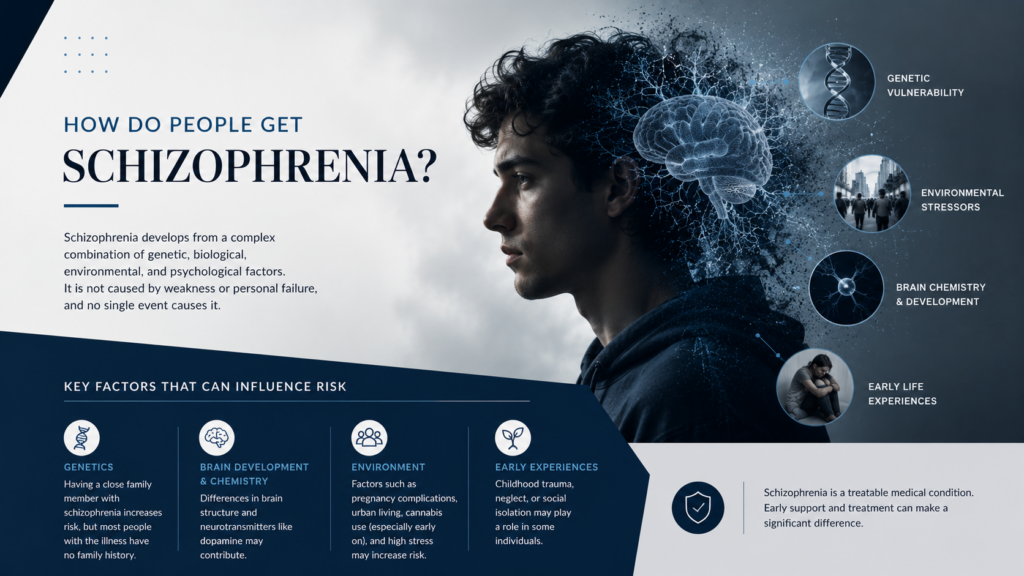
Many people ask, “how do people get schizophrenia?” The answer is not simple. Schizophrenia is a serious mental illness that can affect how a person thinks, feels, acts, and sees the world. If you or a loved one needs help, Revival Mental Health offers support through schizophrenia treatment in Orange County.
People do not get schizophrenia because they are weak. It is not caused by bad parenting. It is not a choice. Schizophrenia is a brain-based disorder that may develop from a mix of genes, brain development, family history, and environmental factors.
Some people have a higher risk than others. But risk does not mean a person will always develop schizophrenia. Many factors can affect whether symptoms appear.
What Is Schizophrenia?
Schizophrenia is a mental health condition that can make it hard for a person to tell what is real and what is not. It is one of several psychotic disorders. A person with schizophrenia may have psychosis, false beliefs, hearing voices, visual hallucinations, or disorganized thinking.
Schizophrenia symptoms can affect daily life. A person may have trouble with school, work, family members, self care, and personal hygiene. They may avoid eye contact, pull away from others, or seem very confused.
Schizophrenia is also a long-term mental health condition. Many people with schizophrenia need lifelong treatment. But with proper treatment, support, and a clear treatment plan, many people can live safer and more stable lives.
What Causes Schizophrenia?
The Exact Causes Are Not Fully Known
The exact causes of schizophrenia are still being studied. Doctors and researchers believe there is not one single cause. Instead, schizophrenia can develop when several factors come together.
These factors may include:
Family history
Brain development
Brain chemistry
Stress
Substance abuse
Recreational drugs
Trauma
Other possible causes linked to health and environment
A person may have some risk factors and never develop schizophrenia. Another person may have fewer known risk factors and still develop symptoms. This is why diagnosis should always be done by a mental health professional.
Brain Development May Play a Role
Brain development is one important part of schizophrenia risk. The brain grows and changes through childhood, the teen years, and young adulthood. During this time, brain cells form new connections and remove old ones.
In some people, changes in the brain may affect thinking, emotions, and the five senses. This may help explain why symptoms of schizophrenia often start in the late teens, early adulthood, or young adulthood.
Schizophrenia is often noticed in young adults. Some people may show early signs before a full psychotic episode happens. Early treatment can make a big difference.
Family History Can Raise Risk
Family history is one of the main risk factors for developing schizophrenia. A person may have a higher risk if a close family member has schizophrenia or another related mental disorder.
But family history does not mean a person will always get schizophrenia. Many people with a family history never develop the disorder. Also, some people with schizophrenia have no known family members with the condition.
Compared to the general population, the risk may be higher when schizophrenia runs in a family. Still, genes are only one part of the picture.
Can You Prevent Schizophrenia?
There Is No Sure Way to Prevent Schizophrenia
At this time, there is no sure way to prevent schizophrenia. Since the exact causes are not fully known, no one can promise that schizophrenia can be stopped before it starts.
But some steps may lower risk or help symptoms get treated sooner. These steps include:
Avoiding recreational drugs
Getting help for substance abuse
Treating severe depression and other mental health conditions
Getting support after trauma
Watching for early schizophrenia symptoms
Talking with a mental health professional early
Staying connected with family members and trusted support
Early treatment may help reduce untreated psychosis. It may also help stop symptoms from getting worse.
Early Help Matters
Untreated psychosis can make life harder. The longer psychotic symptoms go untreated, the harder recovery may feel. A person may lose trust in others, struggle at work or school, or become more socially isolated.
Early treatment can help a person understand what is happening. It can also help family members learn how to support the person in a calm and safe way.
Common Risk Factors for Developing Schizophrenia
Genetics and Family Risk
Genes can affect risk. If a person has a close family member with schizophrenia, they may be at higher risk. But genes do not decide everything.
Mental disorders can also overlap in families. For example, some family members may have bipolar disorder, severe depression, or other mental health conditions. These do not mean a person will get schizophrenia, but they may show a family pattern of mental health risk.
Environmental Factors
Environmental factors may also play a role. These may include stress during early life, trauma, poor support, or major life changes. Some research also looks at pregnancy and birth factors, infections, and other health issues.
Physical illnesses may also need to be ruled out during diagnosis. Some medical problems, drugs, or other possible causes can look like schizophrenia symptoms.
Substance Abuse and Recreational Drugs
Substance abuse can increase the risk of psychosis in some people. Recreational drugs may also bring out symptoms in people who are already at higher risk.
Drugs can affect the brain. Some drugs may cause paranoia, hearing things, visual hallucinations, or a psychotic episode. This can make diagnosis harder because a mental health professional must look at whether symptoms come from schizophrenia, substance use, medicine, or physical illnesses.
Stress and Social Isolation
High stress does not directly “cause” schizophrenia by itself. But stress may bring out symptoms in someone who is already at risk.
Social isolation can also make symptoms worse. A person may stop seeing friends, avoid family members, or spend more time alone. Isolation can make it harder to notice symptoms early and get help.
What Are Early Schizophrenia Symptoms?
Changes Before Psychosis
Before a clear psychotic episode, some people show small changes. These early symptoms may be easy to miss.
A person may:
Pull away from friends or family members
Have trouble sleeping
Seem more suspicious
Stop caring for personal hygiene
Have trouble at school or work
Show less emotion
Avoid eye contact
Have trouble with self care
Speak in a way that is hard to follow
These signs do not always mean schizophrenia. They can also be linked to anxiety, severe depression, bipolar disorder, substance abuse, trauma, or other mental health conditions.
Positive Symptoms
Positive symptoms are symptoms that add something to a person’s experience. These may include things that are not based in reality.
Positive symptoms may include:
Auditory hallucinations
Hearing voices
Hearing things other people do not hear
Visual hallucinations
False beliefs
Paranoia
Psychotic symptoms
A person may believe someone is watching them, following them, or trying to hurt them. They may see or hear things that others do not. These schizophrenia experiences can feel very real to the person.
Negative Symptoms
Negative symptoms are symptoms that take away normal actions or feelings. These symptoms may be harder for others to understand.
Negative symptoms may include:
Low motivation
Less facial expression
Less speaking
Poor self care
Poor personal hygiene
Less interest in life
Pulling away from family members
Less joy in daily activities
Negative symptoms can sometimes look like depression. This is why a full diagnosis matters.
Disorganized Thinking and Speech
Schizophrenia can affect how a person thinks and talks. Disorganized thinking may make it hard to stay on one topic. Disorganized speech may make words sound mixed up or hard to follow.
A person may jump from one idea to another. They may answer questions in a way that does not match the topic. This can make school, work, and relationships harder.
How Is Schizophrenia Diagnosed?
A Mental Health Professional Looks at the Full Picture
A diagnosis should come from a mental health professional. This may include a psychiatrist, therapist, psychologist, social worker, or other trained provider.
The provider may ask about:
Symptoms
Family history
Drugs or alcohol use
Physical illnesses
Current stress
Past trauma
Mood changes
Sleep
Work or school problems
Safety concerns
A doctor may also check for other possible causes. Some medical issues, medicines, or substance use can cause symptoms that look like psychosis.
Schizophrenia Is Not the Same as Bipolar Disorder
Schizophrenia and bipolar disorder can both include psychosis in some cases. But they are not the same disorder.
Bipolar disorder often includes strong mood episodes, such as mania or depression. Schizophrenia is more focused on long-term problems with reality testing, thinking, behavior, and symptoms like hallucinations or false beliefs.
A mental health professional can help tell the difference and build the right treatment plan.
How Is Schizophrenia Treated?
Treatment Can Help Stop Symptoms
Treating schizophrenia often includes more than one type of support. The goal is to stop symptoms, reduce relapse, support daily life, and help the person stay safe.
A treatment plan may include:
Antipsychotic medications
Antipsychotic drugs
Talk therapy
Family support
Case manager support
Social worker support
Supported employment
Life skills help
Help with substance abuse
Mental health services
The right treatment may change over time. A person may need new treatments if symptoms do not improve or side effects are hard to manage.
Antipsychotic Medications
Antipsychotic medications are often used to treat psychotic symptoms. These medicines may help reduce hallucinations, false beliefs, and disorganized thinking.
Antipsychotic drugs do not cure schizophrenia, but they may help people with schizophrenia feel more stable. A doctor should explain the benefits, risks, and side effects.
A person should not stop medication without talking to their doctor. Stopping too fast may cause symptoms to return or get worse.
Talk Therapy and Support
Talk therapy can help a person understand symptoms, lower stress, and build coping skills. Therapy can also help with social skills, self care, and problem solving.
Family members may also benefit from education and support. When family understands schizophrenia, they may respond with more patience and less fear.
Supported employment can help people build work skills and stay involved in daily life. A case manager or social worker may also help with appointments, housing needs, transportation, and community support.
What Is the Long Term Outlook?
Many People Improve With Proper Treatment
The long term outlook for schizophrenia is different for each person. Some people have symptoms that come and go. Others need more daily support. The vast majority of people benefit from treatment, structure, and support.
People with schizophrenia can still have goals, relationships, work, and a better quality of life. The key is early treatment, proper treatment, and steady care.
Lifelong Treatment May Be Needed
Schizophrenia is often a lifelong condition. Lifelong treatment does not mean life is over. It means the person may need ongoing care to stay stable.
Treatment can help reduce psychotic symptoms, improve self care, and lower the chance of relapse. Family members and care teams can also help the person stay connected and supported.
When Should Someone Get Help?
Get Help When Symptoms Affect Daily Life
A person should get help if symptoms affect daily life, safety, work, school, sleep, or relationships.
Warning signs may include:
Hearing voices
Seeing things others do not see
Strong false beliefs
Disorganized speech
Disorganized thinking
Severe social isolation
Not caring for personal hygiene
Acting very confused
Fear that others are trying to harm them
Trouble knowing what is real
If there is danger, call emergency services right away. If the person is not in danger but symptoms are growing, contact a mental health professional as soon as possible.
Revival Mental Health Can Help
Revival Mental Health supports people living with schizophrenia and other mental health conditions. Care may include therapy, medication support, family education, and a treatment plan built around the person’s needs.
Getting help early can protect a person’s health, safety, and future. Schizophrenia is serious, but treatment can help.
FAQs About How People Get Schizophrenia
How do people get schizophrenia?
People may develop schizophrenia because of a mix of risk factors. These can include family history, brain development, environmental factors, substance abuse, and stress. There is no single cause.
Can recreational drugs cause schizophrenia?
Recreational drugs may increase the risk of psychosis in some people, especially those who already have a higher risk. Drugs can also cause symptoms that look like schizophrenia, so diagnosis should be done by a mental health professional.
What age does schizophrenia usually develop?
Schizophrenia symptoms often start in the late teens, early adulthood, or young adulthood. Some people may show early warning signs before a full psychotic episode.
Can schizophrenia be cured?
Schizophrenia is often a lifelong treatment condition. It may not be cured, but proper treatment can help stop symptoms, lower relapse risk, and improve daily life.
What should family members do if they notice symptoms?
Family members should stay calm, avoid arguing about false beliefs, and help the person connect with mental health services. If there is danger, they should call emergency services right away.