
Living with post-traumatic stress disorder (PTSD) can make everyday life feel much harder than it should. Many people struggle with emotions, sleep, work, and relationships after a traumatic event. If you or someone you love is dealing with these challenges, getting professional PTSD treatment can make a real difference. Understanding how does PTSD affect daily life is the first step toward healing and feeling more in control.
PTSD can happen after military combat, abuse, sexual assault, car accidents, natural disasters, medical emergencies, or any event that feels deeply frightening or life-threatening. While everyone reacts to trauma differently, PTSD can affect almost every part of a person’s daily routine.
What Is PTSD?
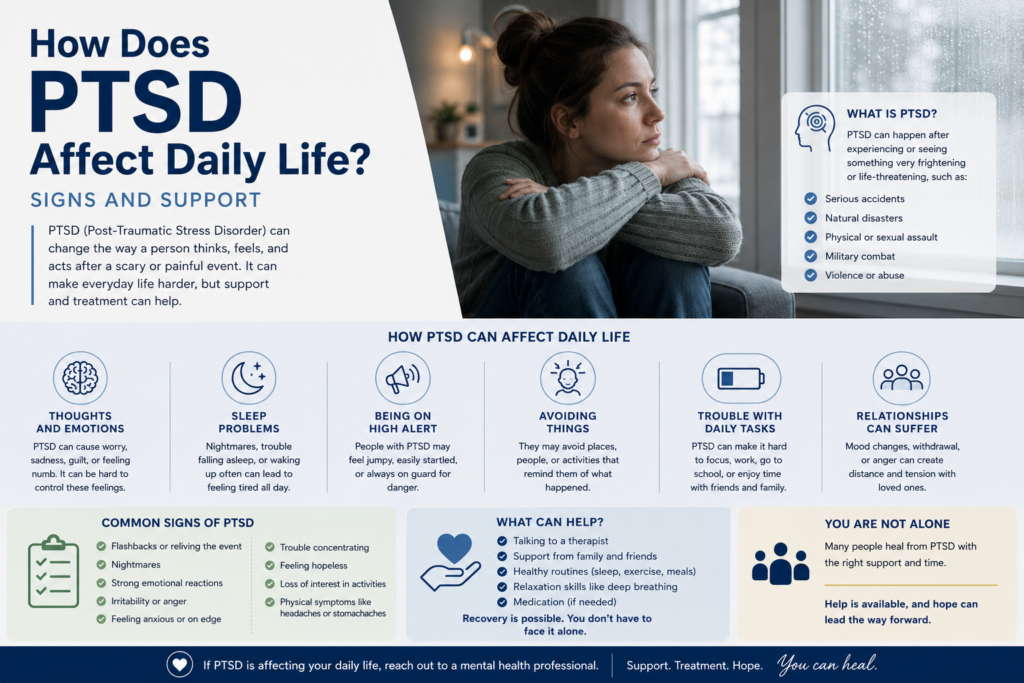
PTSD is a mental health condition that can develop after someone experiences or witnesses a traumatic event. While many people feel stressed after trauma, PTSD symptoms last longer than one month and often become severe enough to interfere with daily activities.
According to the Diagnostic and Statistical Manual of Mental Disorders (DSM-5), PTSD includes symptoms from four main groups:
- Intrusive memories
- Avoidance behaviors
- Negative changes in mood and thinking
- Changes in physical and emotional reactions
Not everyone with PTSD experiences the same symptoms, but they all can affect daily life in different ways.
How Does PTSD Affect Daily Life?
PTSD changes how the brain responds to stress and danger. Even when someone is safe, their brain may stay in “survival mode.” This can make simple daily tasks feel overwhelming.
Daily life with PTSD may include:
- Trouble sleeping
- Difficulty focusing
- Feeling anxious most of the time
- Avoiding certain places or people
- Feeling emotionally numb
- Becoming easily startled
- Trouble trusting others
- Constant fear or worry
These symptoms often affect work, school, family life, and overall well-being.
How PTSD Affects Emotional Health
One of the biggest ways PTSD changes daily life is through emotions.
Feeling Constant Fear
Many people with PTSD feel like danger is always nearby. Even normal situations may feel unsafe.
This can lead to:
- Panic attacks
- Ongoing anxiety
- Hypervigilance
- Feeling tense all day
Mood Changes
PTSD may cause:
- Sadness
- Anger
- Guilt
- Shame
- Hopelessness
Some people become emotionally numb and find it difficult to feel happiness or excitement.
Irritability
Small problems may trigger large emotional reactions. People with PTSD often feel frustrated faster than they did before the trauma.
How PTSD Affects Sleep
Sleep problems are very common with PTSD.
Nightmares
Many people relive their traumatic event through vivid nightmares. These dreams can make it hard to get restful sleep.
Insomnia
Some people struggle to:
- Fall asleep
- Stay asleep
- Feel rested in the morning
Poor sleep often makes PTSD symptoms even worse during the day.
Fear of Sleeping
Some people avoid sleep because they worry about nightmares or losing control while asleep.
How PTSD Affects Work or School
PTSD can make it difficult to perform everyday responsibilities.
Trouble Concentrating
Many people notice:
- Forgetfulness
- Poor focus
- Trouble following conversations
- Difficulty completing tasks
These symptoms may affect grades, job performance, and productivity.
Missing Work
Appointments, anxiety, poor sleep, or emotional distress may lead to:
- Calling in sick often
- Arriving late
- Difficulty meeting deadlines
Workplace Stress
Loud noises, crowded spaces, or conflict with coworkers may trigger PTSD symptoms.
How PTSD Affects Relationships
Healthy relationships often become more difficult when PTSD symptoms are present.
Difficulty Trusting Others
After trauma, trusting people may feel unsafe.
Someone with PTSD may:
- Pull away emotionally
- Avoid close relationships
- Keep feelings private
Communication Problems
PTSD may make it difficult to explain emotions.
Loved ones sometimes misunderstand these changes, creating conflict at home.
Emotional Distance
Some people stop enjoying activities they once loved or spend less time with friends and family.
How PTSD Affects Physical Health
PTSD does not only affect the mind. It also impacts the body.
Chronic Stress
The body’s stress response stays active longer than normal.
This may contribute to:
- High blood pressure
- Muscle tension
- Headaches
- Digestive problems
- Fatigue
Lower Energy
Poor sleep and ongoing anxiety often leave people feeling exhausted.
Even simple chores may feel overwhelming.
How PTSD Affects Memory and Thinking
Trauma can change how the brain processes information.
People with PTSD may experience:
- Memory problems
- Confusion
- Difficulty making decisions
- Trouble learning new information
Some people also experience intrusive memories that suddenly interrupt daily activities.
How PTSD Affects Social Life
Many people begin avoiding situations that remind them of the trauma.
This may include avoiding:
- Crowded places
- Family gatherings
- Restaurants
- Driving
- Public transportation
Over time, avoidance can lead to loneliness and isolation.
Hypervigilance Can Make Daily Life Exhausting
Hypervigilance means constantly watching for danger.
Someone with PTSD may:
- Sit facing the door
- Scan every room
- Jump at loud noises
- Feel uncomfortable in crowds
Because the body stays alert all day, many people feel mentally and physically drained.
PTSD Can Affect Parenting
Parents with PTSD often care deeply about their children, but symptoms may make parenting harder.
Challenges may include:
- Becoming easily overwhelmed
- Trouble staying patient
- Difficulty attending school events
- Feeling emotionally distant
- Being overprotective
Treatment can help parents rebuild confidence and strengthen family relationships.
PTSD Can Affect Self-Care
Simple routines sometimes become difficult.
People with PTSD may struggle to:
- Shower regularly
- Eat healthy meals
- Exercise
- Attend medical appointments
- Keep a daily schedule
These changes are symptoms of the condition—not signs of weakness.
Common PTSD Triggers
Triggers are reminders of the traumatic event.
Common triggers include:
- Loud sounds
- Certain smells
- News stories
- Specific locations
- Anniversaries
- Crowded spaces
- Certain songs
- Weather conditions
Knowing personal triggers can help people prepare healthy coping strategies.
Healthy Ways to Cope With PTSD
While PTSD can affect daily life, recovery is possible.
Healthy coping skills include:
Practice Deep Breathing
Slow breathing helps calm the nervous system.
Build a Daily Routine
Having structure creates a sense of safety and predictability.
Stay Physically Active
Walking, stretching, or gentle exercise may help reduce stress.
Connect With Supportive People
Talking with trusted family members or friends can reduce feelings of isolation.
Limit Alcohol and Drugs
Substance use may temporarily numb emotions but usually makes PTSD symptoms worse over time.
PTSD Treatment Can Improve Daily Life
Professional treatment helps many people regain control of their lives.
Treatment may include:
Trauma Therapy
Evidence-based therapies help people safely process traumatic memories.
Examples include:
- Cognitive Behavioral Therapy (CBT)
- Cognitive Processing Therapy (CPT)
- Eye Movement Desensitization and Reprocessing (EMDR)
- Prolonged Exposure Therapy
Medication
Some people benefit from medications that help reduce anxiety, depression, or sleep problems.
Group Therapy
Meeting others who understand trauma can reduce isolation and build hope.
Family Therapy
Family members learn how PTSD affects behavior and how to provide healthy support.
When Should You Seek Help?
It may be time to seek professional support if PTSD symptoms:
- Last longer than one month
- Affect work or school
- Hurt relationships
- Cause severe anxiety
- Lead to depression
- Cause panic attacks
- Result in avoiding daily activities
- Include thoughts of self-harm
Early treatment often leads to better outcomes.
Recovery Is Possible
PTSD can affect nearly every part of daily life, including emotions, sleep, work, relationships, and physical health. However, PTSD is treatable. With the right support, therapy, and healthy coping skills, many people experience significant improvement and return to enjoying everyday life.
Recovery does not happen overnight, but every small step forward matters. Seeking help is a sign of strength, and no one has to face PTSD alone.
Frequently Asked Questions
Can PTSD make everyday tasks feel difficult?
Yes. PTSD can make cooking, cleaning, working, shopping, and other daily responsibilities feel overwhelming because of anxiety, poor concentration, and emotional stress.
Does PTSD affect relationships?
Yes. PTSD may cause trust issues, emotional distance, irritability, and communication problems that affect relationships with family, friends, and partners.
Can PTSD affect physical health?
Yes. PTSD may contribute to headaches, fatigue, muscle tension, digestive problems, sleep issues, and increased stress hormones that affect overall health.
Can PTSD symptoms improve with treatment?
Yes. Many people see major improvements through trauma-focused therapy, medication when appropriate, healthy coping skills, and ongoing support.
Where can I get help for PTSD?
If PTSD symptoms are affecting your daily life, reaching out to a qualified mental health provider like Revival Mental Health can help you begin recovery with personalized treatment and support.