

When does PTSD require residential treatment? Residential care may be needed when PTSD symptoms become so severe that outpatient therapy no longer provides enough support. This can happen when trauma symptoms make it hard to stay safe, sleep, work, care for yourself, or manage daily life.
For people who need more structure, PTSD treatment in Orange County can provide a higher level of support. At Revival Mental Health, residential care gives people a safe place to focus on healing while receiving consistent mental health treatment.
PTSD does not look the same for everyone. Some people do well with weekly therapy. Others need daily support and a more structured treatment setting.
When Does PTSD Require Residential Treatment?
PTSD may require residential treatment when symptoms are severe, ongoing, or getting worse even with outpatient care.
A mental health professional may consider residential PTSD treatment when a person:
Cannot manage normal daily activities
Has severe flashbacks or panic attacks
Has frequent nightmares and cannot sleep
Feels unsafe when alone
Has intense emotional reactions
Struggles with severe depression or anxiety
Uses drugs or alcohol to deal with trauma
Has serious problems at work, school, or home
Has tried outpatient PTSD treatment without enough improvement
Needs more support than family members can safely provide
PTSD can interfere with relationships, work, sleep, eating, concentration, and other parts of everyday life.
Needing residential treatment does not mean someone has failed at therapy. It simply means the current level of care may not match the level of support they need.
What Is Residential PTSD Treatment?
Residential PTSD treatment is a type of mental health care where a person stays at a treatment facility while receiving therapy and support.
Unlike weekly outpatient therapy, residential treatment creates a structured environment throughout the day.
Residential Care Provides More Daily Support
A residential mental health program may include:
Individual therapy
Group therapy
Trauma-focused therapy
Psychiatric care
Medication management when needed
Coping skills training
Stress management
Healthy routines
Sleep support
Emotional regulation skills
Life skills
Aftercare planning
Trauma-informed treatment should place a strong focus on safety, trust, choice, teamwork, and avoiding retraumatization.
The goal is not simply to remove someone from stressful situations. The goal is to create enough stability for meaningful mental health treatment to take place.
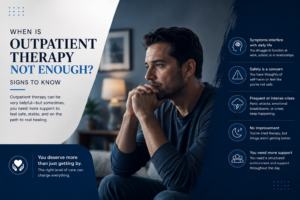
Signs Outpatient PTSD Treatment May Not Be Enough
Outpatient therapy can be very helpful for PTSD. However, a few hours of treatment each week may not be enough when symptoms become severe.
PTSD Symptoms Keep Getting Worse
One warning sign is a steady increase in PTSD symptoms.
A person may have more:
Flashbacks
Intrusive memories
Nightmares
Fear
Anger
Irritability
Anxiety
Panic
Avoidance
Emotional numbness
PTSD can cause people to feel stressed or frightened even when there is no current danger.
When symptoms continue to grow despite regular therapy, a clinician may recommend a more intensive level of care.
Daily Life Is Becoming Hard to Manage
PTSD becomes especially concerning when it starts affecting basic parts of life.
A person may stop:
Going to work
Attending school
Taking showers
Eating regular meals
Cleaning their home
Paying bills
Talking to friends
Leaving the house
Sleeping normally
They may spend much of the day trying to avoid trauma reminders.
When PTSD makes normal daily activities difficult, residential treatment may provide the structure needed to regain stability.
Severe Flashbacks and Dissociation Can Signal a Need for More Support
Flashbacks can make a past traumatic event feel like it is happening again.
During severe flashbacks, people may have trouble knowing what is happening around them. They may feel intense fear, panic, or physical stress.
Dissociation Can Make Someone Feel Disconnected
Dissociation can make a person feel disconnected from themselves or their surroundings.
Someone might describe feeling:
Outside their body
Emotionally numb
Like the world is unreal
Confused about where they are
Disconnected from time
Unable to remember certain events
Occasional symptoms may be managed in outpatient treatment. Frequent or severe dissociation may require closer clinical support.
Residential treatment gives clinicians more opportunities to identify triggers and teach grounding skills in a structured setting.
Severe Sleep Problems Can Make PTSD Harder to Manage
Nightmares and poor sleep are common problems for people with PTSD.
Someone may avoid sleep because they fear having another nightmare. Others wake repeatedly throughout the night.
Over time, severe lack of sleep can make it harder to:
Think clearly
Control emotions
Manage anxiety
Handle stress
Concentrate
Make decisions
PTSD symptoms can significantly interfere with sleeping and other daily activities.
Residential care can provide a regular daily routine while a treatment team works to address both trauma symptoms and sleep problems.
PTSD With Depression or Anxiety May Need More Intensive Care
PTSD often occurs with other mental health conditions.
Depression, anxiety, and substance use problems can occur alongside PTSD.
This can make treatment more complex.
PTSD and Depression
A person with PTSD and depression may feel:
Hopeless
Empty
Exhausted
Worthless
Disconnected
Uninterested in activities
Unable to get out of bed
When depression makes basic daily tasks difficult, more structured care may be appropriate.
PTSD and Severe Anxiety
PTSD can also cause intense anxiety.
Someone may constantly watch for danger, avoid public places, or feel unable to relax.
They may experience:
Racing thoughts
Shaking
Sweating
Fast heartbeat
Shortness of breath
Panic attacks
Constant fear
Residential mental health treatment may help when these symptoms make independent daily life difficult.
Using Alcohol or Drugs to Cope With PTSD Is a Warning Sign
Some people try to escape painful trauma symptoms by drinking alcohol or using drugs.
They may use substances to:
Fall asleep
Stop nightmares
Feel numb
Reduce anxiety
Avoid memories
Feel comfortable around people
This may seem helpful for a short time, but substance use can create another serious problem.
PTSD treatment guidelines recognize that trauma symptoms and substance use disorders can occur together and that PTSD treatment can still be provided when both conditions are present.
When substance use and PTSD are both severe, a clinical assessment can help determine the safest level of care.
When Safety Concerns Require Immediate Help
Residential treatment and emergency psychiatric care are not the same thing.
Residential care is generally designed for people who are medically stable but need much more structure than outpatient therapy can provide.
An emergency may require a higher level of immediate care.
Seek Immediate Evaluation for Serious Safety Risks
Urgent mental health evaluation may be needed when someone:
Has plans or intent to harm themselves
Has plans or intent to harm another person
Cannot stay safe without constant supervision
Is extremely confused or disconnected from reality
Cannot meet basic needs such as eating or drinking
Is experiencing a severe psychiatric crisis
In these situations, the first goal is safety and stabilization. Residential PTSD treatment may become part of the longer-term plan after the immediate crisis is addressed.
How Residential PTSD Treatment Can Help
Residential treatment gives people time and space to focus on recovery without many of the pressures they face at home.
A Structured Environment Can Reduce Overwhelm
Daily schedules can help create predictability.
A structured day might include therapy, meals, wellness activities, coping skills, and time for rest.
For someone whose nervous system feels constantly on alert, predictable routines may make treatment easier to manage.
Trauma Therapy Can Address the Cause of Symptoms
Effective PTSD care often includes trauma-focused psychotherapy.
Evidence-based PTSD guidelines support trauma-focused approaches, including therapies that help people safely process traumatic memories and change harmful beliefs connected with trauma.
Treatment should be matched to each person’s symptoms, needs, health history, and preferences.
Coping Skills Are Practiced Every Day
Residential treatment also gives people many chances to practice new coping skills.
These may include:
Grounding exercises
Deep breathing
Emotional regulation
Mindfulness
Healthy communication
Stress management
Identifying trauma triggers
Creating healthy boundaries
Building sleep routines
Practicing these skills repeatedly can make them easier to use after treatment.
How Long Does Residential Treatment for PTSD Last?
There is no single treatment length that works for everyone.
The amount of time a person needs depends on factors such as:
PTSD severity
Trauma history
Safety concerns
Depression or anxiety
Substance use
Response to treatment
Home environment
Support system
Treatment goals
A clinical team should regularly review progress and determine when someone is ready to move into a less intensive level of care.
The goal is not to stay in residential treatment forever. The goal is to build enough stability and coping skills to continue recovery successfully outside of residential care.
How Is Residential Treatment Different From Outpatient PTSD Therapy?
The biggest difference is the amount of structure and support.
Outpatient PTSD Treatment
Outpatient care allows people to live at home while attending scheduled therapy.
It may work well when a person:
Can stay safe independently
Can manage daily responsibilities
Has stable housing
Has supportive relationships
Can use coping skills outside therapy
Is making progress with treatment
Residential PTSD Treatment
Residential care may be more appropriate when someone needs support throughout the day and a stable therapeutic environment.
It allows treatment to become the main focus instead of trying to balance severe PTSD symptoms with work, school, family duties, and other daily pressures.
The right level of care should be based on an individual clinical assessment rather than the PTSD diagnosis alone.
How Do You Know Which Level of PTSD Care Is Right?
There is no single symptom that automatically means a person needs residential treatment.
A mental health professional looks at the full picture.
A PTSD assessment may consider:
How severe symptoms are
How often symptoms happen
Ability to stay safe
Ability to care for basic needs
Sleep
Work or school functioning
Relationships
Substance use
Previous treatment
Other mental health conditions
Available support at home
PTSD guidelines emphasize individualized treatment decisions based on a person’s needs, characteristics, risks, benefits, and preferences.
A professional assessment can help determine whether outpatient care, intensive outpatient care, residential treatment, or short-term hospital stabilization is most appropriate.
When to Consider Residential PTSD Treatment at Revival Mental Health
It may be time to consider residential treatment when PTSD has taken control of everyday life.
A higher level of care may be worth exploring if:
Weekly therapy is no longer enough
Symptoms continue getting worse
Flashbacks happen frequently
Sleep is severely disrupted
Trauma triggers are hard to manage
Depression or anxiety is becoming severe
Substance use is being used to cope
Relationships are falling apart
Work or school has become difficult
Independent daily life feels overwhelming
Revival Mental Health provides a structured setting where people can step away from daily stress and focus on mental health recovery.
Treatment can address PTSD while also looking at related concerns such as anxiety, depression, emotional regulation, sleep problems, and unhealthy coping patterns.
Residential PTSD Treatment Can Be the Next Step in Recovery
So, when does PTSD require residential treatment?
Residential treatment may be appropriate when PTSD symptoms are severe enough to disrupt safety, sleep, relationships, work, school, or basic daily life and outpatient treatment is not providing enough support.
The decision should be based on the person’s full clinical needs rather than one symptom alone.
For some people, outpatient therapy provides everything they need. For others, a structured residential environment creates the support needed to stabilize symptoms and make deeper progress.
Revival Mental Health can help people understand their treatment options and determine whether residential PTSD care fits their current needs.
Frequently Asked Questions About Residential PTSD Treatment
Can PTSD be treated without residential treatment?
Yes. Many people receive PTSD treatment through outpatient therapy. Residential treatment is generally considered when symptoms become severe, everyday functioning declines, or a person needs more support than outpatient care can provide.
What symptoms may suggest PTSD residential treatment is needed?
Possible signs include severe flashbacks, frequent panic, serious sleep problems, intense avoidance, major difficulty functioning, severe depression or anxiety, substance use, or an inability to manage everyday responsibilities.
Is residential PTSD treatment the same as a psychiatric hospital?
No. A psychiatric hospital generally focuses on short-term crisis stabilization and immediate safety. Residential treatment usually provides longer-term, structured therapeutic care for people who are stable enough to participate in ongoing treatment.
What happens during residential PTSD treatment?
Treatment may include individual and group therapy, trauma-focused care, psychiatric support, medication management when appropriate, coping skills, emotional regulation, wellness activities, structured routines, and discharge planning.
How do I know if outpatient PTSD therapy is no longer enough?
Outpatient therapy may not be enough if symptoms continue getting worse, daily responsibilities become difficult, safety becomes harder to maintain, or progress remains limited despite consistent treatment. A mental health assessment can help determine whether a higher level of care is appropriate.