
If you are wondering what does PTSD feel like, you are not alone. Many people who live with post-traumatic stress disorder (PTSD) struggle to explain their feelings. PTSD can make everyday life feel stressful, scary, and overwhelming. It can affect your emotions, thoughts, body, and relationships.
If you are experiencing symptoms after a traumatic event, learning about PTSD treatment can help you understand your options and begin healing. PTSD is a real mental health condition, and effective treatment is available.
This guide explains what PTSD feels like, why it happens, common symptoms, and how treatment can help you feel like yourself again.
What Is PTSD?
PTSD stands for post-traumatic stress disorder. It is a mental health condition that can happen after someone experiences or witnesses a traumatic event.
Trauma can include:
- Military combat
- Physical assault
- Sexual assault
- Domestic violence
- Serious accidents
- Natural disasters
- Medical emergencies
- Childhood abuse
- Losing someone suddenly
Not everyone who experiences trauma develops PTSD. However, for some people, the brain continues to react as if the danger is still happening, even after the event has ended.
What Does PTSD Feel Like Emotionally?
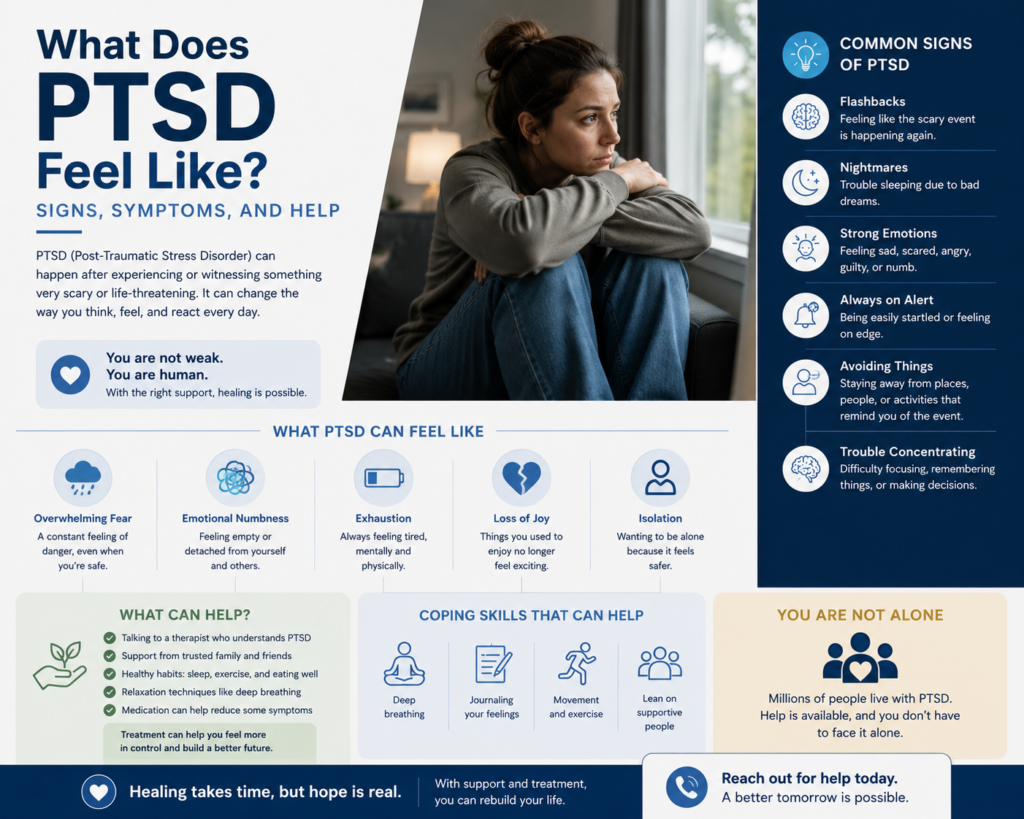
For many people, PTSD feels like living with constant emotional stress.
You may feel:
- Scared without knowing why
- Nervous all the time
- Angry more easily
- Sad or hopeless
- Guilty about what happened
- Ashamed
- Emotionally numb
- Detached from family and friends
Many people describe PTSD as feeling like they are “stuck” in the traumatic event, even when they know they are safe.
Fear That Never Seems to Go Away
One of the biggest emotional symptoms is constant fear.
Your brain stays on alert because it believes danger could happen at any moment. Even safe places may not feel safe anymore.
Feeling Numb
Some people stop feeling emotions altogether.
Instead of sadness or happiness, they may simply feel empty. They may lose interest in hobbies, relationships, or activities they once enjoyed.
Guilt and Shame
Many people with PTSD blame themselves for what happened.
These thoughts may include:
- “I should have done more.”
- “It was my fault.”
- “I should have stopped it.”
These feelings are common but are often not true.
What Does PTSD Feel Like Physically?
PTSD is not only emotional. It also affects the body.
Many people experience physical symptoms every day.
A Racing Heart
Your heart may suddenly beat very fast, even when there is no danger.
This happens because the body’s fight-or-flight system stays active.
Trouble Sleeping
Sleep problems are one of the most common PTSD symptoms.
You may have:
- Trouble falling asleep
- Trouble staying asleep
- Nightmares
- Restless sleep
- Fear of going to bed
Poor sleep can make PTSD symptoms feel even worse.
Muscle Tension and Pain
Many people constantly carry stress in their muscles.
This may lead to:
- Neck pain
- Back pain
- Headaches
- Jaw pain
- Tight shoulders
Feeling Tired All the Time
Living in survival mode uses a lot of energy.
Even after sleeping, many people feel exhausted throughout the day.
What Do Flashbacks Feel Like?
Flashbacks are one of the best-known PTSD symptoms.
A flashback feels like the traumatic event is happening again.
Some people:
- See vivid images
- Hear sounds from the event
- Smell certain odors
- Feel physical sensations
- Lose awareness of their surroundings
During a flashback, the brain reacts as though the danger is happening right now.
Not everyone with PTSD experiences flashbacks, but they are common.
What Do PTSD Triggers Feel Like?
A trigger is something that reminds the brain of trauma.
Triggers can include:
- Loud noises
- Certain smells
- Specific places
- Anniversaries
- Songs
- News stories
- Crowds
- Certain people
When triggered, someone may suddenly experience:
- Panic
- Sweating
- Shaking
- Fast breathing
- Racing thoughts
- Intense fear
Sometimes people do not even realize what triggered them.
Why Does PTSD Cause Anxiety?
PTSD changes how the brain responds to stress.
The amygdala, which helps detect danger, becomes more active. At the same time, the prefrontal cortex, which helps calm fear, may become less effective.
This can make someone feel anxious even when there is no real threat.
The body’s stress hormones also stay elevated, making it difficult to relax.
What Does PTSD Feel Like in Daily Life?
PTSD affects much more than emotions.
It can make everyday activities difficult.
At Work or School
People may have trouble:
- Paying attention
- Remembering information
- Finishing tasks
- Managing stress
- Staying organized
Concentration problems are very common.
At Home
Simple daily routines may become difficult.
Some people avoid leaving the house, while others feel overwhelmed by everyday responsibilities.
In Relationships
PTSD can make relationships challenging.
Someone may:
- Pull away from loved ones
- Avoid talking about emotions
- Become easily irritated
- Have difficulty trusting others
- Feel disconnected
Family members often notice these changes before the person does.
Why Do People Avoid Things After Trauma?
Avoidance is one of the main symptoms of PTSD.
The brain tries to protect itself by staying away from reminders of trauma.
People may avoid:
- Certain places
- Conversations
- People
- Movies
- Driving
- Crowds
- Social events
While avoidance may feel helpful at first, it often keeps PTSD going over time.
Can PTSD Make You Feel Like You’re Always on Guard?
Yes.
This symptom is called hypervigilance.
People with PTSD often feel like they must constantly watch for danger.
They may:
- Sit facing the door
- Check locks many times
- Scan every room
- Startle easily
- Feel uncomfortable in crowds
Living this way is mentally and physically exhausting.
Does PTSD Feel Different for Everyone?
Yes.
Every person’s experience is unique.
Factors that affect symptoms include:
- The type of trauma
- Age
- Past experiences
- Support system
- Physical health
- Other mental health conditions
Some people mainly experience anxiety, while others struggle more with depression, anger, or emotional numbness.
When Should You Seek Help?
If symptoms last longer than one month or interfere with daily life, it is time to seek professional help.
Signs include:
- Frequent nightmares
- Flashbacks
- Panic attacks
- Trouble sleeping
- Avoiding people or places
- Feeling hopeless
- Difficulty working
- Relationship problems
Early treatment often leads to better outcomes.
How Is PTSD Treated?
PTSD is highly treatable.
Mental health professionals create personalized treatment plans based on each person’s needs.
Trauma Therapy
Several evidence-based therapies help people process traumatic memories safely.
Common approaches include:
- Cognitive Behavioral Therapy (CBT)
- Cognitive Processing Therapy (CPT)
- Eye Movement Desensitization and Reprocessing (EMDR)
- Prolonged Exposure Therapy (PE)
These therapies help reduce fear and improve daily functioning.
Medication
Some people benefit from medication that helps manage symptoms like anxiety, depression, or sleep problems.
Medication is often combined with therapy for the best results.
Healthy Lifestyle Habits
Healthy habits can support recovery.
These include:
- Regular exercise
- Good sleep habits
- Balanced nutrition
- Mindfulness
- Deep breathing
- Spending time with supportive family and friends
Lifestyle changes do not replace therapy, but they can improve overall well-being.
How Revival Mental Health Helps People With PTSD
At Revival Mental Health, treatment focuses on helping people recover from trauma in a safe and supportive environment.
Care begins with a complete evaluation to understand each person’s symptoms, history, and goals. From there, licensed mental health professionals develop a personalized treatment plan that may include trauma-focused therapy, evidence-based approaches like CBT and EMDR, medication management when appropriate, and ongoing emotional support.
Recovery looks different for everyone, but with the right treatment, many people experience fewer symptoms, better sleep, healthier relationships, and improved quality of life.
Recovery Is Possible
Living with PTSD can feel frightening, confusing, and exhausting. You may feel like your body is always preparing for danger, even when you know you are safe.
The good news is that PTSD is treatable. With evidence-based therapy, professional support, and time, many people learn to manage symptoms and regain control of their lives.
If you or someone you love is experiencing PTSD symptoms, reaching out for help is an important first step toward healing.
Frequently Asked Questions
Can PTSD make you feel like you’re losing your mind?
PTSD can make thoughts and emotions feel overwhelming, but it does not mean you are losing your mind. Flashbacks, anxiety, and emotional changes are common symptoms that can improve with treatment.
Does PTSD ever go away?
Many people experience significant improvement with therapy and appropriate treatment. Some symptoms may lessen over time, while others can be managed successfully with ongoing care.
Can PTSD make you feel sick physically?
Yes. PTSD may cause headaches, muscle tension, stomach problems, fatigue, rapid heartbeat, dizziness, and other physical symptoms because chronic stress affects the entire body.
Is it normal to avoid people after trauma?
Yes. Avoidance is one of the main symptoms of PTSD. Many people avoid places, conversations, or people that remind them of the traumatic event.
How do I know if I have PTSD or normal stress?
Stress usually improves after a difficult event. PTSD symptoms often last longer than one month, interfere with daily life, and include flashbacks, nightmares, avoidance, and ongoing fear. A licensed mental health professional can provide an accurate diagnosis.