
If you have been wondering does ADHD get worse with age, you are not alone. Many children, teens, and adults ask this question as their lives change. While Attention-Deficit/Hyperactivity Disorder (ADHD) does not always become more severe with age, the symptoms can feel harder to manage because life becomes more demanding. If ADHD symptoms are affecting your daily life, learning about ADHD treatment in Orange County can help you find the right support and improve your quality of life.
Many people believe ADHD only affects children, but that is not true. ADHD often continues into adulthood. As work, family, school, and other responsibilities grow, people may notice that staying organized, focused, and calm becomes more difficult.
What Is ADHD?
Attention-Deficit/Hyperactivity Disorder (ADHD) is a neurodevelopmental disorder that affects how the brain manages attention, behavior, and self-control. It usually begins during childhood, but many people continue to experience symptoms throughout adulthood.
The three main types of ADHD include:
- Predominantly inattentive type
- Predominantly hyperactive-impulsive type
- Combined type
Common symptoms include:
- Trouble paying attention
- Forgetting important tasks
- Losing items often
- Difficulty staying organized
- Acting without thinking
- Feeling restless
- Talking too much
- Trouble finishing projects
Every person experiences ADHD differently.
Does ADHD Get Worse With Age?
The short answer is not usually.
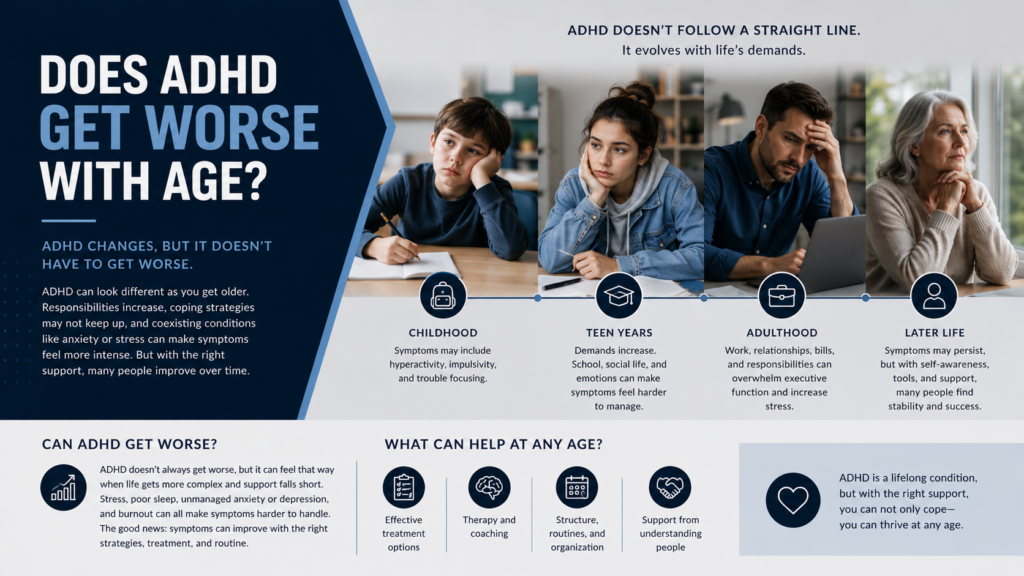
ADHD itself does not normally become more severe as people age. However, many adults feel like their symptoms are getting worse because life becomes much more complicated.
As children, parents and teachers often provide reminders and structure. As adults, people must manage:
- Careers
- Bills
- Parenting
- Relationships
- Household responsibilities
- Financial planning
- Health care
These added responsibilities require strong executive functioning skills. Since ADHD affects these skills, symptoms may become more noticeable.
Instead of ADHD getting worse, the demands of everyday life often increase.
Why ADHD Can Feel Worse Over Time
More Daily Responsibilities
Children usually have adults helping them stay on schedule. Adults must create their own routines.
Managing multiple responsibilities at once can make ADHD symptoms stand out more than they did during childhood.
Less External Structure
School often provides predictable routines.
Adult life usually has fewer built-in schedules. Without structure, staying organized becomes harder.
Higher Stress Levels
Stress can make ADHD symptoms feel stronger.
High levels of stress may lead to:
- Poor concentration
- More forgetfulness
- Increased impulsive behavior
- Emotional frustration
Managing stress is an important part of ADHD treatment.
Sleep Problems
Many adults with ADHD struggle with sleep.
Poor sleep can increase:
- Inattention
- Hyperactivity
- Irritability
- Memory problems
- Poor decision-making
Improving sleep habits often helps reduce symptoms.
How ADHD Symptoms Change With Age
Childhood
Children often show:
- Running around constantly
- Interrupting others
- Trouble sitting still
- Difficulty following instructions
- Poor attention in school
Teachers are often the first to notice these behaviors.
Teen Years
During adolescence, symptoms may change.
Teens may experience:
- Poor organization
- Trouble completing homework
- Emotional ups and downs
- Risk-taking behaviors
- Difficulty planning ahead
School becomes more challenging, making ADHD easier to notice.
Adulthood
Adults usually experience different symptoms than children.
Common adult ADHD symptoms include:
- Forgetting appointments
- Missing deadlines
- Difficulty managing time
- Trouble staying focused during meetings
- Disorganization
- Emotional overwhelm
- Procrastination
Hyperactivity often becomes less physical and more internal. Instead of running around, adults may feel mentally restless.
Executive Function and ADHD
Executive function refers to the brain’s ability to plan, organize, prioritize, remember, and complete tasks.
People with ADHD often struggle with executive functioning.
This may affect:
Time Management
Many adults underestimate how long tasks take.
They may:
- Arrive late
- Miss appointments
- Feel rushed
- Forget deadlines
Organization
Keeping paperwork, schedules, and daily routines organized can be difficult.
Small tasks may pile up over time.
Working Memory
Working memory helps people remember information while completing tasks.
People with ADHD may forget:
- Directions
- Conversations
- Phone numbers
- Shopping lists
- Daily responsibilities
Can ADHD Improve With Age?
Yes.
Some people notice that certain ADHD symptoms improve over time.
Hyperactivity often decreases during adulthood.
Many adults also develop helpful coping strategies, including:
- Using calendars
- Setting reminders
- Creating routines
- Breaking large tasks into smaller steps
- Working with therapists
- Taking prescribed medication
Learning new skills can make ADHD much easier to manage.
Factors That Can Make ADHD Feel Worse
Several conditions can increase ADHD symptoms.
Anxiety Disorders
Anxiety and ADHD often occur together.
Constant worry makes concentration even harder.
Depression
Depression can reduce motivation, energy, and focus.
When depression occurs alongside ADHD, symptoms may feel much more severe.
Chronic Stress
Stress affects memory, attention, and decision-making.
Reducing stress often improves ADHD symptoms.
Hormonal Changes
Hormones may influence ADHD symptoms.
Some women notice changes during:
- Pregnancy
- Menopause
- Monthly menstrual cycles
Hormonal changes may temporarily affect focus and emotional regulation.
Aging Brain Changes
Normal aging may affect memory and attention.
These changes can overlap with ADHD symptoms, making it difficult to tell them apart.
Can Untreated ADHD Become More Difficult?
Yes.
While ADHD itself may not worsen, untreated ADHD can create challenges over time.
These may include:
- Job difficulties
- Financial problems
- Relationship conflicts
- Lower self-esteem
- Anxiety
- Depression
Getting treatment early often helps prevent these problems from growing.
How ADHD Is Diagnosed
A licensed mental health professional evaluates ADHD using several tools.
The evaluation may include:
- Medical history
- Symptom review
- Family history
- Behavior questionnaires
- Interviews
- DSM-5 diagnostic criteria
There is no single blood test or brain scan that diagnoses ADHD.
A complete evaluation helps rule out other conditions that may cause similar symptoms.
Treatment Options for ADHD
The good news is that ADHD is highly treatable.
Many people improve with a combination of treatments.
Medication
Medication may improve:
- Focus
- Attention
- Impulse control
- Executive functioning
Common medications include stimulant and non-stimulant options.
A healthcare provider helps determine which medication is appropriate.
Cognitive Behavioral Therapy (CBT)
CBT teaches practical skills for managing ADHD.
People learn how to:
- Stay organized
- Manage stress
- Reduce negative thinking
- Build healthy habits
Lifestyle Changes
Healthy daily habits support brain function.
Helpful strategies include:
- Regular exercise
- Healthy nutrition
- Consistent sleep
- Daily routines
- Mindfulness exercises
Even small lifestyle changes can improve symptoms.
ADHD Coaching
Some adults benefit from ADHD coaching.
Coaches help people:
- Build routines
- Stay accountable
- Improve productivity
- Reach personal goals
Tips for Managing ADHD as You Age
Create Daily Routines
Doing the same tasks at the same time each day reduces forgetfulness.
Use Digital Reminders
Smartphones, calendars, and alarms help keep important tasks on track.
Break Large Tasks Into Small Steps
Big projects often feel overwhelming.
Completing one small step at a time makes progress easier.
Prioritize Sleep
Aim for consistent sleep every night.
Better sleep supports attention, memory, and emotional health.
Exercise Regularly
Physical activity supports dopamine production and improves focus.
Walking, swimming, cycling, and strength training are all helpful options.
Ask for Support
Working with a therapist, psychiatrist, or ADHD specialist can make managing symptoms much easier.
Support from family and friends also plays an important role.
When Should You Seek Professional Help?
Consider speaking with a mental health professional if ADHD symptoms:
- Affect your work performance
- Harm relationships
- Cause frequent stress
- Lead to anxiety or depression
- Make daily tasks difficult
- Prevent you from reaching your goals
Early treatment often leads to better long-term outcomes.
The Outlook for Adults With ADHD
Living with ADHD does not mean life will become harder every year.
Many adults successfully manage ADHD by learning new skills, following treatment plans, and creating supportive routines.
With the right care, people with ADHD often build successful careers, healthy relationships, and fulfilling lives.
The key is recognizing symptoms early and getting professional support when needed.
Final Thoughts
So, does ADHD get worse with age? Usually, the answer is no. ADHD itself does not normally become more severe over time. However, increasing responsibilities, stress, sleep problems, and other mental health conditions can make symptoms feel more noticeable.
The good news is that ADHD is highly treatable. Therapy, medication, healthy habits, and strong support systems can help people manage symptoms at every stage of life. If ADHD is affecting your daily life, reaching out to a qualified mental health professional is an important first step toward better focus, improved organization, and greater overall well-being.
Frequently Asked Questions
Does ADHD always get worse as you get older?
No. ADHD usually does not become more severe with age. Many adults simply notice their symptoms more because work, family, and other responsibilities increase.
Why does my ADHD seem worse in adulthood?
Adult life often requires stronger organization, time management, and planning skills. These demands can make ADHD symptoms feel more noticeable.
Can ADHD improve without medication?
Some people improve through therapy, healthy routines, exercise, sleep, and organizational strategies. Others benefit from combining these approaches with medication.
At what age are ADHD symptoms strongest?
Symptoms vary from person to person. Hyperactivity is often strongest during childhood, while attention and executive functioning challenges may become more noticeable during adulthood.
Is it ever too late to get treatment for ADHD?
No. Adults of all ages can benefit from ADHD evaluation and treatment. Many people receive their first diagnosis later in life and experience meaningful improvements after beginning treatment.