
Outpatient therapy can help many people manage mental health symptoms while living at home. But sometimes, one or two therapy visits each week are not enough support. If symptoms keep getting worse, daily life feels unsafe, or a person cannot function well at home, school, or work, a higher level of care may be needed. Residential mental health treatment can provide more structure, support, and daily care for people who need help beyond regular outpatient therapy.
Knowing when outpatient therapy is not enough can help you make a safer and more informed treatment choice.
What Is Outpatient Therapy?
Outpatient therapy is mental health treatment that does not require a person to live at a treatment center. A person goes to scheduled appointments and returns home afterward.
What Happens During Outpatient Mental Health Treatment?
Outpatient treatment may include:
Individual therapy
Group therapy
Family therapy
Medication management
Psychiatric appointments
Cognitive behavioral therapy (CBT)
Trauma-focused therapy
Mental health education
Coping skills training
Some people attend therapy once a week. Others may have several appointments each week.
Outpatient care often works well for people who are medically stable, can stay safe at home, and are able to use healthy coping skills between appointments.
However, mental health needs can change. A treatment plan that worked in the past may not provide enough support during a serious mental health crisis.
When Is Outpatient Therapy Not Enough?
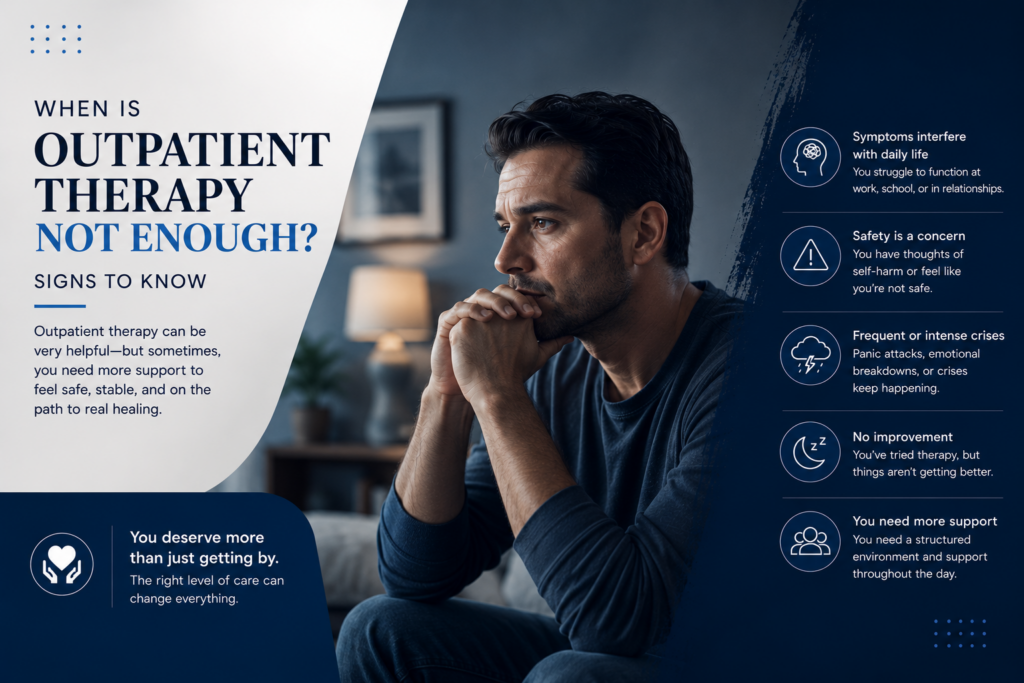
Outpatient therapy may not be enough when mental health symptoms become too severe to manage between appointments.
A person may need a higher level of care if symptoms are affecting safety, daily tasks, relationships, sleep, eating habits, work, or school.
There is no single sign that applies to everyone. Mental health professionals look at the full picture before suggesting a different level of treatment.
Symptoms Keep Getting Worse
One major warning sign is that symptoms continue to get worse even though the person is attending therapy.
For example, someone receiving treatment for depression may become more withdrawn, stop taking care of themselves, or struggle to leave bed.
A person with anxiety may begin avoiding work, school, driving, stores, or social situations because their fear has become too strong.
Worsening symptoms do not always mean therapy has failed. They may mean the person needs more treatment hours, a different treatment approach, medication changes, or a more structured setting.
Daily Life Has Become Hard to Manage
Mental health conditions can make everyday tasks harder.
A higher level of mental health care may be needed when a person has trouble handling basic daily activities.
Problems With Basic Self-Care
Warning signs can include:
Not showering or changing clothes
Not eating enough
Eating in an unhealthy or unsafe way
Sleeping most of the day
Going several nights without enough sleep
Forgetting medications
Missing important medical appointments
Living in unsafe conditions
These changes can happen with conditions such as major depressive disorder, bipolar disorder, schizophrenia, severe anxiety, and post-traumatic stress disorder.
When basic self-care begins to break down, weekly outpatient appointments may not offer enough support.
Work or School Is Becoming Impossible
Mental health symptoms can also affect concentration, motivation, memory, and decision-making.
A person may start missing work or school often.
They may have trouble finishing simple tasks or following normal routines.
Signs That Functioning Is Getting Worse
Examples include:
Repeatedly calling out of work
Missing classes
Falling behind on assignments
Losing a job because of symptoms
Being unable to focus
Feeling too overwhelmed to leave home
Having panic attacks during normal activities
Struggling to communicate with coworkers or classmates
When mental health symptoms stop someone from functioning in important areas of life, more intensive treatment may help stabilize those symptoms.
There Are Serious Safety Concerns
Safety is one of the most important factors when deciding on a level of mental health care.
If a person may hurt themselves or another person, they may need immediate professional evaluation rather than routine outpatient therapy.
Suicidal Thoughts Need Serious Attention
Thoughts about suicide can range from feeling that life is not worth living to making plans to die.
Any suicidal thoughts should be taken seriously.
A mental health professional can assess the level of risk and determine what type of care is appropriate.
People at immediate risk may require emergency or hospital care before moving into another treatment program.
Residential treatment is not the same as emergency psychiatric hospitalization. Residential programs generally serve people who are stable enough to participate in ongoing treatment but still need more support than outpatient care provides.
Mental Health Crises Keep Happening
Some people improve after outpatient appointments but repeatedly fall back into crisis between sessions.
This cycle may look like:
therapy appointment → short period of relief → symptoms increase → crisis → another appointment.
When this happens over and over, there may be too much time between periods of professional support.
More Structure May Help Break the Cycle
A structured treatment setting provides more opportunities to practice coping strategies with support nearby.
Instead of trying a new skill alone at home, a person may be able to work with therapists and other mental health professionals throughout the day.
That added structure can help identify triggers and unhealthy behavior patterns that may be difficult to see during weekly therapy.
Outpatient Therapy Has Been Tried Without Enough Improvement
Mental health treatment often takes time.
A few appointments without major improvement do not automatically mean outpatient therapy is not working.
However, treatment should be reviewed when someone has consistently attended outpatient therapy but remains severely impaired.
Questions a Treatment Team May Consider
A mental health provider may ask:
Are symptoms improving?
Can the person function safely at home?
Are medications helping?
Is the person attending appointments?
Are symptoms interfering with basic needs?
Has treatment reduced crisis situations?
Does the home environment support recovery?
Would daily clinical support be helpful?
Answers to these questions can help determine whether outpatient care remains appropriate.
The Home Environment Makes Recovery Harder
A safe and stable home can play a major role in mental health recovery.
Unfortunately, not every person has that type of environment.
Stress at Home Can Affect Treatment
Recovery may become harder when home includes:
Constant conflict
Emotional stress
Substance use
Abuse
Little privacy
Unstable housing
People who do not support treatment
Easy access to unhealthy triggers
Someone may understand coping skills during therapy but struggle to use them when they return to a stressful environment.
Residential care temporarily removes some outside pressures so the person can focus more closely on treatment and stabilization.
Severe Depression May Need More Support
Depression exists on a wide range.
Some people experience mild symptoms while others struggle with severe major depressive disorder.
Signs Depression May Require Intensive Treatment
More support may be needed when depression leads to:
Severe isolation
Hopelessness
Loss of interest in almost everything
Major sleep problems
Difficulty eating
Poor hygiene
Inability to work or attend school
Frequent thoughts about death
Trouble getting out of bed
Severe loss of motivation
A mental health treatment team can determine which level of care provides the safest environment.
Treatment may involve therapy, psychiatric support, medication management, healthy routines, and help rebuilding daily functioning.
Severe Anxiety Can Limit Daily Life
Anxiety disorders can make ordinary activities feel dangerous.
A person may begin avoiding more and more situations until their world becomes very small.
Anxiety Can Become Disabling
Someone with severe anxiety may stop:
Driving
Going to stores
Attending work
Going to school
Meeting friends
Leaving the house
Attending medical appointments
Panic attacks may also occur often.
Outpatient anxiety treatment can be very effective, but severe symptoms sometimes require more frequent therapeutic support before regular outpatient care becomes manageable again.
Trauma and PTSD Symptoms Can Become Overwhelming
Post-traumatic stress disorder can affect the nervous system, thoughts, emotions, sleep, and relationships.
People living with PTSD may experience flashbacks, nightmares, avoidance, emotional numbness, anxiety, or hypervigilance.
Trauma Symptoms May Affect Safety and Functioning
More intensive care may be considered when trauma symptoms make it difficult to function in daily life.
A structured treatment setting can provide consistent support while a person learns grounding techniques, emotional regulation skills, healthy routines, and ways to respond to trauma triggers.
Trauma treatment should move at a safe pace based on each person’s needs.
Mania or Psychosis May Require a Higher Level of Care
Certain symptoms require close attention because they may affect a person’s ability to understand what is happening around them.
Mania may involve extremely high energy, very little sleep, impulsive decisions, racing thoughts, or risky behavior.
Psychosis may involve hallucinations, delusions, severe confusion, or difficulty separating thoughts from reality.
These Symptoms Need Professional Evaluation
A person experiencing severe mania or psychosis may require urgent psychiatric evaluation.
Depending on the severity of symptoms and safety concerns, hospitalization could be needed first.
After stabilization, a residential or other structured program may help continue treatment before the person returns to regular outpatient therapy.
What Is a Higher Level of Mental Health Care?
Mental health care exists on a range of intensity.
The right level depends on symptoms, safety, functioning, medical needs, and the person’s support system.
Intensive Outpatient Programs
An intensive outpatient program, often called an IOP, provides more treatment hours than regular weekly therapy.
People usually live at home while attending treatment several days each week.
Partial Hospitalization Programs
A partial hospitalization program, or PHP, usually provides treatment for several hours each day.
The person may return home or to supportive housing at night.
Residential Mental Health Treatment
Residential treatment provides 24-hour living support in a treatment environment.
People stay at the program while participating in scheduled therapy, psychiatric services, wellness activities, and structured daily routines.
Residential care can create distance from outside stress while allowing treatment to become the main focus.
Psychiatric Hospitalization
Psychiatric hospitals provide the highest level of short-term mental health support for many serious crises.
Hospitalization may be needed when there is an immediate safety concern or severe psychiatric instability.
The goal is often stabilization before moving to a lower level of care.
What Happens in Residential Mental Health Treatment?
Residential care provides more than additional therapy appointments.
It creates a structured environment focused on mental health recovery.
A Personalized Treatment Plan
Treatment usually begins with an assessment.
Clinicians review symptoms, treatment history, medications, physical health, daily functioning, family needs, and recovery goals.
A care plan may then include:
Individual therapy
Group therapy
Family support
Medication management
Psychiatric care
CBT
DBT skills
Trauma-informed therapy
Mindfulness
Healthy sleep routines
Nutrition support
Stress management
Relapse prevention
Life skills
Treatment should be adjusted as the person’s needs change.
How Long Does Someone Need a Higher Level of Care?
There is no exact treatment length that works for every person.
Some people need intensive support for a shorter period. Others may benefit from longer treatment.
Progress Matters More Than a Set Number of Days
Mental health professionals may look at whether a person can:
Manage symptoms
Stay safe
Follow a daily routine
Use healthy coping tools
Manage medications correctly
Communicate needs
Handle emotional triggers
Return to work, school, or family responsibilities
The goal is not simply to finish a certain number of treatment days.
The goal is to build enough stability and coping ability to succeed at the next level of care.
How Do You Know Which Level of Care Is Right?
You do not have to make this decision alone.
A licensed mental health professional can complete an assessment and recommend an appropriate level of care.
Be Open About What Is Really Happening
When speaking with a therapist or treatment provider, share as much information as possible about:
Current symptoms
Suicidal thoughts
Self-harm
Sleep
Eating habits
Medication use
Substance use
Work or school problems
Family stress
Previous treatment
Recent mental health crises
Accurate information helps clinicians recommend safer and more effective treatment.
Moving to More Care Does Not Mean Outpatient Therapy Failed
Needing more support does not mean treatment was useless.
Mental health care often changes as symptoms change.
A person may move from outpatient therapy into residential care and later return to outpatient treatment when they become more stable.
Treatment Can Move Up and Down in Intensity
Think of mental health care as a ladder.
Sometimes a person needs to move up to a more supportive level. As symptoms improve, they can move back down.
Outpatient therapy often remains an important part of long-term care after residential treatment.
The goal is always to provide the right amount of help at the right time.
When to Consider Revival Mental Health
If regular therapy is no longer helping enough, a professional assessment can help determine what type of support may be appropriate.
Revival Mental Health provides structured mental health treatment designed to address the whole person. Care may focus on emotional health, behavior patterns, relationships, daily routines, coping skills, and long-term wellness.
Seeking more support early may prevent symptoms from becoming even harder to manage.
The right treatment setting can give a person more time, structure, and professional support to work toward greater stability.
FAQs About When Outpatient Therapy Is Not Enough
How do I know if weekly therapy is not enough?
Weekly therapy may not be enough if symptoms continue getting worse, you cannot manage normal daily tasks, crises happen often, or you feel unable to stay stable between appointments. A mental health professional can evaluate your symptoms and recommend a level of care.
Does needing residential treatment mean my mental health is severe?
Residential treatment is often used when symptoms require more structure and support than outpatient care can provide. The need for residential care depends on safety, functioning, symptoms, home support, and previous treatment results rather than one diagnosis alone.
Can I return to outpatient therapy after residential treatment?
Yes. Many people return to outpatient therapy after completing a higher level of care. Outpatient treatment can help maintain progress, continue therapy, manage medication, and provide long-term support.
What is the difference between outpatient and residential mental health treatment?
Outpatient therapy allows you to live at home and attend scheduled appointments. Residential mental health treatment involves living in a structured treatment environment where support and therapeutic services are available throughout the day.
When should someone seek immediate mental health help?
Immediate help may be needed when someone is in danger of harming themselves or another person, cannot stay safe, has severe psychosis or mania, or is experiencing another serious psychiatric crisis. Emergency evaluation may be more appropriate than routine outpatient or residential admission in these situations.
Finding the Right Level of Mental Health Support
Knowing when outpatient therapy is not enough can be an important part of protecting mental health and preventing symptoms from getting worse.
Outpatient therapy can be very helpful, but it is only one level of mental health care. Severe symptoms, repeated crises, difficulty with basic daily life, an unsafe home environment, or limited progress may signal that additional support is needed.
A professional mental health assessment can help determine whether outpatient therapy, intensive outpatient treatment, partial hospitalization, residential mental health treatment, or another level of care is appropriate.
Revival Mental Health can help people and families explore treatment options and find a level of support that matches their current mental health needs.