
Many people feel scared when they have shortness of breath. It can feel like you cannot get enough air or take a deep breath. Sometimes this happens because of an anxiety disorder or panic attacks. Other times, it may be caused by physical health problems.
Knowing how to tell if shortness of breath is from anxiety can help you feel calmer and know when to seek medical attention. Anxiety can cause many physical symptoms that feel very real. The good news is that treatment, breathing exercises, and support from a mental health professional can help many people manage anxiety and feel better.
If you struggle with anxiety symptoms often, getting help through anxiety treatment may improve your daily life and emotional health.
What Does Anxiety Shortness of Breath Feel Like?
Anxiety related shortness can feel different for each person. Some people notice shallow breathing or rapid breathing. Others feel chest tightness, chest pain, or heart palpitations.
You may feel like:
You cannot get enough air
Your chest feels heavy
You need to keep taking a deep breath
Your breathing patterns feel fast
Your throat feels tight
You feel dizzy or shaky
You feel anxious suddenly
These physical and psychological symptoms are common during an anxiety attack or panic attacks.
Why Anxiety Affects Breathing
When you feel stress or fear, your body activates the fight or flight response. This response helps protect you during danger. Your nervous system releases stress hormones like adrenaline and cortisol.
These stress hormones can cause:
Rapid breathing
Muscle tension
Increased blood pressure
Chest tightness
Sweating
Heart palpitations
The body starts chest breathe patterns instead of slow belly breathing. This may lower carbon dioxide levels and make you feel lightheaded or unable to breathe normally.
Even though it feels scary, anxiety affects the body in ways that are usually not dangerous.
Signs Your Shortness of Breath May Be From Anxiety
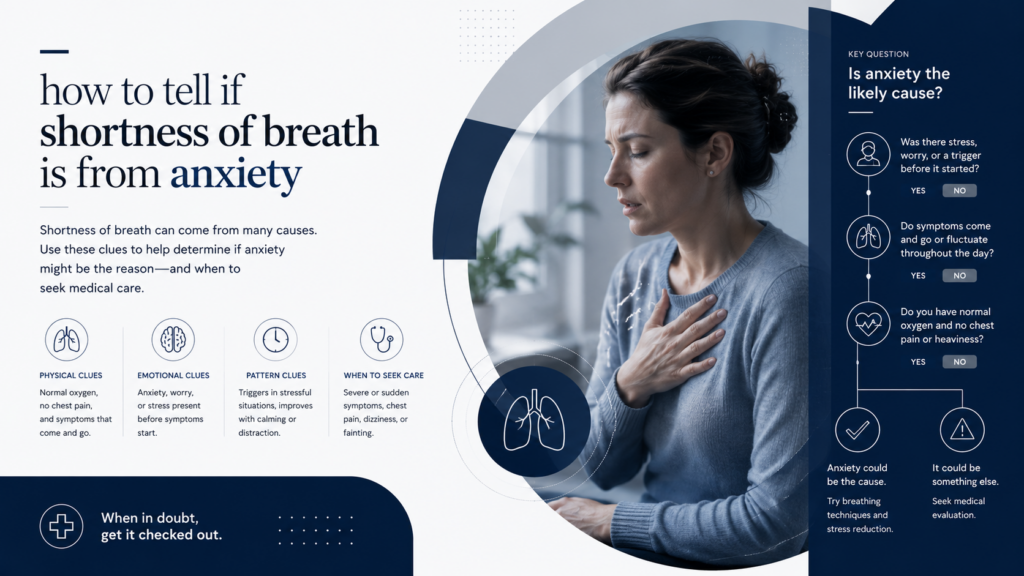
Symptoms Start During Stress or Extreme Worry
Many people notice difficulty breathing during a stressful event or times of extreme worry. Trigger anxiety can come from:
School stress
Work problems
Interpersonal and familial conflicts
Financial stress
Big life changes
Fear about physical health
If symptoms happen during emotional stress, anxiety may be the cause.
Symptoms Improve When You Calm Down
Shortness of breath caused by lung disease or chronic diseases often does not improve quickly with relaxation techniques.
Anxiety symptoms may get better when you:
Breathe slowly
Use grounding techniques
Perform diaphragmatic breathing
Practice deep breathing exercises
Sit quietly
Other Emotional Symptoms Are Present
Psychological symptoms often happen with anxiety related shortness of breath.
You may also notice:
Fear
Panic
Racing thoughts
Feeling out of control
Irritability
Trouble focusing
Chronic anxiety
You Feel Chest Tightness Instead of Sharp Pain
Chest tightness is common with anxiety attacks. Some people also feel extremely painful chest heaviness. While anxiety can cause chest pain, severe or sudden chest pain should always be checked by a healthcare provider.
When Shortness of Breath May Be Something Else
Not all breathing problems come from mental health conditions. Some medical conditions can also cause difficulty breathing.
These may include:
Chronic obstructive pulmonary disease
Lung disease
Asthma
Heart problems
Chronic diseases
Infections
Physical dependence from substances
Physical symptoms from health problems may happen during strenuous physical activity or even while resting.
When to Seek Medical Attention
It is important to know when to seek medical attention or seek emergency care.
Get medical attention right away if you have:
Severe chest pain
Blue lips
Fainting
Trouble speaking
Sudden breathing problems
High fever
Confusion
Symptoms after injury
These could be signs of a medical emergency.
Underlying health issues should never be ignored. A healthcare provider can help rule out serious physical health conditions.
How Anxiety Changes Breathing Patterns
People with anxiety often develop shallow breathing habits. Instead of breathing deeply through the diaphragm, they breathe from the upper chest.
This can lead to:
Chest tightness
Feeling dizzy
Fast heartbeat
Muscle tension
Feeling like you cannot get enough air
Over time, chronic anxiety can make breathing feel harder even when there is no danger.
Deep Breathing Can Help Calm Anxiety
One of the best coping strategies is learning healthy breathing exercises.
Deep breathing helps activate the parasympathetic nervous system. This is the part of the nervous system that helps the body relax.
When you breathe slowly, your body may:
Reduce anxiety
Lower blood pressure
Relax tense muscles
Improve oxygen flow
Create immediate relief
How to Practice Diaphragmatic Breathing
Diaphragmatic breathing is also called belly breathing. It helps you breathe deeply instead of chest breathe.
Steps to Perform Diaphragmatic Breathing
Sit or lie down comfortably
Put one hand on your chest
Put the other hand on your stomach
Take a deep breath through your nose
Let your abdominal muscles rise
Exhale slowly through your mouth
Repeat several times
Try to exhale slowly repeat the pattern for several minutes.
This breathing method may help you feel calmer and get more oxygen into your body.
What Is Pursed Lip Breathing?
Pursed lip breathing is another helpful breathing exercise.
How to Do Pursed Lip Breathing
Inhale slowly through your nose
Purse your lips tightly exhale slowly
Breathe out longer than you breathed in
Keep your shoulders relaxed
Pursed lips help slow rapid breathing and improve breathing control.
This technique is often used by people with chronic obstructive pulmonary disease, but it can also help during anxiety attacks.
Try Box Breathing for Anxiety Relief
Box breathing is a simple tool used to calm the body.
Steps for Box Breathing
Breathe in for 4 seconds
Hold for 4 seconds
Exhale slowly for 4 seconds
Hold again for 4 seconds
Repeat this cycle several times.
Box breathing can help calm physical senses and improve current physical sensations during stress.
Grounding Techniques for Anxiety
Grounding techniques help bring attention back to the present moment.
Some examples include:
Holding ice
Naming objects around you
Listening to calming sounds
Feeling textures
Focusing on physical senses
Grounding may reduce emotional symptoms and help stop panic attacks from getting worse.
Progressive Muscle Relaxation for Anxiety
Progressive muscle relaxation helps relax tense muscles caused by anxiety.
How It Works
You tighten and relax different muscle groups slowly.
This can help with:
Muscle tension
Chest tightness
Chronic anxiety
Difficulty breathing
Combining progressive muscle relaxation with deep breathing exercises may improve relaxation.
How Therapy Can Help Anxiety Breathing Problems
A mental health professional can help you understand why anxiety affects your body.
Treatment options may include:
Talk therapy
Cognitive behavioral therapy
Relaxation techniques
Coping strategies
Cognitive behavioral therapy helps people change unhealthy thought patterns connected to fear and anxiety.
A strong patient therapist relationship can also help people feel supported during recovery.
Healthy Lifestyle Habits That Support Mental Health
Healthy habits may improve mental health and lower stress hormones.
Helpful habits include:
Eating a healthy diet
Getting enough sleep
Exercising regularly
Drinking enough water
Avoiding too much caffeine
Spending time outdoors
Taking care of physical health may also improve emotional symptoms and breathing problems.
Anxiety and Panic Attacks Can Feel Scary
Panic attacks can happen suddenly and feel intense. Many people think they are having a heart attack.
Symptoms may include:
Rapid breathing
Chest pain
Heart palpitations
Sweating
Dizziness
Fear of dying
Chest tightness
Even though panic attacks feel dangerous, they usually pass within minutes.
Learning breathing exercises and coping strategies can help you feel more in control.
How to Reduce Anxiety Long Term
Managing anxiety takes time, but treatment can help.
Ways to reduce anxiety include:
Practicing deep breathing daily
Using grounding techniques
Going to therapy
Managing stress
Staying active
Building healthy routines
If anxiety symptoms affect your daily life, it may be time to talk with a mental health professional.
Final Thoughts
Learning how to tell if shortness of breath is from anxiety can help reduce fear and confusion. Anxiety can create strong physical symptoms like rapid breathing, chest tightness, shallow breathing, and heart palpitations.
Still, it is important to seek medical attention if symptoms feel severe or unusual. A healthcare provider can help rule out underlying health issues or a medical emergency.
With support, breathing exercises, talk therapy, and healthy coping strategies, many people learn to manage anxiety and feel safer in their bodies again.
FAQs
Can anxiety really cause shortness of breath?
Yes. Anxiety can trigger the fight or flight response, causing rapid breathing, chest tightness, and difficulty breathing.
How long does anxiety shortness of breath last?
It can last a few minutes or longer depending on stress levels and anxiety symptoms. Relaxation techniques may help symptoms improve faster.
Should I go to the hospital for anxiety breathing problems?
Seek emergency care if you have severe chest pain, fainting, blue lips, or signs of a medical emergency.
What breathing exercise works best for anxiety?
Many people find diaphragmatic breathing, box breathing, and pursed lip breathing helpful for calming the nervous system.
Can therapy help anxiety breathing problems?
Yes. Cognitive behavioral therapy and talk therapy can help reduce anxiety symptoms and improve coping strategies.