
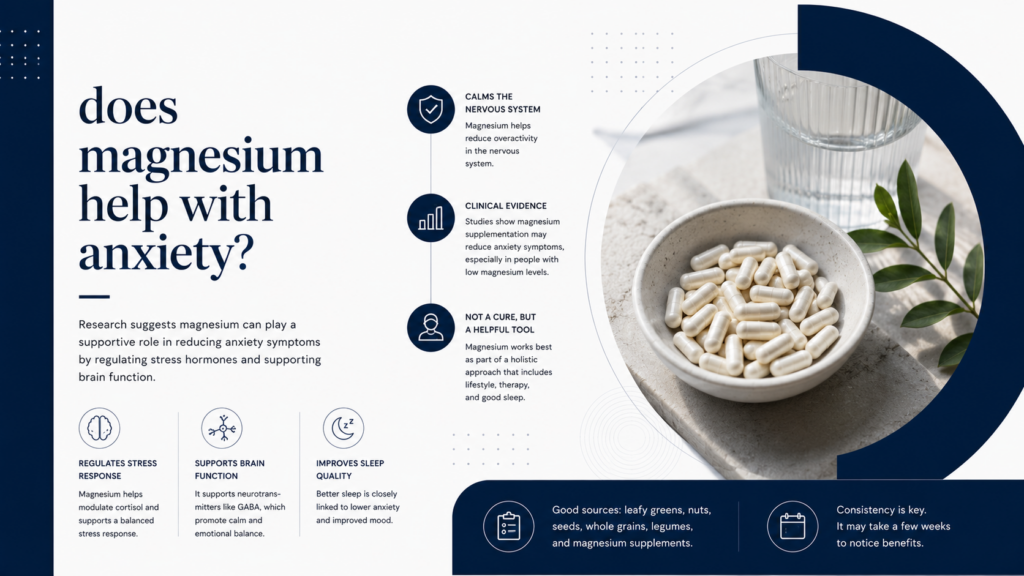
Many people ask, “does magnesium help with anxiety?” The answer may be yes for some people. Magnesium is one of the most important essential minerals in the body. It helps support the brain and nervous system, muscle function, energy production, and sleep quality. Some studies suggest that magnesium for anxiety may help reduce anxiety, improve sleep, and support better mental health.
If you struggle with worry, panic, or stress, getting help through anxiety treatment may also be important. A comprehensive treatment plan can help you find the root cause of your symptoms while learning healthy ways to manage stress and emotions.
What Is Magnesium?
Magnesium is a mineral found in foods and magnesium supplements. It plays a major role in hundreds of body functions. Magnesium plays a part in:
Brain health
Muscle function
Blood pressure
Energy production
Cognitive function
Sleep quality
Nervous system health
Blood vessels support
Your body needs enough magnesium every day to work correctly. Low magnesium levels may affect both anxiety and physical health.
Does Magnesium Help With Anxiety?
Research suggests magnesium may help with anxiety symptoms in some people. Magnesium can support calming effects in the brain and nervous system. It may help regulate stress hormones and support GABA activity, which helps the brain relax.
Some people notice anxiety relief after starting magnesium supplementation, especially if they have a magnesium deficiency.
How Magnesium May Reduce Anxiety
Magnesium help may come from several actions inside the body, including:
Helping control cortisol levels
Supporting healthy sleep
Promoting relaxation
Supporting mental clarity
Helping stabilize mood
Supporting the blood brain barrier
Lowering muscle tension
Supporting healthy blood pressure
People with chronic stress or acute stress may burn through more magnesium over time. This can make anxiety symptoms worse.
What Is Magnesium Deficiency?
A magnesium deficiency happens when the body does not have enough magnesium. Low magnesium levels can affect physical and mental health.
Signs of Magnesium Deficiency
Symptoms may include:
Muscle weakness
Muscle cramps
Trouble sleeping
Anxiety symptoms
Low energy
Mood changes
Severe anxiety
Mild anxiety
Poor cognitive function
Magnesium deficiency may also affect the nervous system and worsen anxiety symptoms over time.
Scientific Evidence About Magnesium for Anxiety
There is growing scientific evidence that magnesium supplementation may support anxiety relief for some people.
A systematic review of studies found that magnesium supplements may help people with mild anxiety, chronic stress, and trouble sleeping. Researchers believe magnesium affects the brain and nervous system by helping regulate stress hormones and GABA activity.
Still, magnesium is not a cure for anxiety disorders. Some people may need therapy, medication, lifestyle changes, or other treatments as part of a comprehensive treatment plan.
Best Forms of Magnesium for Anxiety
There are many forms of magnesium. Some may work better for anxiety and sleep support than others.
Magnesium Glycinate
Magnesium glycinate is one of the best forms for anxiety. It combines magnesium with an amino acid called glycine. Glycine may help promote relaxation and better sleep.
Many people choose magnesium glycinate because it is gentle on the stomach and may help improve sleep quality.
Magnesium L Threonate
Magnesium l threonate may support brain health and cognitive function. Some experts believe this form crosses the blood brain barrier more easily than other forms.
Magnesium l threonate may help with mental clarity and memory support.
Magnesium Taurate
Magnesium taurate combines magnesium with taurine, another amino acid. This form may help support blood vessels and heart health. It may also help people with high blood pressure or stress-related symptoms.
Magnesium Citrate
Magnesium citrate is commonly used because it absorbs well. Some people use magnesium citrate for magnesium supplementation and digestion support.
However, higher doses may cause loose stools.
Magnesium Oxide
Magnesium oxide is less expensive but may not absorb as well as other forms. It may also cause stomach discomfort in some people.
How Much Magnesium Should You Take?
People often ask how much magnesium they should take for anxiety relief. The amount depends on age, sex, diet, and health conditions.
A healthcare professional or healthcare provider can help determine the right amount for you.
Important Safety Tips
Do not take too much magnesium
Follow dosage instructions carefully
Avoid higher doses unless advised
Talk to a healthcare provider if you have kidney disease or kidney problems
Watch for side effects like loose stools
Excess magnesium can lead to problems like:
Low blood pressure
Nausea
Weakness
Irregular heartbeat
Too much magnesium may be dangerous for people with kidney disease because the body may not remove it correctly.
Can Magnesium Improve Sleep and Anxiety Together?
Yes, magnesium may help improve sleep and reduce anxiety at the same time. Many people with anxiety also have trouble sleeping.
Magnesium may help:
Improve sleep quality
Relax muscles
Lower muscle tension
Calm the nervous system
Promote relaxation
Support better sleep
Better sleep may also support better mental health overall.
Foods With Magnesium
You can also get more magnesium from food sources.
Foods Rich in Magnesium
Spinach
Almonds
Pumpkin seeds
Black beans
Avocados
Dark chocolate
Brown rice
Cashews
Eating foods with magnesium and other essential minerals may support overall brain health.
What Can Make Anxiety Worse?
Some habits and health conditions may worsen anxiety symptoms.
Common Anxiety Triggers
Chronic stress
Acute stress
Poor sleep
Caffeine intake
Alcohol use
Poor diet
Lack of exercise
Low magnesium levels
Reducing caffeine intake and improving sleep quality may help anxiety management.
Should You Combine Magnesium With Other Treatments?
Magnesium is often used as a natural treatment, but it should not replace medical care when anxiety is severe.
Many people combine magnesium with:
Therapy
Exercise
Meditation
Healthy sleep habits
Other supplements
Anxiety medication
A comprehensive treatment plan often works better than using only one method.
Can Magnesium Help Everyone?
Magnesium help may not work the same for everyone. Some people notice calming effects quickly, while others may not notice major changes.
People with severe anxiety may need additional mental health treatment and support.
A healthcare professional can help you decide if magnesium supplementation is right for your needs.
Magnesium and Women’s Health
Magnesium may also support women’s health. Hormone changes during pregnancy, menopause, or menstrual cycles can affect magnesium levels and stress hormones.
Some women take magnesium supplements to support:
Sleep quality
Mood balance
Muscle relaxation
Anxiety relief
Always speak with a healthcare provider before starting supplements during pregnancy.
When to Talk to a Healthcare Provider
You should speak with a healthcare provider if you have:
Severe anxiety
Panic attacks
Trouble sleeping often
High blood pressure
Low blood pressure
Kidney disease
Kidney problems
Ongoing mental health concerns
Professional support can help identify the root cause of anxiety symptoms.
Is Magnesium Good for Mental Health?
Magnesium good benefits may include support for better mental health, sleep, and mood. Magnesium plays an important role in the brain and nervous system.
Research continues to explore how magnesium supplementation affects anxiety, depression, stress, and cognitive function.
While magnesium is not a cure, it may help support anxiety relief when combined with healthy habits and proper treatment.
Final Thoughts
So, does magnesium help with anxiety? For some people, yes. Magnesium may help reduce anxiety, support better sleep, improve mental clarity, and calm the nervous system.
Magnesium glycinate, magnesium l threonate, magnesium taurate, magnesium citrate, and other forms of magnesium may offer different benefits. Still, it is important to avoid too much magnesium and work with a healthcare professional when starting magnesium supplementation.
If anxiety symptoms affect your daily life, getting professional support can help you build a safe and effective treatment plan for long-term healing.
FAQs
Does magnesium help with anxiety naturally?
Yes, magnesium may help with anxiety naturally by supporting the brain and nervous system, promoting relaxation, and helping regulate stress hormones.
What is the best magnesium for anxiety?
Many people prefer magnesium glycinate because it may support calm feelings and better sleep while being gentle on the stomach.
Can magnesium improve sleep quality?
Yes, magnesium may improve sleep quality by relaxing muscles and calming the nervous system.
Can too much magnesium be dangerous?
Yes, excess magnesium can cause low blood pressure, nausea, weakness, and other health problems, especially in people with kidney disease.
Should I take magnesium supplements every day?
Some people take magnesium supplements daily, but it is best to talk with a healthcare provider before starting long-term supplementation.