
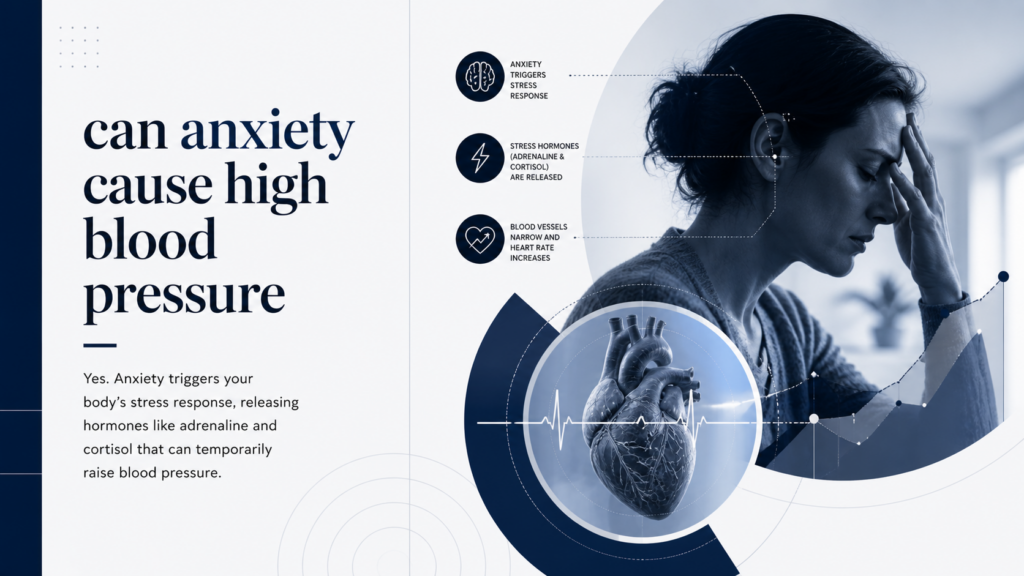
Many people wonder, can anxiety cause high blood pressure? The answer is yes. Anxiety can lead to short-term increases in blood pressure because the body reacts to stress and fear. If you often feel worried, tense, or nervous, your body may go into “fight or flight” mode. This can affect both your mental and physical health.
If anxiety is making daily life hard, getting professional help through anxiety treatment may improve both emotional and physical health. At Revival Mental Health, we understand how closely the mind and body work together.
How Anxiety Affects the Body
When people experience anxiety, the brain sends signals through the cardiovascular system. The body releases stress hormones like cortisol and adrenaline. These hormones prepare the body to respond to a perceived threat.
This causes:
- Faster heart rate
- Tightened blood vessels
- Faster breathing
- Sweating
- Muscle tension
- Temporary rises in blood pressure
During this process, anxiety may raise blood pressure for a short time. This is why many people notice blood pressure spikes during stressful moments.
Can Anxiety Cause High Blood Pressure Long Term?
Many studies show that anxiety can increase the risk of long-term health problems. While anxiety may not directly cause permanent high blood pressure in every person, chronic anxiety and chronic stress can increase the chances over time.
People with untreated anxiety disorders may:
- Have poor sleep
- Eat unhealthy foods
- Skip exercise
- Use alcohol or nicotine
- Feel stressed often
These lifestyle factors may increase the risk of cardiovascular disease, heart disease, and ongoing elevated blood pressure.
What Happens to Blood Pressure During Anxiety?
When anxiety occurs, the body reacts quickly. This may lead to:
- Higher systolic blood pressure
- Faster heartbeat
- Tense muscles
- Rapid breathing
The top number in a blood pressure reading is called systolic pressure. It measures pressure in the arteries when the heart beats.
People who are highly anxious may notice changes in their blood pressure readings during stressful situations. These increases are usually typically temporary, but frequent stress may affect overall cardiovascular health.
Anxiety and High Blood Pressure Symptoms
People dealing with anxiety and high blood pressure may notice many symptoms at once.
Physical Symptoms of Anxiety
Common physical symptoms include:
- Chest tightness
- Sweating
- Dizziness
- Racing heart
- Upset stomach
- Shaking
- Shortness of breath
Symptoms of High Blood Pressure
Many people with high blood pressure have no symptoms. However, severe cases may cause:
- Severe headache
- Blurry vision
- Chest pain
- Fatigue
- Nosebleeds
If symptoms are serious, seek medical care right away.
Can a Panic Attack Raise Blood Pressure?
Yes. A panic attack can quickly raise blood pressure because the body feels extreme fear or danger.
During a panic attack, the body experiences:
- Fast heart rate
- Intense fear
- Sweating
- Dizziness
- Shaking
- Tight chest
These strong physiological changes may lead to temporary anxiety related blood pressure increases.
Although panic attacks are scary, they are usually not life-threatening. Still, repeated panic attacks may affect both mental health and physical health.
What Is White Coat Syndrome?
Some people get nervous at the doctor’s office. This nervousness can cause higher blood pressure readings during appointments. This is called white coat syndrome or white coat hypertension.
A person may have:
- Normal pressure at home
- High readings during doctor visits
Because of this, doctors may recommend home blood pressure monitoring to compare readings outside the clinic.
What Is Masked Hypertension?
Masked hypertension is the opposite of white coat hypertension. A person may have normal readings at the doctor’s office but high readings at home or work.
Stress, anxiety, and daily pressure can sometimes contribute to this problem. This is why checking baseline blood pressure regularly is important.
How Chronic Stress Impacts the Heart
Long-term stress affects more than emotions. It can also affect the heart and artery walls.
Over time, chronic stress may:
- Increase inflammation
- Affect circulation
- Increase risk of heart attack
- Harm the cardiovascular system
- Make it harder to lower blood pressure
People who constantly experience anxiety may have a higher risk of developing long-term health problems.
Anxiety Disorders and Blood Pressure
People with generalized anxiety disorder and other mental health conditions often deal with constant worry and fear.
These conditions may lead to:
- Trouble sleeping
- Increased stress
- Racing thoughts
- Fear about health
- Increased blood pressure during stressful moments
Because anxiety affects the whole body, it is important to treat anxiety early.
How Managing Anxiety Can Help Blood Pressure
Learning healthy ways of managing anxiety may improve both emotional and physical wellness.
Deep Breathing Exercises
Simple deep breathing exercises can help calm the nervous system.
Try this:
- Breathe in slowly for 4 seconds
- Hold for 4 seconds
- Breathe out slowly for 6 seconds
Practicing deep breathing may help reduce anxiety, slow the heart rate, and lower blood pressure.
Lifestyle Changes That Support Heart Health
Healthy habits are important for both mental health and heart health.
Healthy Diet
A healthy diet may help manage blood pressure naturally.
Good foods include:
- Fruits
- Vegetables
- Whole grains
- Lean protein
- Low-salt foods
Healthy eating supports overall well being and may reduce stress on the heart.
Regular Exercise
Regular exercise helps improve mood and heart health.
Exercise can:
- Reduce stress
- Improve sleep
- Strengthen the heart
- Support healthy circulation
- Help manage anxiety levels
Even walking 30 minutes a day may improve cardiovascular health.
Quality Sleep
Getting quality sleep is important for emotional and physical recovery.
Poor sleep may:
- Increase anxiety
- Raise stress hormones
- Affect blood pressure
- Increase anxious thoughts
Good sleep habits can support better emotional balance and healthier blood pressure levels.
Can Untreated Anxiety Affect Long-Term Health?
Yes. Untreated anxiety may affect many areas of life.
Long-term anxiety may increase the risk of:
- Depression
- Heart problems
- Sleep disorders
- Digestive issues
- High blood pressure
- Reduced quality of life
When anxiety becomes severe, it can affect work, school, relationships, and daily routines.
How Health Care Providers Diagnose Blood Pressure Problems
Doctors use several tools to understand blood pressure concerns.
They may review:
- Family and health history
- Current symptoms
- Anxiety levels
- Blood pressure patterns
- Home readings
Multiple blood pressure readings are often needed before diagnosing ongoing high blood pressure.
Talk Therapy for Anxiety
Talk therapy is one of the most effective ways to treat anxiety.
Therapy can help people:
- Understand anxious thoughts
- Learn coping skills
- Manage stress
- Improve emotional states
- Build healthier habits
Cognitive behavioral therapy (CBT) is commonly used to help people with anxiety disorders.
Anti Anxiety Medications
Some people benefit from anti anxiety medications. These medicines may help calm the nervous system and reduce symptoms.
Medication may help people who:
- Have panic attacks
- Feel anxious daily
- Struggle with severe anxiety
- Cannot function normally
A licensed medical provider can help decide the best treatment approach.
When to Seek Medical Help
You should contact a doctor if you notice:
- Frequent high blood pressure readings
- Chest pain
- Severe anxiety
- Dizziness
- Fainting
- A severe headache
It is important to rule out other medical causes while also addressing anxiety.
Ways to Reduce Stress Every Day
Simple daily habits can help improve emotional balance and reduce blood pressure spikes.
Tips for Managing Stress
- Practice mindfulness
- Spend time outdoors
- Exercise regularly
- Limit caffeine
- Eat healthy foods
- Get good sleep
- Talk to supportive people
- Take breaks during stressful days
Small changes can make a big difference over time.
The Connection Between Mind and Body
The mind and body are deeply connected. Anxiety affects emotions, but it also affects the heart, breathing, muscles, and blood flow.
Understanding how stress and anxiety affect the body may help people take better care of themselves. Learning healthy coping skills can support both mental and physical wellness.
At Revival Mental Health, we believe treating anxiety early can improve overall health and quality of life.
FAQs About Anxiety and High Blood Pressure
Can anxiety cause high blood pressure every day?
Yes. Frequent anxiety and stress may lead to regular blood pressure increases, especially in people with chronic anxiety.
Are anxiety blood pressure spikes dangerous?
Short-term spikes are usually temporary, but repeated spikes over time may increase heart health risks.
Can deep breathing lower blood pressure?
Yes. Deep breathing may calm the nervous system, reduce stress hormones, and support healthier blood pressure levels.
What is white coat hypertension?
White coat hypertension happens when a person has higher blood pressure readings at the doctor’s office due to anxiety.
Should I treat anxiety if I have high blood pressure?
Yes. Managing anxiety may help improve emotional health and support healthier blood pressure control.