
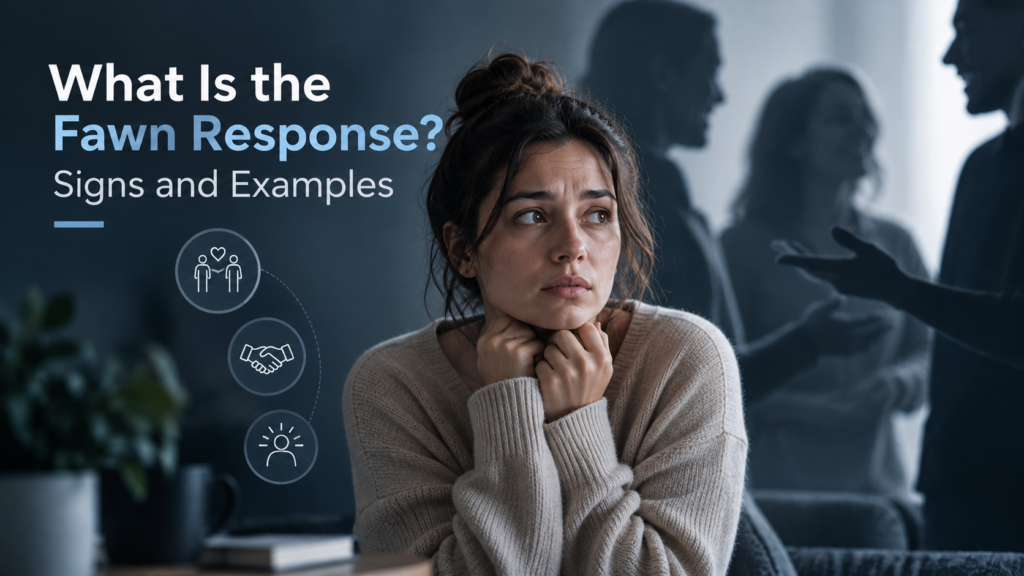
The fawn response is a stress response where a person tries to stay safe by pleasing, helping, or agreeing with others. Instead of fighting, running away, or freezing, someone may focus on keeping another person calm and happy. This pattern can sometimes develop after ongoing stress or trauma.
Understanding the fawn response can be an important part of learning how trauma affects emotions, relationships, and daily life. Professional trauma therapy in Orange County may help people understand these patterns and build healthier ways to feel safe.
What Is the Fawn Response?
The fawn response is a way the nervous system may react when a person feels threatened, unsafe, or afraid of conflict.
A person using this response may try to avoid danger by becoming very agreeable. They may put another person’s wants, feelings, or needs ahead of their own.
For example, someone may agree to something they do not want to do because they are afraid the other person will become angry.
The fawn response is often discussed with other trauma responses, including:
- Fight
- Flight
- Freeze
- Fawn
Each response is a way the body and brain may try to protect a person during stress.
What Does Fawning Mean?
Fawning means trying to create safety by pleasing another person.
This may include:
- Agreeing quickly
- Apologizing often
- Avoiding disagreement
- Helping others even when exhausted
- Ignoring personal needs
- Changing opinions to match others
- Trying to prevent someone from becoming upset
In some situations, this behavior may have helped a person feel safer in the past.
Over time, however, it can become an automatic habit that affects relationships, confidence, and emotional health.
Why Does the Fawn Response Happen?
The fawn response may develop when a person learns that keeping others happy reduces conflict or danger.
The brain is built to notice threats. When it senses danger, the autonomic nervous system can trigger a survival response before a person has time to think through the situation.
For some people, pleasing others may become one of those automatic responses.
Trauma and the Nervous System
Trauma can affect how the nervous system reacts to stress.
A person who has lived through repeated fear, criticism, neglect, emotional abuse, or unstable relationships may become very sensitive to signs of anger or rejection.
They may begin watching other people’s moods closely.
If another person seems upset, they may quickly try to fix the situation.
This is sometimes called hypervigilance. It means the brain stays alert for signs that something may go wrong.
Childhood Experiences
Some fawning patterns may begin during childhood.
For example, a child may learn to stay quiet, helpful, or agreeable if adults around them often become angry or unpredictable.
A child may think:
“If I keep everyone happy, I will be safe.”
That belief may continue into adulthood even after the original danger is gone.
Fear of Conflict
People with a strong fawn response may see conflict as dangerous.
Even small disagreements can create intense fear.
Instead of stating their needs, they may agree with others to avoid tension.
They may also feel guilty when they say no.
Common Signs of the Fawn Response
The fawn response can look different from person to person. However, certain patterns are common.
Saying Yes When You Want to Say No
One common sign is agreeing to things you do not actually want to do.
You may say yes because you are worried someone will become angry, disappointed, or upset.
This can happen with friends, family members, coworkers, or romantic partners.
Apologizing Too Much
Someone with a fawn response may apologize even when they have done nothing wrong.
Examples include:
- “Sorry for bothering you.”
- “Sorry for asking.”
- “Sorry you’re upset.”
- “Sorry I made things difficult.”
Frequent apologizing may become a way to prevent conflict.
Putting Other People’s Needs First
Helping others can be healthy.
However, fawning may cause a person to ignore their own basic needs.
They may cancel plans, lose sleep, spend money, or take on extra work because they fear disappointing someone.
Difficulty Setting Boundaries
Boundaries are limits that protect your time, energy, privacy, and well-being.
People who fawn may have trouble setting limits because they worry boundaries will cause rejection.
They may allow behavior that makes them uncomfortable because speaking up feels unsafe.
Changing Your Personality Around Others
A person with a fawn response may change the way they act based on who is around.
They may change their opinions, interests, or behavior to gain approval.
Over time, this can make it hard to know what they truly think or want.
Feeling Responsible for Other People’s Emotions
Another common sign is feeling responsible for keeping everyone happy.
If someone is angry, sad, or frustrated, a person who fawns may immediately assume they caused the problem.
They may rush to fix the other person’s mood.
Avoiding Disagreements
Healthy relationships include disagreements.
However, someone with a strong fawn response may avoid disagreements at almost any cost.
They may stay silent instead of expressing concerns.
They may also agree with opinions they do not believe.
Fawn Response Examples
Real-life examples can make the fawn response easier to understand.
Fawn Response in Relationships
A person may avoid telling their partner when something hurts their feelings.
Instead, they may say:
“It’s fine. Don’t worry about it.”
They may fear that sharing their true feelings could lead to anger, rejection, or abandonment.
Fawn Response at Work
An employee may constantly accept extra tasks even when their workload is already too high.
They may fear that saying no will make their boss dislike them or think they are not a good worker.
This pattern can lead to stress and burnout.
Fawn Response With Friends
Someone may always let friends choose where to eat, what to do, or how plans should work.
They rarely share their own preference because they are worried disagreement could damage the friendship.
Fawn Response During Conflict
Imagine someone raises their voice during an argument.
A person with a fawn response may immediately agree with the other person, apologize, or offer to fix the problem.
Their main goal becomes calming the situation.
Fawn Response vs People-Pleasing
The fawn response and people-pleasing can look similar, but they are not always the same.
People-pleasing is a broad behavior pattern. A person may want approval, avoid disappointing others, or enjoy being helpful.
The fawn response is more closely linked with feeling unsafe, threatened, or afraid of conflict.
The Main Difference
The key difference is often the feeling underneath the behavior.
With ordinary people-pleasing, someone may think:
“I want this person to like me.”
With a fawn response, the feeling may be closer to:
“I need this person to be happy so I can feel safe.”
That fear-based reaction can make fawning feel automatic.
How the Fawn Response Can Affect Mental Health
A fawn response may help someone get through stressful situations in the short term.
However, ongoing fawning can create problems over time.
Loss of Personal Identity
If you constantly focus on what others want, it may become difficult to understand your own needs.
You may struggle to answer simple questions such as:
- What do I enjoy?
- What do I believe?
- What makes me uncomfortable?
- What do I want from this relationship?
Building a stronger sense of self can be an important part of recovery.
Anxiety
Constantly watching other people’s emotions can create anxiety.
You may worry about saying the wrong thing or making someone upset.
This can keep the nervous system in a constant state of alert.
Low Self-Esteem
People who fawn may believe their value depends on how useful or agreeable they are.
They may feel unworthy when they are not helping someone.
Healthy self-esteem involves knowing that your needs and feelings matter too.
Relationship Problems
Fawning can create relationships that feel one-sided.
One person may constantly give while the other person receives.
Over time, resentment, exhaustion, or emotional distance can develop.
Is the Fawn Response a Trauma Response?
The fawn response is commonly discussed as a possible trauma-related survival pattern.
However, fawning by itself does not prove that someone has experienced trauma or has a mental health condition.
Many factors can affect behavior, including family patterns, personality, past relationships, stress, culture, and learned habits.
A mental health professional can help someone explore where these patterns come from.
How to Stop Fawning
Changing a long-term stress response usually takes time.
The goal is not to become less caring.
The goal is to learn that you can care about others while also protecting your own needs.
Notice Your Automatic Reactions
Start by noticing situations where you immediately agree, apologize, or try to fix someone’s emotions.
Ask yourself:
“Do I actually want to do this?”
Even pausing for a few seconds can create space between the stress response and your decision.
Practice Small Boundaries
You do not have to begin with major confrontations.
Try simple boundaries such as:
“I can’t do that today.”
“I need time to think about it.”
“I’m not available tonight.”
Small boundaries can help your nervous system learn that saying no does not always lead to danger.
Learn to Name Your Feelings
People who fawn may spend so much time tracking others that they stop noticing their own emotions.
Try asking yourself:
- Am I angry?
- Am I scared?
- Am I tired?
- Am I uncomfortable?
- What do I need right now?
Naming emotions can make them easier to understand and manage.
Build Tolerance for Disagreement
Disagreement does not always mean danger.
Healthy relationships allow people to have different opinions.
Practicing calm disagreement with safe people can help build confidence.
Give Yourself Time Before Answering
If someone asks you to do something, you do not have to answer right away.
You can say:
“Let me think about it.”
This gives you time to decide whether you truly want to agree.
How Trauma Therapy May Help With the Fawn Response
Trauma-informed therapy may help people understand why certain reactions developed and how those responses affect current life.
Treatment may focus on emotional awareness, boundaries, relationships, coping skills, and nervous system regulation.
Identifying Triggers
A therapist may help identify situations that activate the fawn response.
Triggers may include:
- Angry voices
- Criticism
- Relationship conflict
- Feeling rejected
- Authority figures
- Someone showing disappointment
Recognizing triggers can make automatic reactions easier to manage.
Building Healthy Boundaries
Therapy can also help people practice setting limits.
This may include learning how to communicate needs without excessive guilt or fear.
Learning Nervous System Regulation
Grounding, breathing exercises, mindfulness, and other coping strategies may help the nervous system settle after stress.
A calmer nervous system can make thoughtful choices easier.
Rebuilding Self-Trust
Fawning can make people doubt their own judgment.
Therapy may help someone learn to notice personal preferences, values, emotions, and needs.
Building self-trust can support healthier relationships.
When to Seek Help for a Fawn Response
You may want to speak with a mental health professional if fawning affects your relationships, work, emotional health, or ability to set boundaries.
Signs that extra support may help include:
- Constant fear of upsetting others
- Difficulty saying no
- Staying in unhealthy relationships
- Feeling responsible for everyone’s emotions
- Losing track of your own needs
- Severe anxiety during conflict
- Feeling emotionally exhausted from helping others
Professional support can help you understand these patterns without judgment.
The Fawn Response Can Change
The fawn response may have developed as a way to create safety.
That does not mean the pattern has to control your life forever.
With awareness, practice, healthy relationships, and professional support when needed, people can learn new ways to respond to stress.
The goal is not to stop caring about others.
The goal is to understand that your feelings, needs, boundaries, and safety matter too.
FAQs About the Fawn Response
What is the fawn response in simple terms?
The fawn response is a stress reaction where a person tries to stay safe by pleasing other people. They may agree, apologize, help, or avoid conflict even when they feel uncomfortable.
What are the main signs of a fawn response?
Common signs include excessive apologizing, trouble saying no, avoiding conflict, ignoring personal needs, changing opinions around others, and feeling responsible for other people’s emotions.
Is the fawn response the same as people-pleasing?
They can look similar, but they are not always the same. People-pleasing may involve wanting approval. The fawn response is often driven by fear, stress, or a need to feel safe.
Can the fawn response come from childhood trauma?
It can. Some people learn during childhood that being helpful, agreeable, or quiet reduces conflict. However, fawning alone does not prove that a person has experienced childhood trauma.
Can therapy help with the fawn response?
Yes. Trauma-informed therapy may help people identify triggers, build boundaries, understand emotions, regulate stress, and develop healthier relationship patterns.