
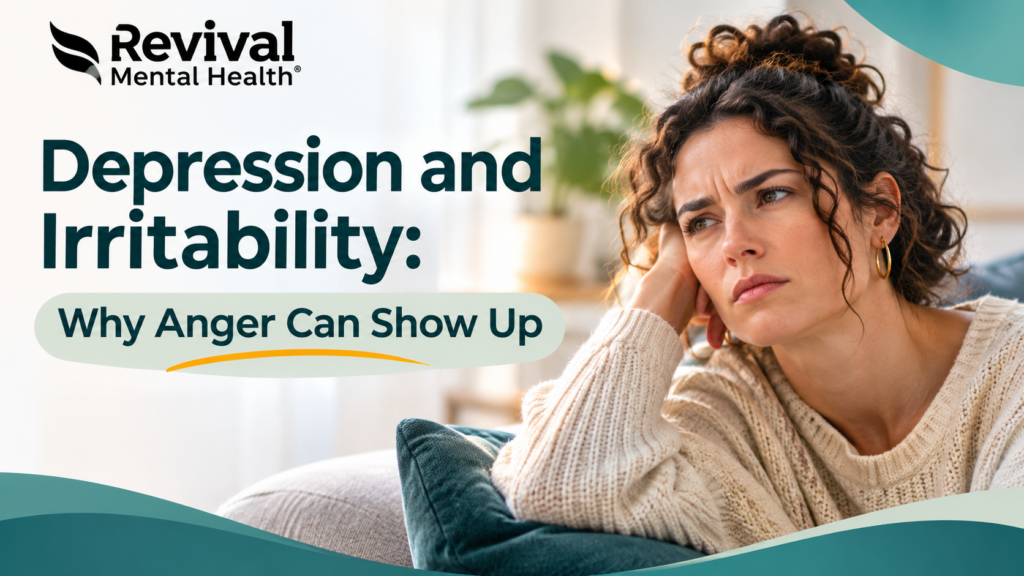
Depression does not always look like sadness. Sometimes, it shows up as anger, frustration, or feeling upset over small things. Depression and irritability often happen together, even when a person does not feel sad all the time.
You may snap at loved ones, lose patience quickly, or feel angry without knowing why. These feelings can be signs of a deeper mental health struggle.
If anger and mood changes are affecting your daily life, learning about depression treatment in Orange County can help you understand your options.
Knowing why depression causes irritability is an important first step toward feeling better.
Can Depression Cause Anger and Irritability?
Yes, depression can cause anger, irritability, and frustration. While many people connect depression with sadness, it can also change how someone responds to stress, people, and daily problems.
Depression is a mental health condition that affects mood, thoughts, energy, and behavior. It can make small problems feel much harder to handle.
The National Institute of Mental Health (NIMH) lists increased anger and irritability among the possible signs of depression.
People dealing with depression-related anger may experience:
Getting upset over small problems
Feeling annoyed by family or friends
Losing patience more often
Having sudden angry outbursts
Feeling frustrated without a clear reason
Becoming upset when plans change
Feeling guilty after getting angry
Wanting to avoid other people
Some people feel sad and angry at the same time. Others feel mostly frustrated, tired, or emotionally numb.
Not everyone who gets angry has depression. However, ongoing anger along with other depression symptoms may be a sign that mental health support is needed.
Why Does Depression Make You Irritable?
Depression can affect how the brain and body respond to stress. When someone is already feeling tired, overwhelmed, or hopeless, even simple tasks can seem difficult.
Several factors may explain the connection between depression and irritability.
1. Depression Can Make Stress Harder to Manage
Stress is part of everyday life. However, depression can make it harder to cope with normal challenges.
A small disagreement, a busy schedule, or an unexpected problem may feel overwhelming.
For example, someone with depression may become angry when asked to complete a simple task. The anger may come from feeling mentally exhausted rather than from the task itself.
When stress keeps building, frustration can become a common response.
2. Low Energy Can Lead to Frustration
Fatigue is one of the common symptoms of depression.
People with depression may feel tired even after sleeping. They may also struggle to finish daily tasks or stay focused.
When energy is low, patience may become limited.
Someone may feel irritated by loud noises, long conversations, or normal family activities.
This does not mean the person wants to be angry. Their mental and physical exhaustion may make it harder to respond calmly.
3. Sleep Problems Can Affect Your Mood
Depression often affects sleep.
Some people have trouble falling asleep. Others wake up during the night or sleep much longer than usual.
Poor sleep can make it harder to manage emotions.
Common sleep-related problems include:
Feeling tired throughout the day
Getting upset more easily
Having trouble concentrating
Feeling restless or tense
Becoming frustrated with others
When depression and sleep problems happen together, irritability may become more noticeable.
4. Feelings of Hopelessness Can Turn Into Anger
Depression can create feelings of hopelessness, guilt, or worthlessness.
A person may feel stuck or believe that nothing will improve.
These painful feelings can sometimes show up as anger.
For example, someone who feels disappointed in themselves may become frustrated when another person offers advice.
They may also become angry when they cannot complete tasks they once found easy.
The anger may be connected to sadness, shame, or feeling helpless.
5. Depression Can Affect Emotional Control
Depression can change how people experience and respond to emotions.
Some people become more sensitive to stress. Others have trouble calming down after getting upset.
A person may react strongly to something that would not normally bother them.
This can lead to emotional outbursts, arguments, or withdrawing from others.
Learning healthy ways to respond to strong emotions can help reduce these problems.
What Are the Signs of Irritability in Depression?
Irritability means feeling easily annoyed, upset, or frustrated.
When it is connected to depression, these feelings may happen often and interfere with normal activities.
Emotional Signs
Common emotional symptoms include:
Feeling angry for no clear reason
Having a short temper
Feeling tense or restless
Becoming upset over small mistakes
Feeling guilty after arguments
Losing interest in enjoyable activities
Feeling emotionally overwhelmed
Some people also experience mood swings, moving between sadness, anger, and emotional numbness.
Behavioral Signs
Depression-related irritability may change how someone acts.
Examples include:
Raising their voice during conversations
Avoiding family members
Arguing more than usual
Becoming impatient at work
Reacting strongly to criticism
Pulling away from close relationships
These changes may seem unusual to people who know the person well.
Physical Signs
Depression can also cause physical symptoms that make irritability harder to manage.
These may include headaches, muscle tension, stomach problems, low energy, or poor sleep.
Physical discomfort can add to frustration and make daily stress feel worse.
Depression Anger vs. Normal Anger: What’s the Difference?
Everyone feels angry sometimes.
Normal anger usually happens in response to a clear event, such as being treated unfairly or facing a stressful problem.
Anger linked to depression may happen more often, last longer, or feel harder to control.
| Normal Anger | Depression-Related Irritability |
|---|---|
| Often follows a clear event | May happen without a clear trigger |
| Usually improves when the problem passes | May continue for days or weeks |
| May not affect overall mood | Often occurs with other mood symptoms |
| Usually does not disrupt daily life for long | May affect relationships, work, or daily tasks |
| Can happen without a mental health condition | May be part of an ongoing mental health condition |
Anger alone does not mean someone has depression.
A mental health professional looks at the full pattern of symptoms, including how long they last and how much they affect daily life.
Can You Have Depression Without Feeling Sad?
Yes. Some people with depression notice anger, irritability, emptiness, or loss of interest more than sadness.
They may not cry often or describe themselves as depressed.
Instead, they may say:
“Everything annoys me lately.”
“I don’t have patience anymore.”
“I feel angry all the time.”
“Nothing makes me happy.”
“I just want everyone to leave me alone.”
Depression may also cause trouble sleeping, changes in appetite, difficulty focusing, and a lack of motivation.
Major depressive disorder is generally diagnosed when a person has several symptoms most of the day, nearly every day, for at least two weeks. These symptoms must include depressed mood or loss of interest or pleasure.
In children and teens, an irritable mood can sometimes take the place of a sad mood in the diagnosis.
Adults may also experience irritability, but anger by itself is not enough for a depression diagnosis.
How Depression and Irritability Affect Relationships
Depression-related anger can create problems with family, friends, and romantic partners.
A person may become upset during simple conversations or feel frustrated when someone asks how they are doing.
More Arguments and Misunderstandings
Someone experiencing depression may react strongly to small disagreements.
Loved ones may not understand why the person seems angry or distant.
This can create repeated arguments and hurt feelings.
Pulling Away From Other People
Some people avoid social activities because they feel easily annoyed or emotionally tired.
They may stop answering messages, cancel plans, or spend more time alone.
While being alone can provide a short break, long periods of isolation may make depression harder to manage.
Feeling Guilty After Angry Outbursts
People with depression may feel bad after becoming angry.
They may regret what they said or worry about hurting someone they love.
This guilt can add to negative thoughts and make the emotional struggle feel worse.
Understanding these patterns can help people recognize when professional support may be useful.
Is Irritability Always a Sign of Depression?
No. Irritability can have many causes.
Someone may feel easily annoyed because of stress, lack of sleep, physical pain, or another health problem.
Other possible causes include:
Chronic stress
Hormonal changes
Medication side effects
Substance use or withdrawal
Certain medical conditions
For example, anxiety can cause someone to feel tense and on edge. Bipolar disorder can involve periods of mood changes and irritability, sometimes with increased energy and a reduced need for sleep.
A healthcare provider can help identify what may be causing these symptoms.
This matters because the right treatment depends on the underlying condition.
How to Manage Depression and Irritability
Managing depression-related anger often involves addressing both the emotional symptoms and the depression itself.
The following strategies may help.
1. Notice What Triggers Your Anger
Pay attention to situations that make you feel upset.
You might notice that irritability becomes worse when you are tired, hungry, stressed, or overwhelmed.
Writing down your feelings can help you see patterns.
Consider recording when you became angry, what happened beforehand, how you reacted, and how you felt afterward.
This information can also help during therapy.
2. Take Short Breaks When Feeling Overwhelmed
When anger begins to build, stepping away from a stressful situation may help.
Try moving to a quiet room, taking slow breaths, or going for a short walk.
You can return to the conversation when you feel calmer.
Taking a break does not mean ignoring the problem. It gives you time to respond without making the situation worse.
3. Improve Your Sleep Routine
Healthy sleep habits can support better emotional health.
Try going to bed and waking up at similar times each day.
Limit caffeine late in the day and create a relaxing bedtime routine.
If sleep problems continue, talk to a healthcare provider.
4. Stay Physically Active
Regular movement can support mental health and may improve mood.
You do not need an intense workout.
Simple activities like walking, stretching, gardening, or riding a bike can be helpful.
Start with small goals that feel manageable.
5. Talk About What You Are Feeling
Keeping anger and sadness inside may make it harder to cope.
Talking with someone you trust can help you feel supported.
You might say, “I’ve been feeling frustrated lately, and I’m trying to understand why.”
You do not have to explain everything at once.
6. Consider Professional Mental Health Treatment
When depression and irritability interfere with daily life, professional treatment may help.
Therapy can teach skills for understanding emotions, managing stress, and responding to anger.
Some people may also benefit from medication prescribed by a qualified healthcare professional.
Treatment should address the full mental health picture rather than anger alone.
What Treatments Help Depression-Related Anger?
Several evidence-based treatments can help manage depression and its related symptoms.
Cognitive Behavioral Therapy (CBT)
Cognitive behavioral therapy (CBT) helps people notice how thoughts, feelings, and actions affect one another.
For example, someone may think, “Nobody understands me,” and become angry when a loved one asks a question.
CBT can help the person examine that thought and practice healthier ways to respond.
It may also help reduce negative thinking and improve coping skills.
Dialectical Behavior Therapy (DBT) Skills
Dialectical behavior therapy (DBT) teaches skills for managing strong emotions and handling stress.
These skills may help people:
Recognize emotional triggers
Calm themselves during stressful moments
Communicate their needs
Handle conflict more safely
Build healthier relationships
DBT skills may be useful when emotional reactions are difficult to manage, although CBT and other therapies have stronger direct evidence for treating depression.
Medication for Depression
Antidepressant medications can help some people manage depression symptoms.
A medical provider may recommend medication based on symptom severity, health history, and other needs.
Medication does not work the same way for everyone. Some people notice improvements within a few weeks, while others need more time or a change in treatment.
Never stop or change a prescribed medication without speaking with your healthcare provider.
When Should You Seek Help for Depression and Anger?
Consider reaching out to a mental health professional when irritability becomes frequent or begins affecting your life.
Signs that additional support may be needed include:
Feeling angry or frustrated most days
Having trouble controlling emotional reactions
Arguing with loved ones more often
Feeling hopeless or emotionally numb
Losing interest in favorite activities
Having ongoing sleep or appetite problems
Struggling with work or daily tasks
You do not need to wait until symptoms become severe.
If several depression symptoms last two weeks or longer, or are causing major problems, a professional evaluation is important.
If you feel at risk of harming yourself or someone else, seek immediate help. In the United States, call or text 988 for crisis support. Call 911 if there is immediate danger.
Getting Help for Depression and Irritability in Orange County
Living with depression and irritability can be exhausting. You may feel frustrated with yourself, upset with others, or unsure why your mood has changed.
The good news is that depression is treatable.
At Revival Mental Health, individuals in Orange County can explore professional mental health care for depression, emotional distress, and related challenges.
Treatment may help you better understand your emotions, build coping skills, and work toward healthier relationships.
If anger, sadness, or ongoing frustration is making everyday life difficult, reaching out for support can be an important next step.
Frequently Asked Questions About Depression and Irritability
Can depression make you angry all the time?
Yes. Depression can cause ongoing anger, frustration, or irritability. Some people feel angry more often than sad. However, constant anger can have other causes, so a mental health evaluation can help identify what is happening.
Why do I get irritated so easily when I’m depressed?
Depression can cause fatigue, sleep problems, stress, and difficulty managing emotions. These symptoms may lower your patience and make small problems feel overwhelming.
Is irritability a symptom of major depressive disorder?
Yes. Irritability can occur with major depressive disorder, along with symptoms such as sadness, low energy, sleep changes, and loss of interest. A diagnosis depends on the full pattern of symptoms, not irritability alone.
Can depression cause anger toward loved ones?
Yes. Depression can make someone more sensitive to stress and frustration. This may lead to arguments, impatience, or angry reactions toward family members and friends. Therapy can help improve emotional control and communication.
Does depression-related irritability go away with treatment?
It often improves as depression symptoms are treated. Therapy, medication when appropriate, better sleep, and healthy coping habits may reduce irritability. Recovery takes time, and results differ from person to person.
Understanding Your Emotions Is the First Step Toward Recovery
Depression and irritability can be closely connected. Anger may be one of the ways depression affects your mood, even when sadness is not your main symptom.
Understanding what is behind your frustration can help you respond differently and recognize when you need support.
With the right treatment and coping skills, many people experience better emotional balance and improved daily functioning.
Revival Mental Health provides an opportunity to explore mental health treatment options in Orange County. If depression-related anger is affecting your daily life, consider speaking with a qualified mental health professional.