
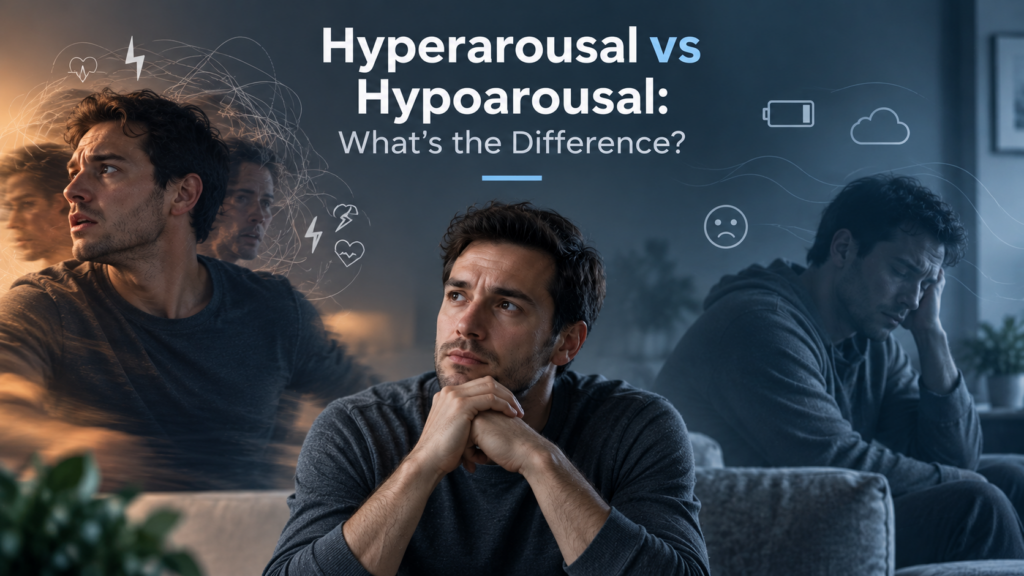
Hyperarousal and hypoarousal are two ways the nervous system may react to stress or trauma. Hyperarousal means your body feels overly alert, tense, or ready for danger. Hypoarousal means your body slows down, shuts down, or feels disconnected.
People dealing with trauma may move between both states. Understanding these reactions can help you recognize what your body is doing and why. Trauma therapy in Orange County at Revival Mental Health may help people understand these nervous system responses and build healthier ways to manage them.
What Is Hyperarousal?
Hyperarousal is a state in which your nervous system becomes highly active.
Your brain and body may act as if danger is nearby, even when you are physically safe. This can happen after a stressful event, ongoing stress, or trauma.
Hyperarousal is often connected to the body’s fight-or-flight response. During this response, the sympathetic nervous system becomes more active.
Your heart may beat faster. Your muscles may tighten. Your breathing may become quicker. Your mind may begin searching for possible threats.
Common Signs of Hyperarousal
Signs of hyperarousal may include:
- Feeling constantly on edge
- Fast heartbeat
- Racing thoughts
- Trouble sleeping
- Irritability
- Anger
- Feeling jumpy
- Being easily startled
- Sweating
- Shaking
- Muscle tension
- Trouble focusing
- Feeling unsafe
- Watching your surroundings closely
Some people with hyperarousal feel like they cannot fully relax.
Even small sounds, movements, or changes in the environment may cause a strong reaction.
What Is Hypoarousal?
Hypoarousal is a state in which the nervous system slows down.
Instead of preparing to fight or escape, the body may become less active. A person may feel numb, tired, disconnected, or emotionally shut down.
Hypoarousal is sometimes linked to the freeze or shutdown response.
The body may use this response when stress feels too intense or when fighting or escaping does not seem possible.
Common Signs of Hypoarousal
Signs of hypoarousal may include:
- Feeling emotionally numb
- Low energy
- Extreme tiredness
- Feeling disconnected from your body
- Trouble thinking clearly
- Slow movement
- Feeling empty
- Difficulty speaking
- Feeling distant from other people
- Lack of motivation
- Feeling frozen
- Trouble remembering parts of an event
- Dissociation
- Feeling like the world is not real
A person experiencing hypoarousal may appear calm from the outside.
Inside, however, they may feel shut down or disconnected.
Hyperarousal vs Hypoarousal: What Is the Main Difference?
The main difference between hyperarousal vs hypoarousal is how active the nervous system becomes.
Hyperarousal involves too much nervous system activation. Hypoarousal involves too little activation.
With hyperarousal, the body prepares for action.
With hypoarousal, the body slows down or shuts down.
Hyperarousal May Feel Like
Hyperarousal can feel like:
- “I need to get away.”
- “Something bad is about to happen.”
- “I cannot calm down.”
- “I need to stay alert.”
- “I cannot stop thinking.”
The body is often prepared to fight or escape.
Hypoarousal May Feel Like
Hypoarousal can feel like:
- “I cannot feel anything.”
- “I feel completely exhausted.”
- “I cannot move.”
- “I feel disconnected.”
- “Everything feels far away.”
The nervous system is often trying to reduce stimulation.
Hyperarousal vs Hypoarousal Symptoms
Hyperarousal and hypoarousal can affect emotions, thoughts, behavior, and physical health.
Physical Symptoms of Hyperarousal
Physical symptoms may include:
- Fast breathing
- Increased heart rate
- Tight muscles
- Sweating
- Trembling
- Headaches
- Trouble sleeping
- Stomach discomfort
Stress hormones such as adrenaline and cortisol may become more active during periods of high stress.
Emotional Symptoms of Hyperarousal
Emotional symptoms may include:
- Anxiety
- Fear
- Anger
- Irritability
- Panic
- Feeling overwhelmed
Some people may also become very sensitive to noise, crowds, or unexpected movement.
Physical Symptoms of Hypoarousal
Physical symptoms may include:
- Heavy limbs
- Low energy
- Slower movement
- Feeling weak
- Extreme fatigue
- Reduced awareness of physical sensations
Some people describe feeling as though their body has become heavy or difficult to control.
Emotional Symptoms of Hypoarousal
Emotional symptoms may include:
- Emotional numbness
- Sadness
- Feeling empty
- Disconnection
- Loss of interest
- Difficulty feeling joy
Hypoarousal can sometimes look similar to depression, although the two are not always the same.
Why Does Trauma Cause Hyperarousal or Hypoarousal?
Trauma can change how the brain and nervous system respond to possible danger.
The nervous system is designed to protect you.
When the brain detects danger, it may activate survival responses such as fight, flight, freeze, or shutdown.
After trauma, these responses may become easier to trigger.
The brain may react strongly to sounds, smells, places, memories, people, or situations connected to the original experience.
The Fight-or-Flight Response
The fight-or-flight response usually creates higher nervous system activity.
This can lead to hyperarousal.
Your brain may release stress hormones that prepare the body to move quickly.
You may feel anxious, restless, angry, or alert.
The Freeze or Shutdown Response
When the brain believes fighting or escaping is not possible, the body may freeze or shut down.
This may lead to hypoarousal.
A person may become numb, quiet, disconnected, or unable to move.
These reactions are automatic. They are controlled by survival systems in the brain and body.
What Is the Window of Tolerance?
The “window of tolerance” is a term often used in trauma therapy to describe a range in which a person can manage emotions and stress without becoming overwhelmed.
Inside this window, a person may feel:
- Calm
- Alert
- Focused
- Connected
- Able to solve problems
- Able to communicate
When stress becomes too strong, a person may move above or below this range.
Above the Window of Tolerance
Moving above the window may lead to hyperarousal.
You may experience:
- Panic
- Racing thoughts
- Anger
- Fast breathing
- Restlessness
The nervous system becomes overly active.
Below the Window of Tolerance
Moving below the window may lead to hypoarousal.
You may experience:
- Numbness
- Fatigue
- Dissociation
- Feeling frozen
- Trouble thinking
The nervous system becomes less active.
Trauma treatment often focuses on helping people recognize when they are moving outside their window of tolerance.
Can You Experience Hyperarousal and Hypoarousal?
Yes.
A person can experience both hyperarousal and hypoarousal.
In fact, some people move between these two states quickly.
For example, someone may first experience intense anxiety, panic, or anger. Later, they may feel completely exhausted or emotionally numb.
This shift may happen because the nervous system becomes overwhelmed.
Example of Moving Between the Two States
Imagine someone hears a loud noise that reminds them of a past traumatic event.
Their heart begins racing. Their muscles tighten. They start scanning the room for danger.
This is hyperarousal.
A short time later, they may become extremely tired, disconnected, or emotionally numb.
This is hypoarousal.
Both responses may be connected to the same nervous system stress reaction.
Is Hyperarousal the Same as Anxiety?
Hyperarousal and anxiety can overlap, but they are not exactly the same thing.
Anxiety is an emotional and mental response involving worry, fear, or nervousness.
Hyperarousal refers more specifically to increased nervous system activity.
A person experiencing anxiety may also experience hyperarousal symptoms such as:
- Racing heart
- Sweating
- Shaking
- Restlessness
- Trouble sleeping
- Feeling alert to danger
Hyperarousal may occur with anxiety disorders, post-traumatic stress disorder, or other trauma-related conditions.
Is Hypoarousal the Same as Depression?
Hypoarousal and depression can also share some symptoms.
Both may involve:
- Low energy
- Emotional numbness
- Loss of interest
- Fatigue
- Social withdrawal
- Trouble concentrating
However, hypoarousal is often described as a nervous system shutdown response.
Depression is a mental health condition that may involve ongoing low mood, changes in sleep, changes in appetite, feelings of hopelessness, or reduced interest in daily life.
A mental health professional can help identify what may be causing these symptoms.
How Does PTSD Affect Arousal Levels?
Post-traumatic stress disorder, or PTSD, can affect how the nervous system responds to stress.
Some people with PTSD remain in a state of high alert.
This may cause:
- Hypervigilance
- Sleep problems
- Irritability
- Startle reactions
- Panic
- Trouble relaxing
Other people may experience periods of numbness, dissociation, or shutdown.
PTSD symptoms can vary greatly from person to person.
What Can Trigger Hyperarousal or Hypoarousal?
Triggers are experiences that remind the brain or body of danger.
Common triggers may include:
- Loud sounds
- Arguments
- Certain smells
- Crowded places
- Physical touch
- Specific locations
- Anniversaries
- Certain people
- News stories
- Memories
- Stress at work
- Relationship conflict
A trigger does not always need to be obvious.
Sometimes the body reacts before a person understands what caused the reaction.
How Can You Calm Hyperarousal?
The goal during hyperarousal is often to help the nervous system slow down.
Helpful techniques may include:
Slow Your Breathing
Slow breathing may help signal safety to the nervous system.
Try breathing in slowly through your nose and breathing out gently.
A longer exhale may help the body begin to relax.
Use Grounding Techniques
Grounding can help bring attention back to the present.
You can try noticing:
- Five things you can see
- Four things you can touch
- Three things you can hear
- Two things you can smell
- One thing you can taste
This may help shift your attention away from frightening thoughts or memories.
Reduce Stimulation
Bright lights, noise, crowds, or constant phone use may make hyperarousal stronger.
A quieter environment may help your nervous system settle.
How Can You Move Out of Hypoarousal?
When experiencing hypoarousal, the goal may be to gently increase nervous system activity.
Try Gentle Movement
Walking, stretching, or moving your arms and legs may help you reconnect with your body.
Movement does not need to be intense.
Even standing up or changing rooms can sometimes help.
Use Your Senses
Cold water, textured objects, music, or strong but pleasant smells may help bring attention back to the present moment.
Connect With Someone You Trust
Safe social connection may help the nervous system feel more active and supported.
Talking with a trusted person or mental health professional may make it easier to feel connected.
How Trauma Therapy Can Help Regulate the Nervous System
Trauma therapy may help people better understand how their nervous system responds to stress.
Treatment may focus on recognizing triggers, understanding body signals, and learning ways to return to a calmer state.
Depending on a person’s needs, treatment may include individual therapy, group therapy, trauma-focused approaches, mindfulness, grounding techniques, or other evidence-based methods.
The goal is not to remove every stress reaction.
Instead, treatment may help a person notice their reactions earlier and respond in healthier ways.
Revival Mental Health provides mental health treatment for people experiencing trauma-related symptoms, emotional distress, and difficulty regulating their nervous system.
When Should You Seek Professional Help?
Occasional stress responses are normal.
Professional support may be helpful when hyperarousal or hypoarousal begins affecting everyday life.
Consider speaking with a mental health professional if you experience:
- Frequent panic
- Severe anxiety
- Ongoing emotional numbness
- Regular dissociation
- Flashbacks
- Trouble sleeping
- Difficulty working or going to school
- Relationship problems
- Constant fear
- Feeling disconnected for long periods
You do not need to wait until symptoms become extreme before seeking support.
Understanding your nervous system responses can be an important first step.
FAQs About Hyperarousal vs Hypoarousal
What is the main difference between hyperarousal and hypoarousal?
Hyperarousal happens when the nervous system becomes highly active. You may feel anxious, tense, restless, or alert. Hypoarousal happens when the nervous system slows down. You may feel numb, tired, disconnected, or frozen.
Can trauma cause both hyperarousal and hypoarousal?
Yes. Trauma can cause both states. Some people move between hyperarousal and hypoarousal depending on stress, triggers, and how overwhelmed the nervous system becomes.
What does hyperarousal feel like?
Hyperarousal may feel like being unable to relax. You may have a racing heart, fast thoughts, tight muscles, trouble sleeping, irritability, or a strong need to watch for danger.
What does hypoarousal feel like?
Hypoarousal may feel like shutting down. You may feel tired, numb, disconnected, frozen, or unable to think clearly. Some people also experience dissociation.
Can therapy help with hyperarousal and hypoarousal?
Yes. Trauma-informed therapy may help people recognize nervous system patterns, identify triggers, practice grounding skills, and develop healthier ways to manage stress responses.