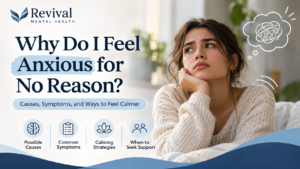


Feeling anxiety for no reason can be scary and confusing. You may feel nervous, restless, or afraid even when nothing seems wrong. Your heart might race, your stomach may feel upset, or your mind may fill with worry.
The truth is that anxiety does not always need a clear trigger. Stress, poor sleep, changes in your body, and mental health conditions can all cause anxious feelings.
If these feelings keep coming back, learning about anxiety treatment in Orange County can help you understand your symptoms and find support.
Why Do I Feel Anxious for No Reason?
Feeling anxious for no reason often means your body’s stress response is active even when there is no clear danger. Your brain may sense a threat before you know what is causing the feeling.
Anxiety is your body’s natural alarm system. It helps protect you from danger. But sometimes this alarm becomes too sensitive.
You might feel anxious while:
Sitting at home watching television
Spending time with friends or family
Getting ready for bed
Driving to work
Waking up after a full night’s sleep
Relaxing on your day off
These feelings can happen without a clear reason. However, there may still be physical, emotional, or mental health factors behind them.
Can Anxiety Happen Without a Trigger?
Yes. Anxiety can happen without an obvious trigger.
Your brain and nervous system work together to keep you safe. When your brain senses possible danger, it can activate your body’s fight-or-flight response.
This response releases stress hormones, including adrenaline and cortisol.
These hormones can cause:
A faster heartbeat
Rapid breathing
Tight muscles
Sweating
Shaking
A feeling that something bad might happen
You may notice these physical symptoms before having any anxious thoughts.
That is why anxiety can sometimes feel like it comes out of nowhere.
8 Common Causes of Anxiety for No Reason
Several factors can cause unexpected anxiety. Sometimes more than one factor is involved.
1. Hidden Stress and Emotional Pressure
Stress can build up even when you feel like everything is fine.
You may be dealing with work, money, family needs, or personal problems without realizing how much pressure you carry.
Over time, ongoing stress can keep your nervous system alert.
For example, you might spend the day handling problems at work. Later, while relaxing at home, you suddenly feel nervous.
Your body may still be reacting to the stress from earlier.
2. Generalized Anxiety Disorder (GAD)
Generalized anxiety disorder is a mental health condition that causes frequent and hard-to-control worry.
People with GAD may feel anxious about everyday situations, even when there is little reason to expect something bad.
Common symptoms include:
Constant worry
Feeling nervous or on edge
Trouble sleeping
Muscle tension
Difficulty focusing
Restlessness
Feeling tired
GAD often involves worry on most days for at least six months. A healthcare professional can determine whether your symptoms meet the full criteria.
Not everyone who feels anxious without a reason has an anxiety disorder.
3. Poor Sleep and Exhaustion
Not getting enough sleep can affect how your brain handles stress.
When you are tired, small problems may feel harder to manage. You might also feel more sensitive to sounds, emotions, and physical sensations.
Sleep problems can cause:
Increased nervousness
Trouble focusing
Irritability
Emotional stress
Restlessness
Anxiety can also make it harder to sleep, creating a cycle of tiredness and worry.
Keeping a regular sleep schedule may help reduce these symptoms.
4. Too Much Caffeine
Coffee, energy drinks, soda, and some teas contain caffeine.
Caffeine stimulates your nervous system. Too much can cause feelings that resemble anxiety.
These include:
Racing heartbeat
Shaky hands
Restlessness
Trouble sleeping
Feeling unusually alert
Some people are more sensitive to caffeine than others.
If you notice anxiety after drinking coffee or energy drinks, reducing caffeine may help.
5. Hormonal Changes
Hormones affect how your brain and body respond to stress.
Hormonal changes during puberty, pregnancy, the menstrual cycle, perimenopause, and menopause may affect anxiety symptoms.
Thyroid conditions can also cause symptoms that feel similar to anxiety.
For example, an overactive thyroid can cause a fast heartbeat, shaking, and nervousness.
If your anxiety is new or comes with unexplained physical symptoms, a medical evaluation can help identify possible causes.
6. Past Trauma and Emotional Experiences
Past experiences can affect how safe you feel today.
Someone who has lived through a frightening or painful event may become more sensitive to possible danger.
Even small reminders can activate the body’s stress response.
These reminders may include certain sounds, smells, places, or situations.
Sometimes you may not notice the connection between a past experience and your current anxiety.
Trauma-related anxiety does not always mean someone has post-traumatic stress disorder (PTSD). A mental health professional can help identify what is happening.
7. Physical Health Conditions or Medications
Some physical health problems can produce anxiety-like symptoms.
Possible causes include:
Thyroid disorders
Heart rhythm problems
Low blood sugar
Breathing problems
Side effects from certain medications
Withdrawal from alcohol or other substances
These problems may cause physical sensations that feel like fear or panic.
A healthcare provider can review your health history, symptoms, and medications to look for possible causes.
Do not stop taking prescribed medication without medical guidance.
8. An Overactive Nervous System
Your nervous system helps control breathing, heart rate, and your body’s reaction to danger.
When stress lasts a long time, your body may stay in a state of high alert.
This is sometimes called hyperarousal.
You may notice:
Feeling jumpy
Trouble relaxing
Being easily startled
Muscle tightness
A constant sense of unease
Feeling unsafe even in calm places
Your body may react as though danger is nearby, even when your surroundings are safe.
What Does Anxiety for No Reason Feel Like?
Anxiety affects both the mind and body. Some people notice physical symptoms first, while others experience racing thoughts.
Physical Symptoms of Unexplained Anxiety
Common physical signs include:
Heart palpitations
Chest tightness
Shortness of breath
Sweating
Dizziness
Nausea or stomach pain
Trembling
Headaches
Muscle tension
Fatigue
These symptoms may come and go throughout the day.
Because some medical conditions can cause similar symptoms, do not assume that new or unusual physical symptoms are caused by anxiety.
Mental and Emotional Symptoms
Anxiety can also affect how you think and feel.
You may experience:
A sense that something bad will happen
Fear without a clear cause
Trouble concentrating
Racing thoughts
Irritability
Feeling overwhelmed
Trouble making decisions
Difficulty relaxing
Some people describe unexplained anxiety as a constant feeling of dread.
Others say they feel nervous inside, even when they appear calm.
Why Does Anxiety Suddenly Hit When Everything Is Fine?
Sudden anxiety can happen because your brain responds to changes inside or outside your body before you consciously notice them.
For example, your heart may begin beating faster after caffeine or poor sleep. You might notice the sensation and become worried about it.
That worry can make your heart beat even faster.
This creates an anxiety cycle:
You notice a physical sensation.
Your brain interprets it as possible danger.
Your body releases stress hormones.
Physical symptoms become stronger.
You feel more anxious.
This cycle can make anxiety seem sudden and unexpected.
Is Sudden Anxiety the Same as a Panic Attack?
Not always.
Anxiety may develop slowly or continue throughout the day.
A panic attack is a sudden wave of intense fear or discomfort that usually peaks within minutes.
Panic attacks may involve a pounding heartbeat, shaking, dizziness, difficulty breathing, and fear of losing control.
Having one panic attack does not automatically mean you have panic disorder.
If you experience repeated attacks, professional support can help you understand your symptoms.
How to Calm Anxiety When You Don’t Know the Cause
You do not always need to identify the exact cause of anxiety before taking steps to feel calmer.
These strategies may help lower your body’s stress response.
Practice Slow, Gentle Breathing
Slow breathing can help you settle when you feel anxious.
Try this exercise:
Sit in a comfortable position.
Breathe in gently through your nose.
Slowly breathe out.
Relax your shoulders.
Repeat for one or two minutes.
Avoid forcing deep breaths or breathing so fast that you become dizzy.
Use the 5-4-3-2-1 Grounding Technique
Grounding helps bring your attention back to the present moment.
Look around and identify:
5 things you can see
4 things you can feel
3 things you can hear
2 things you can smell
1 thing you can taste
This technique may help when your thoughts feel overwhelming.
Move Your Body
Gentle movement can help reduce stress and muscle tension.
You could try taking a short walk, stretching, or practicing yoga.
You do not need an intense workout. Even a few minutes of movement may help you feel more settled.
Check Your Daily Habits
Your daily routine can affect anxiety symptoms.
Try to:
Maintain regular sleep and wake times.
Eat balanced meals.
Drink enough water.
Limit caffeine if it increases your symptoms.
Make time for rest.
Reduce alcohol and recreational drug use.
Small changes may help, but they do not replace treatment when anxiety affects your daily life.
Notice Patterns Without Judging Yourself
Keeping a simple anxiety journal may help you find hidden triggers.
Write down when anxiety happens, how your body feels, what you were doing, and how much sleep you had.
Over time, you might notice patterns related to stress, meals, caffeine, or certain situations.
You do not need to track every feeling. The goal is to learn what helps, not to monitor yourself all day.
When Is Anxiety for No Reason a Sign of a Disorder?
Occasional anxiety is a normal part of life.
However, frequent anxiety may point to an anxiety disorder when symptoms are hard to control or interfere with everyday activities.
Signs that professional support may be helpful include:
Feeling anxious most days
Avoiding activities because of fear
Trouble sleeping because of worry
Difficulty working or maintaining relationships
Frequent panic attacks
Feeling unable to relax
Physical anxiety symptoms that keep returning
A healthcare professional can help determine whether your symptoms are linked to generalized anxiety disorder, panic disorder, another mental health condition, or a physical health problem.
Seek emergency medical care for new or severe chest pain, serious breathing trouble, fainting, or other possible medical emergencies. Do not assume these symptoms are anxiety.
How Is Unexplained Anxiety Treated?
Treatment depends on your symptoms, health history, and how much anxiety affects your life.
Cognitive Behavioral Therapy (CBT)
Cognitive behavioral therapy helps people identify patterns of thinking and behavior that may increase anxiety.
During CBT, you may learn how to respond to anxious thoughts, reduce avoidance, and manage physical symptoms.
CBT is an evidence-based treatment for several anxiety disorders.
Medication Management
Some people benefit from medication alongside therapy.
A qualified medical professional may consider medications such as selective serotonin reuptake inhibitors (SSRIs) or serotonin-norepinephrine reuptake inhibitors (SNRIs).
These medications can help manage certain anxiety disorders, but they do not work the same way for everyone.
Your provider can explain the benefits, risks, and possible side effects.
Structured Mental Health Treatment
If anxiety makes everyday life difficult, more structured treatment may help.
Depending on a person’s needs, options may include outpatient therapy, an intensive outpatient program (IOP), or a partial hospitalization program (PHP).
These programs can provide support, coping skills, and treatment from mental health professionals.
The right level of care depends on an individual assessment.
Finding Support for Unexplained Anxiety
Feeling anxious when nothing seems wrong can be exhausting. You might wonder why your body will not relax or why your mind keeps expecting danger.
You do not have to know the exact cause before asking for help.
At Revival Mental Health, individuals can explore mental health treatment options for anxiety and related symptoms. A professional assessment can help identify possible causes and guide the next steps.
Getting support may help you better understand your nervous system, manage anxious thoughts, and build healthier ways to cope with stress.
Frequently Asked Questions About Anxiety for No Reason
1. Why do I feel anxious when nothing is wrong?
You may feel anxious when nothing seems wrong because your body’s stress response can activate without an obvious threat. Poor sleep, hidden stress, caffeine, hormones, and anxiety disorders may contribute. A medical or mental health professional can help identify possible causes if the feeling keeps returning.
2. Can you have anxiety without worrying about anything?
Yes. Anxiety can cause physical symptoms without clear worried thoughts. You might feel shaky, restless, dizzy, or tense even when your mind feels calm. This can happen because your nervous system responds to stress before you notice a specific concern.
3. Why do I suddenly feel scared for no reason?
Sudden fear may happen when your body activates its fight-or-flight response. Stress, panic attacks, physical health problems, and other factors can trigger this reaction. If sudden fear happens often or includes concerning physical symptoms, speak with a healthcare professional.
4. How do I stop feeling anxious for no reason?
Slow breathing, grounding exercises, regular sleep, physical movement, and reducing caffeine may help. If anxiety keeps returning or affects your daily life, treatments such as cognitive behavioral therapy and medication may provide further relief.
5. Does feeling anxious for no reason mean I have an anxiety disorder?
Not necessarily. Everyone experiences anxiety sometimes. An anxiety disorder becomes more likely when worry or fear is frequent, difficult to control, or affects daily activities. A qualified healthcare professional can assess your symptoms and determine whether treatment is needed.
Final Thoughts: Understanding Anxiety Without a Clear Cause
Anxiety for no reason does not always mean something dangerous is happening. It may be your body’s response to stress, poor sleep, physical changes, or an anxiety condition that has not yet been identified.
Learning to recognize symptoms, practicing healthy coping skills, and seeking professional guidance can help you understand what you are experiencing.
If unexplained anxiety is affecting your daily life, Revival Mental Health can help you explore treatment options and take steps toward feeling more in control.