
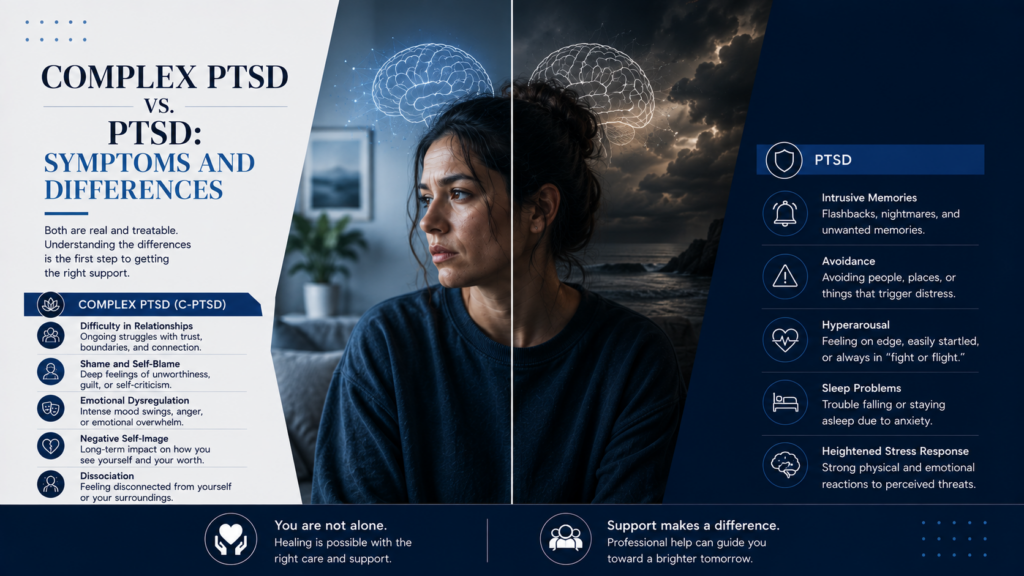
When comparing complex PTSD vs PTSD, the biggest difference is how trauma may affect a person’s emotions, self-image, and relationships over time. Both conditions can cause flashbacks, fear, avoidance, and feeling unsafe. Complex PTSD may also involve deep shame, trouble controlling emotions, and problems feeling close to others. If trauma symptoms are making daily life hard, PTSD treatment in Orange County may help you understand your symptoms and find the right level of support.
PTSD and complex PTSD can look alike, but they are not exactly the same. Understanding these differences can make it easier to talk with a mental health professional and choose a treatment plan.
What Is PTSD?
Post-traumatic stress disorder, or PTSD, is a mental health condition that can develop after a person experiences or witnesses a traumatic event.
Trauma may involve:
- Violence
- Sexual assault
- Serious accidents
- Combat
- Natural disasters
- Abuse
- Sudden loss
- Life-threatening events
- Other frightening experiences
Not everyone who goes through trauma develops PTSD. Some people recover with time and support. Others continue to have symptoms that affect sleep, work, school, relationships, or daily life.
PTSD symptoms usually involve reliving the trauma, avoiding reminders of it, changes in mood or thinking, and feeling more alert or unsafe.
Common PTSD Symptoms
PTSD can affect the mind and body.
Common symptoms may include:
- Flashbacks
- Nightmares
- Unwanted memories
- Strong emotional reactions to reminders
- Avoiding people or places linked to trauma
- Feeling emotionally numb
- Feeling detached from others
- Trouble sleeping
- Trouble focusing
- Irritability
- Anger
- Feeling easily startled
- Watching for danger
- Negative thoughts or beliefs
A person does not need to experience every possible symptom to have PTSD.
Symptoms also vary in strength. One person may struggle mostly with nightmares and anxiety, while another may feel numb, angry, or disconnected.
What Is Complex PTSD?
Complex post-traumatic stress disorder, often called complex PTSD or CPTSD, includes the core symptoms of PTSD along with added problems involving emotions, self-worth, and relationships.
Complex PTSD is often linked with trauma that was repeated, long-lasting, or hard to escape. Examples may include long-term childhood abuse, domestic violence, captivity, human trafficking, torture, or other repeated traumatic experiences.
However, the type of trauma alone does not decide whether someone develops PTSD or complex PTSD. People can respond very differently to similar experiences.
Complex PTSD is recognized as a separate diagnosis in the World Health Organization’s ICD-11 diagnostic system.
Common Complex PTSD Symptoms
A person with complex PTSD experiences PTSD symptoms plus ongoing problems in several other areas.
These may include:
- Trouble controlling strong emotions
- Feeling overwhelmed by anger or sadness
- Feeling worthless
- Deep shame
- Negative beliefs about oneself
- Trouble trusting people
- Feeling distant from others
- Difficulty maintaining relationships
- Feeling disconnected even around loved ones
These added symptoms may affect many parts of a person’s life.
For example, someone may know that a current relationship is safe but still expect rejection, betrayal, or abandonment because of what happened in the past.
Complex PTSD vs PTSD: Main Differences
The difference between PTSD and complex PTSD is not simply whether one condition is more severe.
Both can be serious.
The main difference is the pattern of symptoms.
PTSD mainly involves trauma-related symptoms such as re-experiencing traumatic events, avoidance, changes in thoughts or mood, and an ongoing sense of danger.
Complex PTSD includes trauma symptoms along with deeper and more lasting difficulties involving emotional regulation, self-image, and relationships.
Trauma Patterns May Be Different
PTSD can develop after one traumatic event or many traumatic experiences.
Complex PTSD is more often associated with repeated or long-lasting trauma, especially when escape feels difficult.
This may include trauma that happens:
- During childhood
- Inside a family
- Within an abusive relationship
- During captivity
- Over many months or years
- At the hands of someone the person trusted
Still, trauma history cannot diagnose complex PTSD by itself.
Two people can experience similar events and develop very different symptoms.
Emotional Regulation Can Be Harder With Complex PTSD
People with PTSD can experience anger, fear, sadness, and emotional numbness.
With complex PTSD, trouble managing emotions may become a more central part of daily life.
A person might:
- Become overwhelmed quickly
- Have intense anger
- Feel emotionally shut down
- Struggle to calm down after stress
- Feel emotions that seem much stronger than the current situation
These reactions may develop after spending a long time in situations where the nervous system had to stay prepared for danger.
Self-Image May Be More Affected
Another major difference in CPTSD vs PTSD involves how a person views themselves.
Trauma can affect self-esteem in either condition. With complex PTSD, however, a lasting negative view of oneself is especially important.
A person might think:
- “I am worthless.”
- “Something is wrong with me.”
- “I cannot trust myself.”
- “No one could love me.”
- “Everything was my fault.”
These beliefs can feel true even when they are not supported by the person’s current life.
Shame may also become a major part of complex trauma symptoms.
Relationships May Feel More Difficult
PTSD can affect relationships because a person may avoid others, feel numb, become irritable, or have trouble discussing the trauma.
Complex PTSD may create even broader relationship problems.
Someone may have trouble:
- Trusting other people
- Feeling emotionally close
- Setting healthy boundaries
- Asking for help
- Believing others will stay
- Handling conflict
- Feeling safe during intimacy
Some people withdraw from relationships. Others may strongly fear losing the people they depend on.
These patterns can continue even after the original danger has ended.
PTSD and Complex PTSD Have Many Symptoms in Common
Despite their differences, there is a large amount of overlap between PTSD and CPTSD.
Both may involve intrusive trauma memories, avoidance, emotional distress, and feeling constantly alert for danger.
Flashbacks and Intrusive Memories
A flashback can make a past traumatic experience feel as though it is happening again.
Some flashbacks are vivid. Others may involve strong emotions, physical feelings, images, sounds, or memories.
People with either PTSD or complex PTSD may also have nightmares or unwanted thoughts related to trauma.
Avoidance
Avoidance is another common trauma response.
A person may avoid:
- Talking about the trauma
- Certain locations
- Certain people
- Movies or news stories
- Sounds or smells
- Memories
- Feelings connected with what happened
Avoidance can bring short-term relief, but it may also make a person’s world smaller over time.
Hypervigilance and Feeling Unsafe
Trauma can teach the brain to watch closely for danger.
A person may scan rooms, watch doors, check locks, become startled easily, or have trouble relaxing.
This response is sometimes called hypervigilance.
Even when the person knows they are safe, their body may continue reacting as if another threat could appear.
How Are Complex PTSD and PTSD Diagnosed?
A mental health professional can assess trauma symptoms, how long they have lasted, and how much they affect daily life.
There is no blood test, brain scan, or online quiz that can confirm PTSD or complex PTSD.
A clinical assessment may look at:
- Trauma history
- Current symptoms
- Sleep
- Anxiety
- Mood
- Relationships
- Work or school functioning
- Safety
- Substance use
- Physical health
- Other mental health symptoms
A correct diagnosis matters because several mental health conditions can share similar symptoms.
Is Complex PTSD an Official Diagnosis?
The answer depends partly on which diagnostic system is being used.
The ICD-11 recognizes complex PTSD as a separate condition. Its diagnostic guidance includes both PTSD symptoms and added difficulties with emotional regulation, negative self-concept, and relationships.
In U.S. clinical practice, clinicians may use different diagnostic frameworks when evaluating complex trauma symptoms.
This does not mean the symptoms are less important.
Treatment should focus on the person’s actual symptoms, history, safety, daily functioning, and needs rather than relying only on a label.
Can PTSD Turn Into Complex PTSD?
PTSD does not simply “turn into” complex PTSD because it has lasted a long time.
Complex PTSD describes a particular pattern of trauma-related difficulties.
Someone can have severe PTSD without meeting criteria for complex PTSD. Another person may have a complex pattern that strongly affects emotions, identity, and relationships.
A trauma-informed assessment can help explain which symptoms are present and what type of support may be most useful.
How Does Complex Trauma Affect the Nervous System?
The body has natural systems that help people respond to danger.
A frightening event can trigger reactions such as fighting, running away, freezing, or becoming extremely alert.
These survival responses can be helpful during real danger.
After trauma, however, the brain and body may continue reacting strongly to reminders even when the immediate danger has passed.
A person might notice:
- Fast heartbeat
- Muscle tension
- Sweating
- Shaking
- Trouble sleeping
- Feeling jumpy
- Difficulty relaxing
- Strong reactions to sounds
- Emotional numbness
Long-term trauma may also shape the way a person learns to understand safety, trust, emotions, and relationships.
Treatment can help people develop healthier ways to respond to trauma reminders.
Complex PTSD vs PTSD Treatment
Treatment for complex PTSD vs PTSD has many similarities.
Treatment should be individualized because trauma does not affect everyone in the same way.
Evidence-based PTSD care often includes psychotherapy, medication, or a combination of approaches. Trauma-focused treatments are important options and can also help people experiencing symptoms associated with complex PTSD.
Trauma-Focused Therapy
Trauma-focused therapy helps people safely work with memories, thoughts, feelings, and beliefs connected with traumatic experiences.
Treatment does not mean a person must immediately tell every detail of what happened.
Therapy should move at a pace that considers the person’s symptoms, safety, and treatment goals.
A therapist may help the person understand triggers, challenge harmful beliefs, reduce avoidance, and develop healthier responses to trauma reminders.
Emotional Regulation Skills
Some people with complex PTSD may need extra support learning how to manage intense emotions.
Treatment may help someone:
- Identify emotions
- Notice emotional triggers
- Calm physical stress responses
- Communicate needs
- Manage anger
- Build coping skills
- Feel safer during conflict
Research has also examined treatment approaches that teach emotional and relationship skills before directly processing traumatic memories, although it is not yet clear that these approaches work better for everyone than established trauma-focused treatment alone.
Relationship and Trust Building
Complex trauma can change the way relationships feel.
Therapy may help people recognize old survival patterns that no longer serve them.
Treatment may focus on:
- Healthy boundaries
- Trust
- Communication
- Attachment
- Safe relationships
- Conflict management
- Asking for support
Building safe connections can become an important part of long-term healing.
Medication
Medication may sometimes be used to help manage certain PTSD symptoms or related conditions.
For example, medication may be considered for depression, anxiety, sleep problems, or other symptoms.
Medication choices should be made with a qualified medical professional based on the person’s health history, symptoms, possible side effects, and other medications they take. Psychotherapy and medication are both established parts of PTSD treatment.
When Should You Seek Trauma Treatment?
Consider talking with a mental health professional when trauma symptoms continue to interfere with your life.
Signs that more support may be helpful include:
- Frequent nightmares
- Flashbacks
- Severe anxiety
- Constant hypervigilance
- Avoiding normal activities
- Feeling emotionally numb
- Strong shame or guilt
- Trouble controlling anger
- Feeling worthless
- Difficulty trusting anyone
- Relationships repeatedly breaking down
- Sleep problems
- Problems at work or school
- Using substances to escape emotions
You do not need to decide whether you have PTSD or complex PTSD before asking for help.
That is part of what a professional assessment can explore.
Finding Trauma-Informed Care at Revival Mental Health
Living with trauma can affect much more than memories of the past. It can change sleep, emotions, relationships, confidence, and the way the body responds to everyday stress.
Revival Mental Health provides trauma-focused mental health care designed around each person’s symptoms and needs.
Treatment may address PTSD symptoms as well as anxiety, depression, emotional regulation problems, relationship difficulties, and other concerns linked with trauma.
A professional assessment can help determine what level of care may be appropriate and which therapies fit your needs.
FAQs About Complex PTSD vs PTSD
What is the biggest difference between PTSD and complex PTSD?
The main difference is that complex PTSD includes PTSD symptoms plus ongoing problems with emotional regulation, negative self-image, and relationships. Both conditions can cause serious distress and affect daily life.
Is complex PTSD worse than PTSD?
Not necessarily. Complex PTSD is not simply a more severe form of PTSD. It describes a different pattern of symptoms. A person with PTSD can have very severe symptoms, while another person may experience the added emotional, relationship, and self-image difficulties associated with complex PTSD.
Can one traumatic event cause complex PTSD?
Complex PTSD is often associated with repeated or long-lasting trauma, but trauma type alone does not determine the diagnosis. Individual responses vary greatly, and symptoms matter more than simply counting how many traumatic events occurred.
Can complex PTSD be treated?
Yes. Trauma-focused therapies used for PTSD may also help people with complex PTSD symptoms. Some people may need additional work on emotional regulation, self-esteem, relationships, depression, or other concerns.
How do I know whether I have PTSD or complex PTSD?
Symptoms alone can be difficult to sort out without a clinical assessment. A qualified mental health professional can review your trauma history, symptoms, emotional patterns, relationships, and daily functioning. The goal is not simply to find a label but to understand what is happening and create a treatment plan that fits your needs.
Get Help for PTSD and Complex Trauma
Understanding complex PTSD vs PTSD can help explain why trauma affects people in different ways. PTSD often involves intrusive memories, avoidance, changes in mood, and feeling constantly alert for danger. Complex PTSD includes many of these concerns along with deeper struggles involving emotions, self-worth, and relationships.
You do not have to know which diagnosis fits before seeking support. A trauma-informed mental health assessment can help identify your symptoms and treatment needs.
If trauma is affecting your ability to feel safe, maintain relationships, sleep, work, or enjoy daily life, Revival Mental Health can help you explore treatment options and begin building a path toward recovery.