
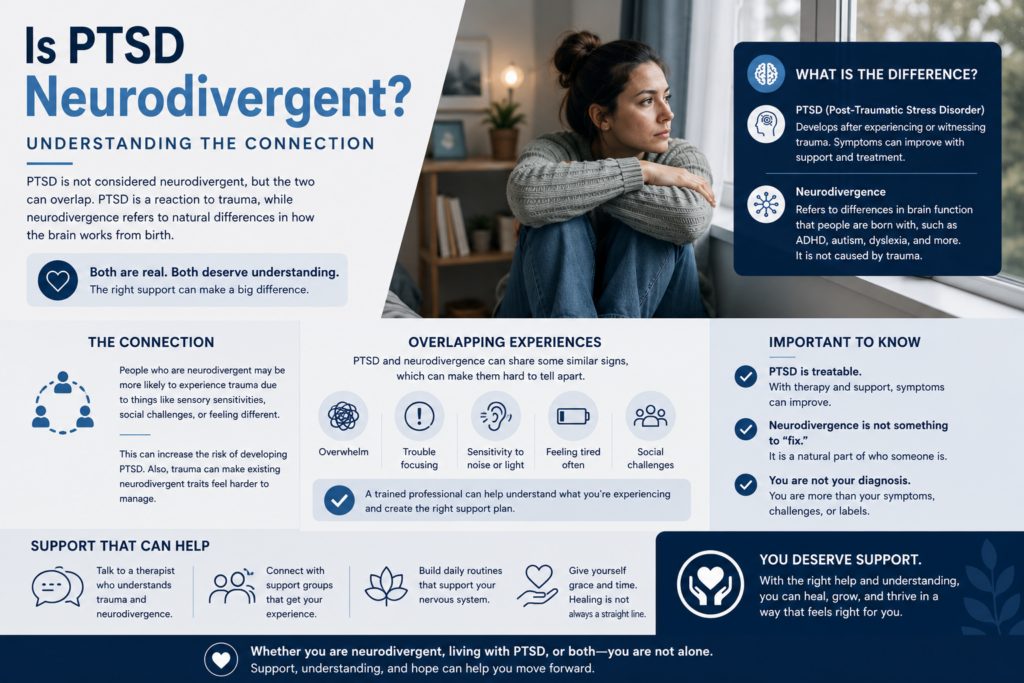
Many people ask, is PTSD neurodivergent? The answer is not completely simple. PTSD, or Post-Traumatic Stress Disorder, changes how the brain works after a traumatic event. While many experts do not officially classify PTSD as a neurodivergent condition, others believe it shares many traits with neurodivergence because it changes thinking, emotions, memory, and behavior.
If you or someone you love is living with PTSD, getting professional PTSD treatment can help reduce symptoms and improve daily life. Understanding how PTSD affects the brain is the first step toward healing.
What Is PTSD?
PTSD stands for Post-Traumatic Stress Disorder. It is a mental health condition that can happen after someone experiences or witnesses a traumatic event.
Examples include:
- Military combat
- Physical assault
- Sexual assault
- Domestic violence
- Serious accidents
- Natural disasters
- Childhood abuse
- Medical trauma
Not everyone who experiences trauma develops PTSD. However, for some people, the brain stays in survival mode long after the danger is over.
The American Psychiatric Association (APA) recognizes PTSD as a trauma-related disorder in the Diagnostic and Statistical Manual of Mental Disorders (DSM-5).
What Does Neurodivergent Mean?
The word neurodivergent describes people whose brains work differently from what society considers typical.
Common examples include:
- Autism Spectrum Disorder (ASD)
- Attention-Deficit/Hyperactivity Disorder (ADHD)
- Dyslexia
- Dyspraxia
- Tourette syndrome
These conditions are usually lifelong differences in how the brain develops and processes information.
Neurodivergence is not considered an illness. Instead, it describes natural differences in brain function.
Is PTSD Considered Neurodivergent?
The short answer is not officially.
PTSD is generally classified as a mental health disorder, not a neurodevelopmental condition.
However, many mental health professionals recognize that PTSD can cause lasting changes in the brain that make a person think, feel, and react differently.
Some people in the neurodiversity community consider PTSD to be an example of acquired neurodivergence because the brain changes after trauma.
Others believe neurodivergence should only describe conditions present from birth or early childhood.
There is no universal agreement today.
Why Do People Think PTSD Is Neurodivergent?
Researchers have found that PTSD changes several parts of the brain.
These changes may affect:
- Memory
- Concentration
- Emotional regulation
- Sleep
- Attention
- Decision-making
- Learning
- Stress response
Because these differences can last for years, some experts believe PTSD creates a brain that functions differently from the average brain.
That is why the discussion about PTSD and neurodivergence continues.
How PTSD Changes the Brain
Trauma affects several important brain structures.
The Amygdala
The amygdala is the brain’s alarm system.
With PTSD, it often becomes overactive.
This may cause:
- Feeling constantly on edge
- Being easily startled
- Fear responses
- Panic
- Hypervigilance
The Hippocampus
The hippocampus helps organize memories.
PTSD may make it harder to separate past trauma from present safety.
This can lead to:
- Flashbacks
- Confusing memories
- Nightmares
- Emotional triggers
The Prefrontal Cortex
This part of the brain helps with:
- Decision-making
- Planning
- Self-control
- Emotional regulation
PTSD may reduce activity here, making it harder to calm down during stress.
PTSD Symptoms That Can Look Like Neurodivergence
Many PTSD symptoms overlap with traits often seen in neurodivergent individuals.
These include:
Difficulty Concentrating
People with PTSD may struggle to:
- Stay focused
- Finish tasks
- Remember information
- Pay attention
Sensory Sensitivity
Trauma may increase sensitivity to:
- Loud sounds
- Bright lights
- Crowds
- Certain smells
- Unexpected touch
Emotional Dysregulation
Strong emotions may appear quickly.
Someone may experience:
- Anger
- Fear
- Anxiety
- Sadness
- Emotional numbness
Social Challenges
PTSD may cause someone to:
- Avoid people
- Feel unsafe in groups
- Have trouble trusting others
- Withdraw from relationships
These symptoms can sometimes resemble autism or ADHD, but the cause is different.
PTSD vs. Neurodevelopmental Disorders
Although PTSD and neurodevelopmental disorders share similarities, they are different conditions.
| PTSD | Neurodevelopmental Disorders |
|---|---|
| Usually develops after trauma | Usually present from birth |
| Triggered by traumatic events | Caused by brain development differences |
| May improve with treatment | Usually lifelong |
| Symptoms can decrease over time | Traits often remain throughout life |
| Classified as a mental health disorder | Classified as neurodevelopmental conditions |
Understanding these differences helps people receive the right diagnosis and treatment.
Can Someone Have PTSD and Be Neurodivergent?
Yes.
Someone can have both PTSD and another neurodivergent condition.
For example, a person may have:
- ADHD and PTSD
- Autism and PTSD
- Dyslexia and PTSD
- Tourette syndrome and PTSD
In fact, some research suggests neurodivergent individuals may experience higher rates of trauma because they often face bullying, misunderstanding, discrimination, or stressful life experiences.
Having one condition does not cause the other, but they can exist together.
How PTSD Affects Daily Life
PTSD can impact many parts of everyday living.
School
Students may struggle with:
- Concentration
- Memory
- Completing homework
- Participating in class
Work
Adults may experience:
- Trouble focusing
- Increased stress
- Difficulty meeting deadlines
- Problems with coworkers
Relationships
PTSD may make relationships harder because of:
- Trust issues
- Emotional distance
- Irritability
- Fear of being hurt
Physical Health
Trauma can also affect the body.
Some people experience:
- Headaches
- Digestive problems
- Fatigue
- Muscle tension
- Sleep problems
- Increased heart rate
Mental and physical health often influence each other.
Can PTSD Heal?
Yes.
Many people recover with the right treatment and support.
Healing looks different for everyone.
Some people improve within months, while others need ongoing care.
Recovery does not always mean symptoms disappear completely.
Instead, treatment helps people regain control over their lives.
PTSD Treatment Options
There is no one-size-fits-all treatment.
Mental health professionals create personalized treatment plans based on each person’s needs.
Trauma Therapy
Trauma-focused therapy helps people safely process painful experiences.
Common approaches include:
- Trauma-focused Cognitive Behavioral Therapy (CBT)
- Cognitive Processing Therapy (CPT)
- Eye Movement Desensitization and Reprocessing (EMDR)
Medication
Some people benefit from medication to reduce symptoms such as:
- Anxiety
- Depression
- Panic attacks
- Sleep problems
Medication is often combined with therapy for better results.
Stress Management
Healthy coping skills may include:
- Deep breathing
- Mindfulness
- Gentle exercise
- Journaling
- Healthy sleep habits
These strategies do not replace therapy but can support recovery.
When Should You Seek Professional Help?
Consider talking to a mental health professional if symptoms:
- Last longer than one month
- Interfere with work or school
- Affect relationships
- Cause panic attacks
- Lead to isolation
- Make daily activities difficult
Early treatment often leads to better outcomes.
Is PTSD a Disability?
Sometimes.
PTSD can qualify as a disability if symptoms significantly limit daily functioning.
Eligibility depends on:
- Symptom severity
- Ability to work
- Medical documentation
- Individual circumstances
A mental health professional can help determine the impact PTSD has on daily life.
Living Well With PTSD
Although PTSD can feel overwhelming, many people build healthy, meaningful lives after trauma.
Helpful habits include:
- Attending therapy regularly
- Following treatment recommendations
- Building supportive relationships
- Practicing self-care
- Managing stress
- Learning personal triggers
- Celebrating progress
Recovery is a journey, and every small step matters.
The Bottom Line
So, is PTSD neurodivergent? There is no official medical agreement that PTSD is a neurodivergent condition. PTSD is classified as a trauma-related mental health disorder, while neurodivergence usually refers to lifelong differences in brain development.
However, PTSD can create lasting changes in how the brain functions. Because of these changes, some experts describe PTSD as an example of acquired neurodivergence. Regardless of the label, PTSD is a real and treatable condition. With the right care, therapy, and support, many people experience meaningful recovery and improved quality of life.
Frequently Asked Questions
Is PTSD officially considered neurodivergent?
No. PTSD is currently classified as a trauma-related mental health disorder rather than a neurodevelopmental condition. Some experts, however, consider it an acquired form of neurodivergence because trauma can permanently affect brain function.
Can trauma make someone neurodivergent?
Trauma can change how the brain works, leading some people to describe PTSD as acquired neurodivergence. However, this idea is still debated, and there is no official medical consensus.
Can someone have both ADHD and PTSD?
Yes. It is possible to have both ADHD and PTSD. The two conditions can exist together, and a mental health professional can help determine which symptoms belong to each condition.
Does PTSD permanently change the brain?
Research shows PTSD can affect areas of the brain involved in memory, fear, and emotional regulation. Many of these changes improve with effective treatment, although recovery varies from person to person.
What is the best treatment for PTSD?
Treatment often includes trauma-focused therapy, such as Cognitive Behavioral Therapy (CBT), Cognitive Processing Therapy (CPT), or EMDR. Some people also benefit from medication and healthy coping strategies as part of a personalized treatment plan.