
Living through domestic violence PTSD can change the way a person feels, thinks, and reacts every day. Many people who survive abuse may feel fear, shame, anxiety, or sadness long after the violence ends. Survivors may also struggle with sleep, panic attacks, or painful memories connected to the traumatic event.
At Revival Mental Health, we understand how trauma from intimate partner violence can affect mental health. Many people who are seeking PTSD treatment need support after experiencing domestic violence, emotional abuse, or physical violence. Healing is possible with the right treatment, therapy, and emotional support.
What Is Domestic Violence PTSD?
Domestic violence PTSD happens when a person develops post-traumatic stress disorder after experiencing abuse or violence at home or in a relationship. PTSD can happen after a traumatic event that feels threatening, overwhelming, or dangerous.
Domestic violence occurs in many forms, including:
Physical violence
Emotional abuse
Sexual violence
Threats and control
Isolation from family members or friends
Financial abuse
Verbal abuse
Sexual assault
Many domestic violence survivors feel trapped by fear and control from an abuser. Over time, repeated violence and harm may lead to trauma and long-lasting mental health problems.
How Intimate Partner Violence Affects Mental Health
Intimate partner violence can deeply affect a person’s mental health and emotional well-being. Abuse victims may live in constant fear or stress. This can change how the brain and body respond to danger.
Many survivors experience:
Anxiety
Depression
Panic attacks
Shame
Guilt
Isolation
Suicidal thoughts
Fear of relationships
Trouble trusting others
Some survivors may develop PTSD after violent incidents. Others may develop complex PTSD or c PTSD, especially if the abuse happened for a long time.
Trauma research shows that ongoing abuse increases the risk of mental health conditions and physical health problems.
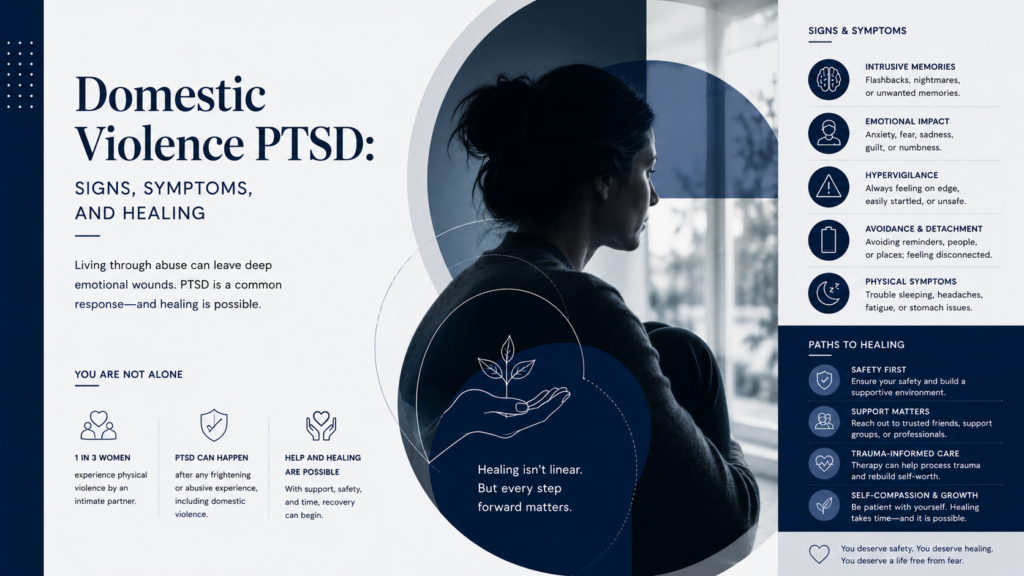
Signs and Symptoms of PTSD After Domestic Abuse
PTSD symptoms may appear right away or months after the abuse ends. Many survivors do not realize their feelings are connected to trauma.
Flashbacks and Bad Memories
A person with PTSD may relive painful memories from the abuse. Flashbacks can feel very real and overwhelming.
Some people may:
Remember violent incidents often
Have nightmares
Feel fear when reminded of the abuse
Avoid certain people or places
Panic Attacks and Anxiety
Many survivors experience panic attacks after domestic violence. Their body may stay in “fight or flight” mode.
Symptoms can include:
Fast heartbeat
Sweating
Trouble breathing
Shaking
Feeling unsafe
Anxiety may make daily life harder and affect work, school, or relationships.
Depression and Emotional Pain
Depressive symptoms are common in domestic abuse survivors. A person may feel hopeless or numb after trauma.
Some people may:
Lose interest in activities
Feel sadness every day
Have low energy
Feel shame or guilt
Think about self-harm or suicide
Professional help is important if suicidal thoughts are present.
What Is Complex PTSD?
Complex PTSD happens after repeated or long-term trauma. Many survivors of domestic violence experience c PTSD because the abuse may happen over months or years.
Unlike PTSD from a single traumatic event, complex PTSD often affects:
Self-esteem
Emotions
Relationships
Trust
Feelings of safety
People with complex PTSD may struggle with overwhelming emotions, fear, or shame even after leaving the abusive relationship.
Domestic Violence Can Affect Physical Health
Trauma does not only affect emotions. Domestic abuse can also affect physical health.
Research shows that survivors may face an increased risk of:
Heart disease
Chronic pain
Sleep problems
High blood pressure
Digestive issues
Substance abuse
Stress from violence and fear can affect the nervous system for years.
Domestic Violence and Substance Abuse
Some survivors turn to drugs or alcohol to cope with trauma. Substance abuse may temporarily numb painful feelings, but it can create more mental health problems later.
A person experiencing domestic violence may use substances because they:
Feel overwhelmed
Want to escape emotional pain
Struggle with anxiety or depression
Feel isolated
Have trouble sleeping
Treatment programs that address both trauma and substance abuse can help survivors heal safely.
How Domestic Violence Affects Children
Children who witness abuse are also deeply affected by trauma. Witnessing violence between family members can create emotional and behavioral problems.
Children may:
Feel fear or anxiety
Have nightmares
Struggle in school
Become withdrawn
Feel guilt or shame
Develop depression or PTSD
Trauma can affect children at every age. Early support and therapy may help children feel safer and more connected.
Why Many Survivors Stay Silent
Many survivors do not tell others about the abuse. Fear, shame, and control from the abuser may stop them from asking for help.
Some survivors may worry:
The abuse will get worse
They will not be believed
Their children will be harmed
They have nowhere to go
They are financially dependent on their partner
Isolation is common in abusive relationships. This is why emotional support from a friend or family member can make a big difference.
Domestic Violence Happens to Many People
Domestic violence can happen to women, men, and people of all backgrounds. However, female victims are especially affected by intimate partner violence.
Many survivors feel alone, but domestic violence is sadly very common. The prevalence of abuse shows how important awareness, services, and treatment are for victims and survivors.
Abuse can happen in:
Dating relationships
Marriages
Families
Same-sex relationships
Long-term partnerships
Violence and abuse are never the survivor’s fault.
When to Seek Professional Help
Professional help can support healing after trauma. PTSD symptoms may become severe if treatment is delayed.
You may benefit from therapy if you:
Feel fear often
Have panic attacks
Avoid people or places
Feel unsafe
Struggle with depression
Have suicidal thoughts
Use substances to cope
Have trouble with relationships
Many survivors improve with the right support and effective therapies.
Effective Therapies for Domestic Violence PTSD
There are many forms of PTSD treatment that may help survivors recover.
Trauma Therapy
Trauma therapy helps survivors process painful experiences in a safe setting. Therapy can help reduce fear, anxiety, and flashbacks.
Cognitive Behavioral Therapy
Cognitive Behavioral Therapy (CBT) helps people recognize unhealthy thought patterns connected to trauma.
EMDR Therapy
Eye Movement Desensitization and Reprocessing (EMDR) may help survivors process traumatic memories and reduce emotional pain.
Group Therapy
Support groups can help survivors stay connected and feel less alone.
Medication Support
Some people benefit from medication for anxiety, depression, or panic attacks while healing from trauma.
How to Support Someone Experiencing Domestic Violence
Helping a survivor with compassion and patience matters.
You can:
Listen without judgment
Offer emotional support
Help them find services
Encourage professional help
Stay connected
Respect their choices
Avoid blaming the survivor or pressuring them to leave before they feel safe.
National Domestic Violence Hotline and Resources
If you or someone you know is experiencing domestic violence, help is available.
The National Domestic Violence Hotline offers:
Crisis support
Safety planning
Emotional support
Local resources and services
Talking to a trusted person or mental health professional may also help survivors feel safer and supported.
Healing After Domestic Violence PTSD
Healing from trauma takes time, but recovery is possible. Many survivors learn healthy ways to cope with fear, anxiety, and painful feelings.
Healing may include:
Therapy
Support groups
Building healthy relationships
Learning coping skills
Staying connected with trusted people
Creating a safe environment
Survivors deserve safety, support, and hope. With treatment and compassionate care, people can rebuild their lives after abuse and violence.
FAQs About Domestic Violence PTSD
Can domestic violence cause PTSD?
Yes. Domestic violence can cause PTSD, especially after repeated physical violence, emotional abuse, or sexual violence. Many survivors experience fear, anxiety, flashbacks, and panic attacks after trauma.
What is the difference between PTSD and complex PTSD?
PTSD may happen after one traumatic event, while complex PTSD often develops after long-term abuse or repeated trauma. Complex PTSD can affect emotions, trust, and relationships more deeply.
Can children develop PTSD from witnessing abuse?
Yes. Children who witness violence at home may develop anxiety, depression, trauma symptoms, or PTSD. Early therapy and emotional support can help children heal.
What are common symptoms of domestic violence PTSD?
Common symptoms include panic attacks, nightmares, fear, flashbacks, anxiety, depression, guilt, shame, and avoiding reminders of the abuse.
Where can survivors get help?
Survivors can reach out to the National Domestic Violence Hotline, mental health professionals, trauma therapists, or PTSD treatment programs for support and safety planning.