
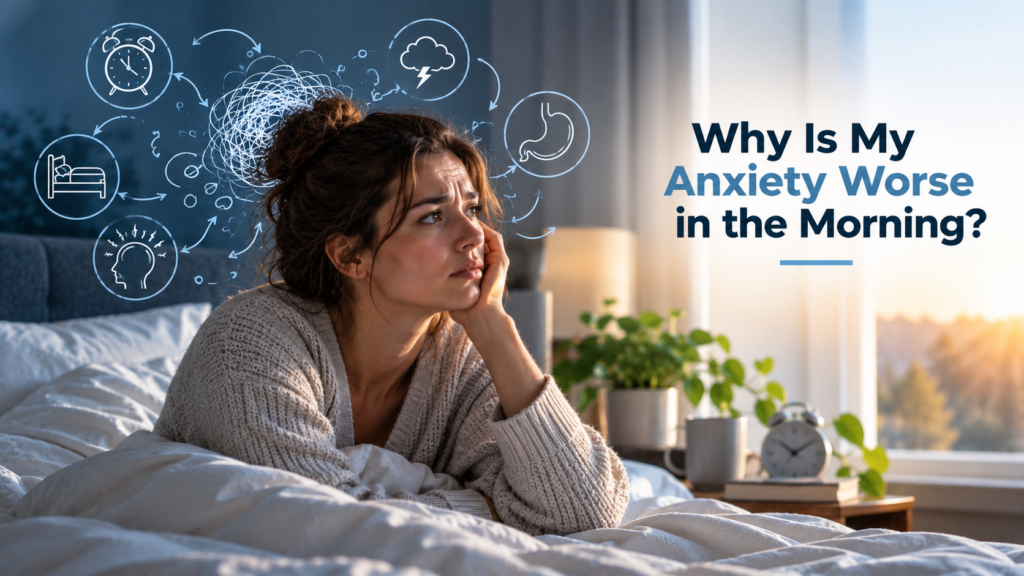
Waking up with anxiety can make the day feel stressful before it even begins. You may open your eyes with a racing heart, upset stomach, tense muscles, or thoughts about everything that could go wrong. For some people, these feelings are strongest right after waking.
If anxiety is affecting your mornings and daily life, learning about anxiety treatment can help you understand your symptoms and the types of support available.
Morning anxiety can be linked to your body’s natural stress response, poor sleep, worries about the day ahead, caffeine, low blood sugar, or an anxiety disorder. Understanding the cause can make these symptoms feel easier to manage.
What Is Morning Anxiety?
Morning anxiety means feeling worried, nervous, fearful, or physically tense shortly after waking up. It is not a separate mental health diagnosis. Instead, it describes anxiety symptoms that happen or become stronger during the morning.
Some people feel anxious the moment they wake up. Others notice anxiety building as they start thinking about work, school, family duties, money, relationships, or other responsibilities.
Morning anxiety may last a few minutes or continue for hours. In some cases, symptoms improve once a person gets moving and begins their normal routine.
What Does Morning Anxiety Feel Like?
Anxiety can affect both your mind and body. Morning anxiety symptoms may include:
Racing or unwanted thoughts
Feeling nervous or restless
A sense that something bad may happen
Fast heartbeat
Tightness in the chest
Shaky hands
Sweating
Nausea or an upset stomach
Diarrhea
Headaches
Muscle tension
Trouble taking a deep breath
Feeling tired even after sleeping
Trouble concentrating
Irritability
Lack of appetite
Some people also wake up with a strong sense of dread even when they cannot identify a clear reason for it.
Why Is My Anxiety Worse in the Morning?
There is rarely one cause of morning anxiety. Your body’s hormones, sleep habits, thoughts, diet, and stress level can all play a role.
One important factor is the body’s natural stress response. Your brain and body make changes every morning to prepare you to wake up and become active. If you already struggle with anxiety, these normal changes may feel more intense.
Cortisol Naturally Rises in the Morning
Cortisol is a hormone produced by the adrenal glands. It plays an important role in your body’s response to stress, but cortisol is also part of a healthy daily sleep-wake cycle.
Cortisol levels normally increase around the time you wake up. This process helps your body become alert and ready for the day.
For a person who is sensitive to physical signs of anxiety, this increased alertness may feel uncomfortable. You might notice a faster heartbeat, more energy, tense muscles, or a feeling that you need to act quickly.
These sensations do not always mean something is wrong. However, they can become part of an anxiety cycle if you interpret them as signs of danger.
Your Thoughts May Jump to the Day Ahead
Morning may be the first time you begin thinking about everything you need to do that day.
Your thoughts might quickly move to:
Work deadlines
School responsibilities
Financial problems
Family needs
Health concerns
Social situations
Important appointments
Unfinished tasks
This is sometimes called anticipatory anxiety. It happens when you feel anxious about something that has not happened yet.
Your mind may begin asking “what if” questions. What if I make a mistake? What if something goes wrong? What if I cannot handle today?
These thoughts can activate the body’s fight-or-flight response before your day has even started.
Can Poor Sleep Make Morning Anxiety Worse?
Yes. Sleep and anxiety are closely connected.
A night of poor sleep can make it harder for the brain to manage stress and emotions the next morning. At the same time, anxiety can make falling asleep and staying asleep more difficult.
This can create a cycle:
Anxiety makes it harder to sleep. Poor sleep makes anxiety feel stronger. Stronger anxiety then makes the next night’s sleep more difficult.
Signs Sleep May Be Affecting Your Anxiety
You may notice:
Trouble falling asleep
Waking several times during the night
Waking earlier than planned
Nightmares
Racing thoughts at bedtime
Feeling exhausted after waking
Depending on caffeine to function
Feeling irritable during the morning
A regular sleep schedule may help reduce some of these problems.
Can Low Blood Sugar Cause Anxiety in the Morning?
Going many hours without eating can sometimes cause physical sensations that feel similar to anxiety.
For example, you might wake up feeling shaky, weak, dizzy, sweaty, or irritable. Hunger may also make it harder to concentrate.
These symptoms can be especially stressful for someone who already worries about physical sensations.
Eating a balanced breakfast with protein, fiber, and carbohydrates may help some people feel steadier during the morning.
If you often experience severe shaking, dizziness, fainting, or other concerning symptoms, talk with a medical professional. Anxiety is not the only condition that can cause these symptoms.
Does Caffeine Make Morning Anxiety Worse?
Caffeine stimulates the central nervous system. It can increase alertness, but larger amounts can also cause symptoms that feel a lot like anxiety.
These may include:
Faster heartbeat
Shaking
Restlessness
Sweating
Trouble concentrating
Upset stomach
Feeling “on edge”
Drinking coffee or energy drinks immediately after waking may make morning anxiety feel stronger for some people.
Try paying attention to how you feel before and after caffeine. You may notice that reducing your intake or waiting until after breakfast makes a difference.
Can an Anxiety Disorder Cause Morning Anxiety?
Frequent morning anxiety can sometimes be connected to an anxiety disorder.
The Diagnostic and Statistical Manual of Mental Disorders (DSM-5-TR) describes several anxiety disorders, including generalized anxiety disorder, panic disorder, social anxiety disorder, and specific phobias.
Generalized Anxiety Disorder
Generalized anxiety disorder, or GAD, involves ongoing and difficult-to-control worry about different parts of life.
A person with GAD may worry about work, family, health, finances, relationships, and everyday responsibilities. These worries can appear first thing in the morning.
Panic Disorder
Panic disorder involves repeated panic attacks and ongoing concern about having another one.
A panic attack can cause intense physical symptoms, including a racing heart, chest discomfort, dizziness, shaking, sweating, nausea, and shortness of breath.
People who have experienced panic attacks in the morning may begin worrying about whether another attack will happen after waking.
Other Mental Health Conditions
Morning distress is not limited to anxiety disorders. Depression, trauma-related disorders, obsessive-compulsive disorder, and other mental health conditions can affect how someone feels after waking.
A mental health professional can help determine what may be contributing to your symptoms.
Why Do I Wake Up With Anxiety for No Reason?
Sometimes there is no obvious trigger.
You may think, “Nothing bad is happening, so why am I anxious?”
Anxiety does not always need an immediate outside cause. Your nervous system can become activated before you consciously start worrying about anything.
Physical sensations may come first. Then your brain may search for an explanation.
For example, you wake up with your heart beating quickly. You notice it and become worried. That worry makes your heart beat even faster. Within minutes, you may feel very anxious even though there was no clear trigger.
Learning to recognize this pattern can help interrupt it.
How Can I Calm Anxiety in the Morning?
Small changes to your morning routine may help lower anxiety. You do not need to change everything at once.
Start with one or two habits and see how your body responds.
Get Out of Bed Instead of Staying With Your Thoughts
Lying in bed and thinking about everything that could go wrong can make anxiety grow.
Try getting up, opening the curtains, drinking water, washing your face, or starting another simple task.
Movement gives your brain something specific to focus on.
Try Slow Breathing
Anxiety often causes quick, shallow breathing.
Try breathing slowly through your nose and letting your stomach expand. Then breathe out slowly.
The goal is not to force anxiety away. Instead, slow breathing can signal to your body that it does not need to remain on high alert.
Avoid Checking Your Phone Right Away
Emails, news, social media, and work messages can add more information to an already active mind.
Consider giving yourself a short period after waking before checking notifications.
Use that time to shower, stretch, eat breakfast, take a short walk, or prepare for the day.
Eat and Drink Water
Dehydration and hunger can create uncomfortable physical sensations.
Drink some water after waking and consider eating a balanced breakfast. Notice whether your anxiety changes afterward.
Create a Predictable Morning Routine
Uncertainty can increase anxiety.
A simple routine can make mornings feel more predictable. For example:
Wake up, drink water, shower, eat breakfast, get dressed, and leave for work.
Following roughly the same order each morning may reduce the number of decisions you have to make while feeling anxious.
What Treatments Can Help With Anxiety?
If morning anxiety happens often or interferes with daily life, professional treatment may help.
Treatment depends on your symptoms, health history, and individual needs.
Cognitive Behavioral Therapy
Cognitive behavioral therapy, often called CBT, helps people recognize connections between thoughts, feelings, and behaviors.
For morning anxiety, CBT may help you identify automatic thoughts such as:
“I can’t handle today.”
“Something bad is going to happen.”
“I’m already anxious, so today will be terrible.”
A therapist can help you examine these thoughts and develop healthier ways of responding to them.
Exposure-Based Therapy
Avoiding situations that cause anxiety can bring short-term relief, but avoidance may strengthen anxiety over time.
Exposure-based approaches help people gradually face feared situations in a structured and supportive way.
This treatment is commonly used for several anxiety disorders.
Medication
Medication may be part of treatment for some people with anxiety disorders. Different types of medication work in different ways and may have different risks or side effects.
A licensed medical professional should evaluate whether medication is appropriate for you.
When Should I Get Help for Morning Anxiety?
Occasional morning stress is common. Professional support may be worth considering when anxiety becomes frequent, intense, or difficult to control.
Consider speaking with a mental health professional if anxiety:
Happens most mornings
Interferes with work or school
Makes you avoid normal activities
Causes frequent panic attacks
Makes sleeping difficult
Affects relationships
Causes ongoing physical symptoms
Feels difficult to manage on your own
You do not have to wait until anxiety becomes severe before asking for support.
If physical symptoms are new, severe, or unusual, medical evaluation can also help rule out other health conditions.
Finding Support for Anxiety at Revival Mental Health
Morning anxiety can make every day begin with stress, but these symptoms can be understood and treated.
At Revival Mental Health, treatment can focus on the thoughts, physical reactions, behaviors, and underlying concerns connected to anxiety. Care may include therapy and other evidence-based mental health services based on a person’s needs.
The first step is understanding what is happening. From there, you can learn ways to respond to anxiety without allowing it to control your entire morning.
FAQs About Morning Anxiety
Why is anxiety strongest when I first wake up?
Anxiety may feel stronger after waking because cortisol naturally rises around this time. Poor sleep, worries about the upcoming day, hunger, and an overactive stress response can also contribute to morning symptoms.
How do I stop waking up with anxiety?
A regular sleep schedule, slower morning routine, balanced breakfast, less caffeine, breathing exercises, physical activity, and therapy may help. If anxiety happens regularly, consider speaking with a mental health professional.
Can cortisol cause morning anxiety?
Cortisol naturally increases around waking and helps your body become alert. This normal response may contribute to physical sensations that feel like anxiety, but cortisol is usually one part of a larger picture rather than the sole cause.
Why do I wake up with a racing heart and anxiety?
A racing heart can happen with anxiety, nightmares, poor sleep, caffeine, panic symptoms, and other health conditions. If a fast heartbeat is new, severe, persistent, or comes with chest pain, fainting, or other concerning symptoms, seek medical care.
Is morning anxiety a sign of generalized anxiety disorder?
It can be associated with generalized anxiety disorder, but morning anxiety alone does not mean you have GAD. A qualified mental health professional can evaluate your symptoms, how long they have lasted, and how much they affect daily life.