

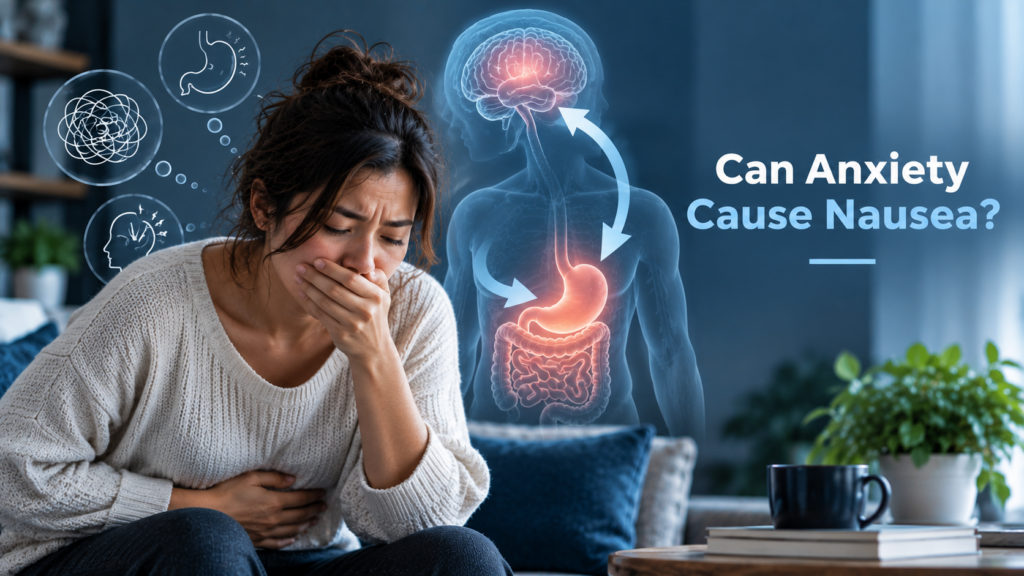
Yes, anxiety can cause nausea. When you feel anxious, your brain and body can trigger a stress response that affects your digestive system. This may cause nausea, stomach pain, loss of appetite, diarrhea, or the feeling that you might throw up.
For some people, stomach problems are one of the first physical signs of anxiety. Learning how mental health and anxiety affect the body can help you understand why these symptoms happen and when it may be time to seek support.
Why Can Anxiety Cause Nausea?
Anxiety does more than affect your thoughts. It can create real physical changes throughout your body.
When your brain senses danger or stress, it activates your body’s fight-or-flight response. Stress hormones such as adrenaline and cortisol are released. Your heart may beat faster, your muscles may tighten, and your breathing may change.
At the same time, your body may change how it handles digestion. This can leave your stomach feeling unsettled.
The Brain-Gut Connection
Your brain and digestive system constantly communicate with each other. This relationship is often called the gut-brain axis.
The nervous system helps control digestion, while signals from the digestive tract can also affect how you feel.
This is why strong emotions can sometimes create stomach symptoms. You may have experienced “butterflies” before an important event or lost your appetite during a stressful day.
Anxiety can create a stronger version of the same response.
The connection can also work in both directions. Feeling nauseous may make you worry about being sick. That worry can increase anxiety, which can make the nausea feel worse.
What Does Anxiety Nausea Feel Like?
Anxiety nausea can feel different from person to person. Some people have mild discomfort. Others feel like they are close to vomiting.
Common symptoms may include:
A sick or uneasy feeling in the stomach
Feeling like you might throw up
Loss of appetite
Stomach cramps
A tight or “knotted” stomach
Bloating
Gas
Indigestion
Acid reflux
Diarrhea
Frequent bowel movements
Dry mouth
Sweating
Dizziness or lightheadedness
These symptoms may happen with other signs of anxiety, such as a racing heart, shaking, fast breathing, muscle tension, or constant worry.
Can Anxiety Make You Throw Up?
Yes. Severe anxiety can sometimes lead to vomiting.
This may happen during a panic attack or a period of intense stress. The body’s stress response can become strong enough to upset normal digestion.
However, repeated vomiting should not automatically be blamed on anxiety. Many medical conditions can cause vomiting. If you are vomiting often, cannot keep fluids down, or have other concerning symptoms, speak with a healthcare professional.
Why Does Anxiety Affect Your Stomach?
Your digestive system contains a large network of nerves called the enteric nervous system. These nerves help control the movement and function of your digestive tract.
Your autonomic nervous system also controls many automatic body functions, including heart rate and digestion.
When anxiety activates the sympathetic nervous system, your body prepares to deal with a possible threat. Digestion may become less important for a short time because the body is focused on survival.
This shift can affect the way food moves through your digestive tract and how your stomach feels.
Stress Hormones Can Change Digestion
During anxiety, your body releases stress hormones.
These chemicals help you react quickly to danger. But if anxiety happens often, your body may stay in a heightened state for long periods.
This can contribute to symptoms such as:
Nausea
Stomach discomfort
Changes in appetite
Diarrhea or constipation
Indigestion
Abdominal pain
The symptoms are physical even when anxiety is the trigger.
Can Anxiety Cause Nausea Every Day?
Yes, ongoing anxiety may cause nausea regularly.
People with frequent worry or chronic stress may notice stomach symptoms almost every day. Some people feel nauseous when they wake up. Others notice symptoms before work, school, social situations, travel, or stressful events.
Frequent nausea may be connected with conditions such as generalized anxiety disorder, panic disorder, or other anxiety disorders.
However, daily nausea can have many possible causes. A healthcare professional may need to rule out digestive problems, medication side effects, infections, pregnancy, migraines, or other health conditions.
Can Anxiety Cause Morning Nausea?
Anxiety can contribute to nausea in the morning.
Some people wake up already thinking about responsibilities, problems, or events that may happen during the day. This can quickly activate the body’s stress response.
Normal changes in hormones after waking may also make feelings of stress seem stronger for some people.
Morning anxiety may include:
Nausea
Racing thoughts
Tightness in the chest
Rapid heartbeat
Shaking
Sweating
Loss of appetite
A feeling of dread
If morning nausea happens often, consider discussing it with a medical or mental health professional.
How Long Does Anxiety Nausea Last?
There is no single amount of time that anxiety nausea lasts.
For some people, nausea improves within minutes after a stressful situation ends. For others, it may continue for hours.
People dealing with ongoing anxiety may experience stomach problems on and off for days or longer.
The length of symptoms often depends on what is causing the anxiety, how strongly the body reacts to stress, and whether the anxiety continues.
How Do You Know If Nausea Is From Anxiety?
It is not always easy to tell.
One clue is whether your nausea appears during stressful or anxiety-producing situations.
For example, nausea may start before:
A meeting or presentation
A social event
An important appointment
Traveling
A difficult conversation
A major life change
Situations that have caused panic before
You may also notice that nausea becomes stronger when your anxious thoughts increase and improves when you begin to feel calm.
Look for Other Anxiety Symptoms
Nausea related to anxiety may occur with other physical and emotional symptoms.
These can include:
Excessive worry
Racing thoughts
Feeling restless
Trouble concentrating
Rapid heartbeat
Shortness of breath
Muscle tension
Sweating
Shaking
Dizziness
Trouble sleeping
Keeping track of when your nausea occurs may help you identify patterns.
A symptom journal can include what you were doing, what you ate, how anxious you felt, and how long the nausea lasted.
How to Calm Nausea From Anxiety
Reducing the body’s stress response may help settle your stomach.
Different methods work for different people. The goal is to help your nervous system move away from a high-alert state.
Slow Your Breathing
Anxiety can cause fast, shallow breathing. Slowing your breathing may help your body feel safer.
Try breathing gently through your nose and allowing your belly to expand. Then slowly breathe out.
Avoid forcing very deep breaths if that makes you dizzy or uncomfortable.
Sip Water Slowly
Small amounts of water may help when you feel nauseous.
Drinking too much too quickly can sometimes make nausea worse. Take small sips and give your stomach time to settle.
Eat Small, Simple Meals
Anxiety can make eating difficult, but an empty stomach may sometimes increase nausea.
Small meals may feel easier to manage than large ones.
Simple foods may also be easier on an upset stomach. Your individual dietary and medical needs should guide what you eat.
Use Grounding Techniques
Grounding can shift attention away from anxious thoughts and back to your surroundings.
You might focus on things you can see, hear, touch, or smell. You can also notice how your feet feel against the floor or how your body feels against a chair.
Grounding does not make every anxious thought disappear. It can help remind your nervous system that you are in the present moment.
Try Gentle Movement
Light physical activity can help some people manage stress and anxiety.
Walking, stretching, or another comfortable form of movement may help release muscle tension and regulate your stress response.
If movement makes your nausea worse, stop and rest.
How Is Anxiety-Related Nausea Treated?
If nausea is caused or worsened by anxiety, addressing the underlying anxiety may reduce physical symptoms.
Treatment depends on the person, their symptoms, and how much anxiety affects daily life.
Therapy for Anxiety
Psychotherapy can help people understand anxiety and learn healthier ways to respond to it.
Cognitive behavioral therapy (CBT) is commonly used for anxiety disorders. CBT can help identify patterns of anxious thinking and change behaviors that may keep the anxiety cycle going.
Other approaches may focus on relaxation, mindfulness, emotional regulation, exposure, or past experiences that contribute to anxiety.
Medication
Medication may be considered for some anxiety disorders.
A physician or other qualified healthcare professional can determine whether medication is appropriate based on a person’s symptoms, medical history, current medications, and other factors.
Medication should be used according to professional medical guidance.
Healthy Daily Habits
Daily habits can also support anxiety management.
Helpful habits may include:
Getting consistent sleep
Eating regular meals
Staying physically active
Limiting excess caffeine
Using relaxation techniques
Spending time with supportive people
Creating predictable daily routines
Taking breaks during stressful periods
These habits may support treatment but are not a replacement for professional care when anxiety is severe or persistent.
When Should You Get Help for Anxiety and Nausea?
Occasional anxiety is a normal part of life. But anxiety may need professional attention when it begins interfering with everyday activities.
Consider talking with a mental health professional if anxiety or nausea makes it difficult to:
Eat normally
Sleep
Work
Attend school
Leave home
Drive or travel
Spend time with other people
Complete normal daily responsibilities
You may also need medical care if nausea is severe, persistent, or unexplained.
When Nausea May Need Medical Attention
Do not assume that every stomach problem is caused by anxiety.
Seek medical guidance if nausea keeps returning or is accompanied by symptoms such as severe abdominal pain, ongoing vomiting, dehydration, unexplained weight loss, blood in vomit or stool, fainting, fever, or other unusual symptoms.
A medical professional can help determine whether anxiety, a physical condition, medication, or another issue may be contributing.
Breaking the Anxiety-Nausea Cycle
Anxiety and nausea can sometimes create a cycle.
You feel anxious. Your stomach becomes upset. Then you worry about the nausea. That worry creates more anxiety, and your stomach feels even worse.
Understanding this cycle can be an important first step.
Rather than focusing only on stopping the nausea, it may help to address the anxiety that triggers the body’s stress response.
With appropriate support, people can learn to recognize anxiety symptoms earlier, regulate their nervous system, and respond differently when stress appears.
If anxiety and physical symptoms are affecting your daily life, Revival Mental Health can help you explore treatment options and develop skills for managing anxiety in a healthier way.
FAQs About Anxiety and Nausea
Can anxiety cause nausea without a panic attack?
Yes. You do not need to have a panic attack for anxiety to cause nausea. Everyday worry, chronic stress, or generalized anxiety can affect the digestive system and create stomach symptoms.
Why does anxiety make my stomach feel sick?
Anxiety activates your body’s stress response. This can change digestion and communication between the brain and digestive system. These changes may cause nausea, cramps, diarrhea, or a tight feeling in the stomach.
Can anxiety cause nausea all day?
It can. Ongoing anxiety may cause nausea that lasts for hours or returns throughout the day. Persistent nausea should also be discussed with a healthcare professional to rule out other possible causes.
How do I stop feeling nauseous when I am anxious?
Slow breathing, grounding, sipping water, eating small meals, and gentle movement may help some people. If nausea keeps returning because of anxiety, treating the underlying anxiety may provide longer-term relief.
When should I see a professional about anxiety nausea?
Consider seeking help when anxiety or nausea regularly interferes with eating, sleeping, work, relationships, or daily activities. Persistent or severe nausea should also be evaluated by a medical professional to check for other possible causes.