

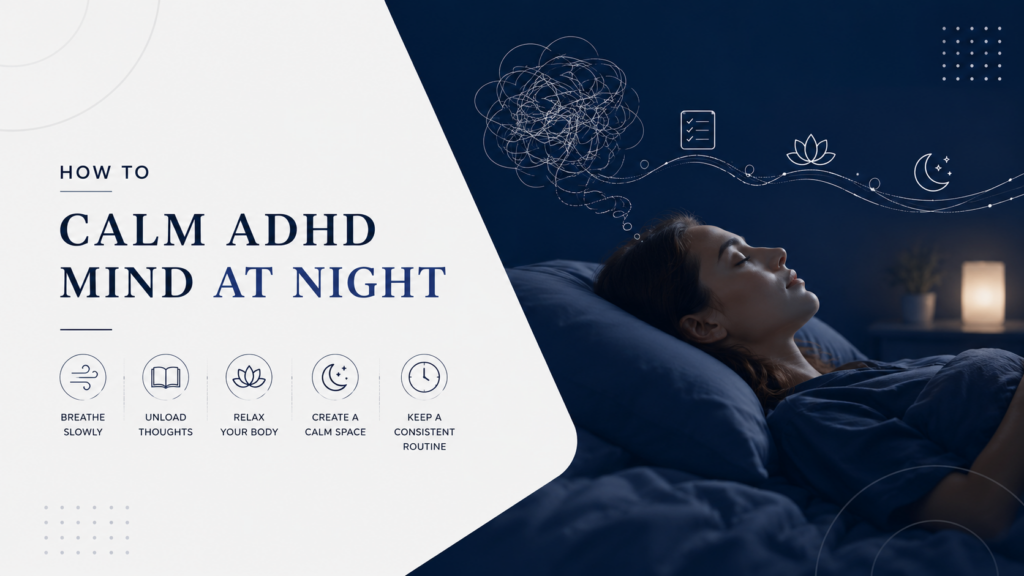
How to Calm ADHD Mind at Night
Many people with ADHD feel wide awake at bedtime. The brain keeps going even when the body feels tired. Racing thoughts, restless nights, and trouble falling asleep are common parts of the ADHD experience. If you are searching for how to calm ADHD mind at night, you are not alone.
ADHD and sleep problems often happen together. Many adults and teens with attention deficit hyperactivity disorder struggle with sleep quality, emotional regulation, and staying on a healthy sleep schedule. The good news is that small habits can make a big difference.
At Revival Mental Health, we understand how ADHD affects sleep, mood, focus, and daily life. Learning healthy sleep hygiene habits can help calm the ADHD brain and improve sleep over time.
Why ADHD Minds Struggle at Night
People with ADHD often feel tired during the day but become more alert at night. This can create a frustrating cycle of poor sleep and daytime sleepiness.
The ADHD brain works differently. It may have trouble slowing down thoughts, calming emotions, and following a normal circadian rhythm. This is why many people with ADHD feel like a night owl.
Racing Thoughts and Emotional Dysregulation
Racing thoughts are one of the biggest ADHD sleep issues. At bedtime, the brain may replay conversations, worries, or unfinished tasks. Emotional dysregulation can also make stress feel stronger at night.
This nightly battle can make it hard to fall asleep or stay asleep. Some people stay wide awake for hours in bed even when they feel exhausted.
Delayed Sleep Phase Syndrome
Many people with ADHD have delayed sleep phase syndrome. This means their sleep cycle naturally shifts later at night. They may not feel sleepy until very late and may have difficulty waking in the morning.
An irregular sleep schedule can lead to chronic sleep deprivation over time.
ADHD and Sleep Disorders
ADHD and sleep disorders often happen together. Some common sleep disturbances include:
- Sleep apnea
- Restless legs syndrome
- Insomnia
- Trouble staying asleep
- Trouble falling asleep
A sleep specialist may recommend a sleep study if symptoms become severe.
Common ADHD Sleep Problems
ADHD sleep struggles can affect every part of life. Poor sleep can worsen ADHD symptoms like impulse control, focus, and emotional regulation.
Difficulty Falling Asleep
Many people with ADHD have difficulty falling asleep because the brain stays active. Bright lights, electronic devices, and stress can make this worse.
Trouble Staying Asleep
Some people wake up many times during the night. Others wake up too early and cannot fall back asleep.
Difficulty Waking Up
Even after sleeping for hours, many adults with ADHD still feel tired. Difficulty waking may happen because of poor sleep quality or an unhealthy sleep cycle.
How to Calm ADHD Mind at Night
There are many ways to calm the brain before bed. Healthy habits can improve sleep patterns and help the body relax naturally.
Create a Wind Down Routine
A wind down routine tells the brain it is time for sleep. Try doing the same calming activities every night before bedtime.
Good bedtime habits may include:
- Taking a warm bath
- Taking a warm shower
- Reading a book
- Gentle yoga
- Listening to white noise
- Deep breathing
A calm routine can help the ADHD brain feel safe and relaxed.
Use Deep Breathing
Deep breathing helps slow the heart rate and relax the nervous system. This can reduce stress and racing thoughts.
Try breathing in slowly for four seconds and breathing out for six seconds.
Try Progressive Muscle Relaxation
Progressive muscle relaxation helps release tension in the body. Tighten and relax each muscle group slowly from head to toe.
This simple tool may help people with ADHD calm their minds and bodies before sleep.
Make Your Bedroom Better for Sleep
Your bedroom environment matters. A dark room with fewer distractions can improve sleep quality.
Reduce Blue Light
Blue light from phones, tablets, and TVs can confuse the circadian rhythm. Electronic devices tell the brain to stay awake.
Avoid screens for at least one hour before bedtime if possible.
Use White Noise
White noise or a white noise machine can block distracting sounds. Some people with ADHD sleep better with calming background noise.
Try Weighted Blankets
Weighted blankets may help reduce stress and create a calming feeling. Some people find they stay asleep longer with gentle pressure on the body.
Follow a Healthy Sleep Schedule
A steady sleep schedule helps train the brain and body.
Try to:
- Go to bed at the same time each night
- Wake up at the same time every morning
- Use an alarm clock consistently
- Avoid sleeping too late on weekends
Better sleep habits can improve ADHD sleep over time.
Avoid Stimulants Before Bed
Stimulant medications are often used for managing ADHD symptoms. However, medication timing matters.
Taking ADHD medications too late in the day may lead to trouble sleeping.
Watch Caffeine Intake
Avoid caffeine late in the day. Coffee, soda, energy drinks, and chocolate can all make it harder to fall asleep.
Talk to a Professional About Medication Timing
Sometimes changing medication timing can improve sleep. Never stop sleep medicine or ADHD medications without talking to a healthcare provider.
Professional support can help you safely manage sleep problems.
Calm the ADHD Brain Before Bed
The ADHD brain often needs help slowing down.
Try Brain Dumping
Brain dumping means writing down thoughts before bed. Some people call this a “bed write” exercise.
Write down:
- Tasks for tomorrow
- Worries
- Ideas
- Reminders
This can help the brain let go of mental stress before sleep.
Practice Stress Management
Stress management is important for improving sleep. Stress and anxiety can increase sleep struggles.
Helpful stress management tools include:
- Meditation
- Gentle stretching
- Journaling
- Talking with a therapist
- Listening to calming music
ADHD Sleep Tips for Kids and Teens
Children with ADHD may also struggle with bedtime.
Parents can help by:
- Keeping a regular bedtime
- Limiting bright lights
- Avoiding electronic devices before bed
- Using calming bedtime routines
- Creating a quiet sleep space
Simple routines often make a big difference.
When to See a Sleep Specialist
Sometimes sleep issues become serious. A sleep specialist can help identify sleep disorders that may affect ADHD sleep.
You may need extra support if you:
- Stay awake most nights
- Feel extreme daytime sleepiness
- Snore loudly
- Stop breathing during sleep
- Feel exhausted daily
A sleep study can help find problems like sleep apnea or restless legs syndrome.
How Poor Sleep Affects ADHD Symptoms
Poor sleep can worsen ADHD symptoms in many ways.
Lack of sleep may lead to:
- Worse focus
- Mood swings
- Emotional dysregulation
- Poor impulse control
- Trouble learning
- Low energy
Sleep and ADHD are closely connected. Improving sleep may also help improve focus and emotional health.
Better Sleep Takes Time
Many people with ADHD want fast results. But healthy sleep habits often take time to work.
The goal is progress, not perfection.
Small changes can slowly improve:
- Sleep quality
- Sleep patterns
- Mood
- Focus
- Energy
Even one healthy bedtime habit can help calm the ADHD mind.
Final Thoughts
Learning how to calm ADHD mind at night can feel hard at first. ADHD brains struggle with racing thoughts, poor sleep, emotional regulation, and staying on a healthy sleep cycle. But there is hope.
Simple tools like deep breathing, progressive muscle relaxation, brain dumping, and better sleep hygiene can help calm the brain before bedtime. Creating a dark room, avoiding blue light, and following a regular sleep schedule may also improve sleep quality.
At Revival Mental Health, we understand how ADHD affects daily life and sleep. With the right support, many people with ADHD can enjoy better sleep, calmer nights, and healthier mornings.
FAQs
Can ADHD cause trouble sleeping?
Yes. ADHD and sleep problems often happen together. Many people with ADHD have racing thoughts, delayed sleep phase syndrome, or trouble calming the brain at night.
What helps calm an ADHD brain before bed?
Deep breathing, white noise, gentle yoga, brain dumping, and a calming wind down routine may help calm the ADHD brain before sleep.
Why do people with ADHD stay awake at night?
Many people with ADHD have changes in their circadian rhythm. This can make them feel more alert at night and sleepy during the day.
Can ADHD medications affect sleep?
Yes. Some stimulant medications may cause trouble falling asleep if taken too late in the day. Medication timing is important.
When should I see a sleep specialist?
You should seek professional support if sleep issues become severe, if you feel tired every day, or if you think you may have sleep apnea or other sleep disorders.