

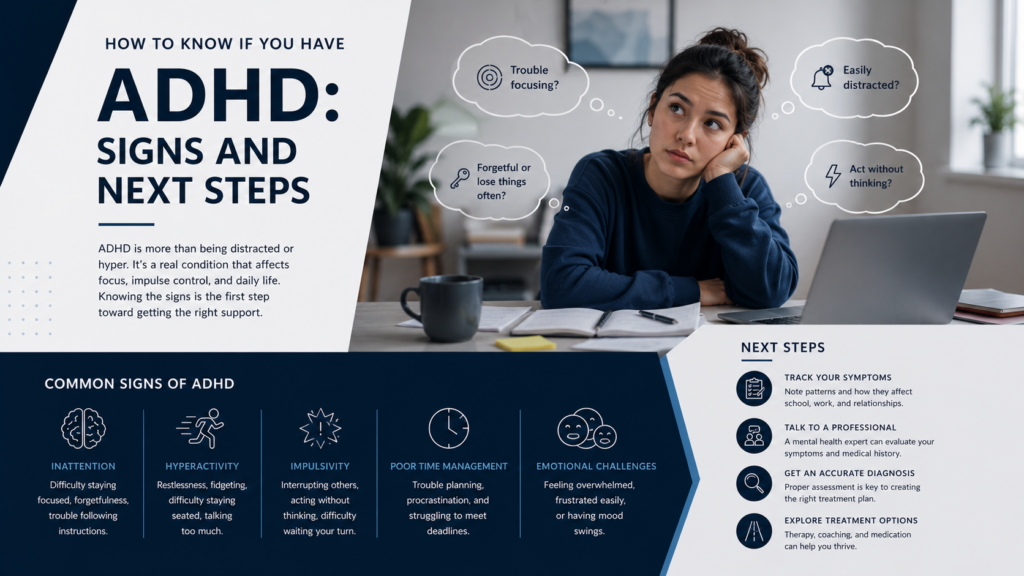
Many people wonder how to know if you have ADHD because they struggle with focus, forget things often, or feel restless every day. If these challenges affect school, work, or relationships, it may be time to learn more. Understanding the signs is the first step toward getting help. If you are looking for professional ADD treatment in Orange County, Revival Mental Health offers personalized care to help people manage symptoms and improve daily life.
Attention-Deficit/Hyperactivity Disorder (ADHD) is a neurodevelopmental disorder that affects children and adults. While everyone loses focus sometimes, ADHD symptoms happen often and make everyday tasks harder. Learning the warning signs and knowing what to do next can help you move forward with confidence.
What Is ADHD?
ADHD stands for Attention-Deficit/Hyperactivity Disorder. It is a medical condition that affects how the brain manages attention, self-control, and organization.
People with ADHD may have trouble:
- Paying attention
- Staying organized
- Controlling impulses
- Sitting still
- Finishing tasks
- Managing time
The Centers for Disease Control and Prevention (CDC), American Psychiatric Association (APA), and National Institute of Mental Health (NIMH) recognize ADHD as a real medical condition that can be treated successfully.
Why ADHD Can Be Hard to Recognize
Many people live with ADHD for years before getting diagnosed.
This happens because symptoms may look different from person to person. Some people are very active and impulsive. Others mainly struggle with focus and forgetfulness.
Many adults assume they are simply:
- Lazy
- Disorganized
- Bad at managing time
- Forgetful
- Easily distracted
In reality, ADHD affects how the brain works—not how smart someone is.
Common Signs You May Have ADHD
Trouble Paying Attention
One of the biggest signs of ADHD is difficulty staying focused.
You may notice that you:
- Lose track during conversations
- Skip important details
- Make careless mistakes
- Drift off while reading
- Have trouble finishing projects
Even enjoyable activities may become difficult if they require long periods of concentration.
You Get Distracted Easily
Small sounds, phone notifications, or movement around you can quickly pull your attention away.
People with ADHD often:
- Jump between tasks
- Forget what they were doing
- Lose focus during meetings
- Have trouble returning to work after interruptions
You Forget Things Often
Forgetfulness is another common symptom.
You might:
- Miss appointments
- Lose your keys
- Forget birthdays
- Leave tasks unfinished
- Forget where you put everyday items
This happens because ADHD affects working memory.
Poor Time Management
Many people with ADHD underestimate how long tasks take.
You may:
- Run late often
- Miss deadlines
- Start projects too late
- Feel rushed throughout the day
This is sometimes called “time blindness.”
Trouble Staying Organized
Keeping things organized may feel overwhelming.
Signs include:
- Cluttered spaces
- Messy desks
- Losing paperwork
- Forgetting bills
- Difficulty planning ahead
Even simple daily routines can become stressful.
Restlessness
Not everyone with ADHD is hyperactive, but many people feel restless inside.
You may:
- Tap your foot
- Fidget constantly
- Pace while talking
- Feel unable to relax
- Need to keep moving
Adults often experience internal restlessness instead of obvious hyperactivity.
Acting Without Thinking
Impulsivity is another common ADHD symptom.
This may include:
- Interrupting conversations
- Speaking before thinking
- Making quick decisions
- Spending money impulsively
- Taking unnecessary risks
Impulsivity can affect relationships, work, and finances.
Emotional Signs of ADHD
Many people do not realize ADHD also affects emotions.
Common emotional symptoms include:
Becoming Frustrated Quickly
Small problems may feel much bigger than they really are.
Feeling Overwhelmed
Simple tasks can pile up and become stressful.
Mood Changes
Some people notice frequent mood swings throughout the day.
Low Self-Esteem
Years of struggling can lead someone to believe they are not capable, even though ADHD is the real cause.
ADHD Looks Different in Adults and Children
ADHD in Children
Children often show:
- Running around constantly
- Interrupting teachers
- Difficulty following directions
- Trouble sitting still
- Forgetting homework
Teachers are often the first to notice these behaviors.
ADHD in Adults
Adults may experience:
- Chronic lateness
- Poor organization
- Missed deadlines
- Forgetfulness
- Difficulty managing responsibilities
- Problems maintaining relationships
Many adults are diagnosed after realizing their childhood symptoms never disappeared.
Types of ADHD
There are three recognized presentations of ADHD.
Predominantly Inattentive Presentation
People mainly struggle with attention.
Common symptoms include:
- Daydreaming
- Forgetfulness
- Losing items
- Difficulty focusing
- Trouble following instructions
Predominantly Hyperactive-Impulsive Presentation
These individuals are more likely to:
- Fidget
- Talk excessively
- Interrupt others
- Act impulsively
- Feel restless
Combined Presentation
Many people experience both inattentive and hyperactive symptoms.
This is the most common type.
Could It Be Something Else?
Several conditions can look similar to ADHD.
These include:
- Anxiety disorders
- Depression
- Learning disabilities
- Sleep disorders
- Thyroid problems
- Stress
- Bipolar disorder
That is why professional evaluation is important.
How Is ADHD Diagnosed?
There is no single blood test or brain scan that diagnoses ADHD.
Instead, a licensed mental health professional gathers information from several sources.
Medical History
Your provider asks about:
- Childhood behavior
- School performance
- Family history
- Current symptoms
- Medical conditions
ADHD Symptom Review
Providers compare symptoms with criteria found in the Diagnostic and Statistical Manual of Mental Disorders (DSM-5-TR).
Symptoms must:
- Last at least six months
- Affect daily life
- Begin during childhood
- Occur in more than one setting
Rating Scales
Standard ADHD questionnaires help providers better understand symptoms.
Additional Evaluations
Sometimes providers recommend testing for learning disabilities, anxiety, depression, or other mental health conditions.
When Should You Get Evaluated?
Consider scheduling an ADHD evaluation if your symptoms:
- Affect work performance
- Hurt relationships
- Cause academic struggles
- Create daily stress
- Continue for months or years
- Make organization difficult
Early diagnosis often leads to better outcomes.
What Happens After an ADHD Diagnosis?
Receiving an ADHD diagnosis is not the end—it is the beginning of understanding how your brain works.
Treatment helps many people improve focus, organization, and confidence.
ADHD Treatment Options
Most treatment plans include several approaches.
Therapy
Behavioral therapy helps people:
- Build routines
- Improve organization
- Learn coping skills
- Manage emotions
- Reduce stress
Cognitive Behavioral Therapy (CBT) is commonly used for adults with ADHD.
Medication
Some people benefit from medication prescribed by a qualified healthcare provider.
Common options include:
- Stimulant medications
- Non-stimulant medications
Medication is usually combined with therapy and healthy habits.
Lifestyle Changes
Healthy routines can improve symptoms.
Helpful habits include:
- Regular exercise
- Healthy eating
- Good sleep
- Daily planners
- Reminder apps
- Breaking tasks into smaller steps
Tips If You Think You Have ADHD
While waiting for an evaluation, try these strategies.
Write Everything Down
Use calendars, planners, or phone reminders.
Break Big Tasks Into Small Steps
Large projects feel easier when divided into smaller goals.
Remove Distractions
Create a quiet workspace whenever possible.
Build Daily Routines
Doing tasks at the same time each day improves consistency.
Get Enough Sleep
Sleep affects attention, memory, and emotional control.
ADHD Is Treatable
Many successful people have ADHD.
With the right treatment plan, people often improve:
- Focus
- Organization
- Time management
- Relationships
- School performance
- Job performance
- Self-confidence
The earlier treatment begins, the easier it becomes to build lifelong skills.
Why Choose Revival Mental Health
At Revival Mental Health, we understand that ADHD affects every person differently. Our team provides personalized evaluations and evidence-based treatment plans designed to improve focus, organization, emotional regulation, and daily functioning. Whether your symptoms are mild or significantly affecting your life, we work with you to create a plan that fits your goals.
If you believe you may have ADHD, seeking professional support is an important first step. Early diagnosis and treatment can help you better understand your symptoms and develop skills that improve your quality of life.
Final Thoughts
Learning how to know if you have ADHD starts with recognizing the signs. Difficulty focusing, forgetfulness, impulsive behavior, poor organization, and time management problems are common symptoms. While everyone experiences these challenges occasionally, persistent symptoms that interfere with everyday life deserve professional attention.
An ADHD evaluation can provide answers and help you begin an effective treatment plan. With therapy, healthy routines, and, when appropriate, medication, many people successfully manage ADHD and live productive, fulfilling lives.
Frequently Asked Questions
Can ADHD develop in adulthood?
Research suggests ADHD begins in childhood, even if it is not diagnosed until adulthood. Many adults recognize symptoms only after workplace or family responsibilities increase.
Is ADHD different from ADD?
Yes. ADD is an older term. Today, all forms are diagnosed as Attention-Deficit/Hyperactivity Disorder (ADHD), with different presentations based on symptoms.
Can anxiety look like ADHD?
Yes. Anxiety and ADHD share symptoms like poor concentration and restlessness. A professional evaluation helps determine the correct diagnosis.
Do I need testing to know if I have ADHD?
Yes. A licensed mental health professional uses interviews, symptom checklists, medical history, and DSM-5 criteria to diagnose ADHD accurately.
Can ADHD be treated without medication?
Yes. Many people benefit from therapy, behavioral strategies, organizational skills, exercise, healthy sleep habits, and lifestyle changes. Some people also choose medication as part of a comprehensive treatment plan.