
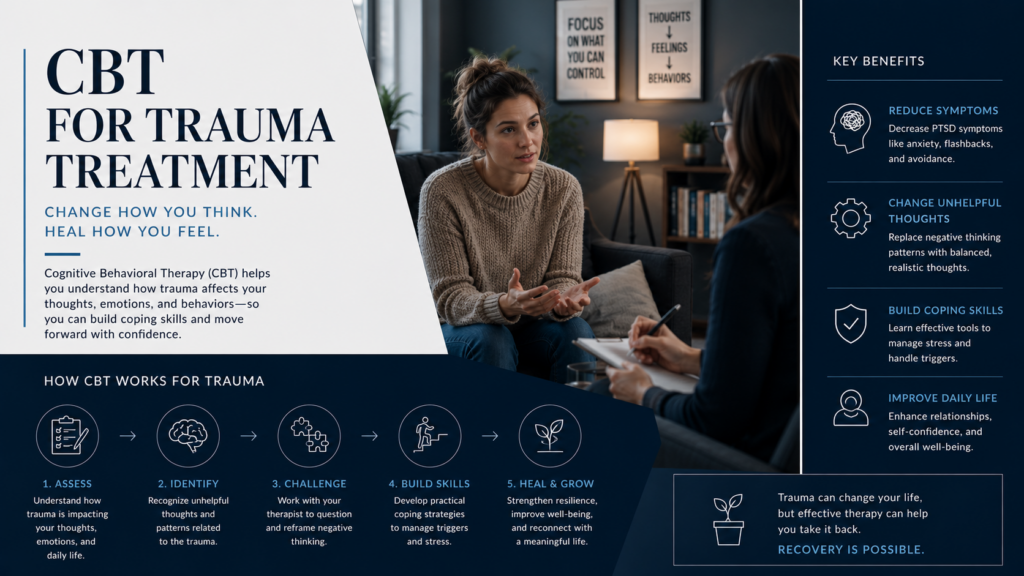
CBT for trauma treatment can help people who feel stuck after a scary or painful event. If you are looking for support, Revival Mental Health offers trauma therapy in Orange County for people who need help with trauma, PTSD, anxiety, depression, and stress. Cognitive behavioral therapy, also called CBT, helps a person understand how thoughts, feelings, and behaviors work together. When trauma changes how you think, feel, and act, CBT can help you feel more safe, calm, and in control.
Trauma can happen after a traumatic event such as violence, a car accident, sexual abuse, loss, medical trauma, or another painful life event. Some people heal over time. Others may have symptoms that do not go away. CBT gives people helpful tools to lower fear, manage emotions, and build coping skills.
What Is CBT for Trauma Treatment?
CBT for trauma treatment is a type of therapy that helps people change painful thought processes after trauma. It is based on the idea that thoughts, emotions, and behaviors are connected.
For example, after trauma, a person may think, “I am never safe.” This thought can lead to fear, stress, anger, and avoidance. The person may stop going places, seeing friends, or sleeping well. CBT helps the person look at these thinking patterns and learn new ways to respond.
CBT does not mean the trauma was not serious. It does not blame the person. It helps the brain and body learn that the danger is over and that healing is possible.
How Cognitive Behavioral Therapy Works
Cognitive behavioral therapy often starts with assessing symptoms, trauma history, and daily difficulties. A therapist may ask about sleep, fear, anxiety, depression, anger, family stress, and emotional responses.
Then, the therapist helps the person learn skills. These skills may include relaxation techniques, communication tools, guided imagery, cognitive restructuring, and safe exposure methods. Over time, the person can feel less controlled by trauma memories.
CBT can be used with adults, adolescents, and children. It can also be helpful for people suffering from post traumatic stress disorder, acute stress disorder, and other trauma-related symptoms.
Trauma and Post Traumatic Stress Disorder
Post traumatic stress disorder, also written as posttraumatic stress disorder or PTSD, can happen after a person lives through or sees a traumatic event. PTSD symptoms can affect the mind, body, and daily life.
Some people have symptoms soon after trauma. Others may not feel symptoms until weeks, months, or years later. Acute stress disorder is when strong trauma symptoms happen in the first month after a traumatic event. If symptoms last longer, the person may be assessed for PTSD.
Common PTSD Symptoms
PTSD symptoms can look different for each person. Some common symptoms include:
Feeling scared even when safe
Having nightmares or bad memories
Avoiding people, places, or thoughts linked to the trauma
Feeling numb or distant from others
Having anger, guilt, or shame
Feeling jumpy or on guard
Trouble sleeping or focusing
Anxiety, depression, or panic
Feeling unsafe in the body
These symptoms are not a sign of weakness. They are signs that the brain and body are still reacting to traumatic experiences.
Why CBT Helps With Trauma
CBT helps because trauma can change the way a person sees the world. A person may start to believe that all people are dangerous, that the trauma was their fault, or that they will never feel better.
These negative thoughts can keep fear alive. CBT helps with identifying these thoughts and testing whether they are true, helpful, or based on trauma fear.
Changing Negative Thoughts
One key part of CBT is cognitive restructuring. This means learning how to notice negative thoughts and replace them with more balanced thoughts.
For example:
A trauma thought may be, “It was all my fault.”
A balanced thought may be, “I did not choose what happened. I can work on healing now.”
This practice can help lower shame, fear, and stress. It can also improve a person’s sense of security and self-control.
Building Coping Skills
CBT also teaches coping skills that can be used outside therapy. These skills help patients deal with symptoms in real life.
Helpful skills may include deep breathing, relaxation, journaling, grounding, guided imagery, problem solving, communication, and learning skills for calming the nervous system.
The more a person practices these methods, the easier it can become to manage emotions and behaviors.
Trauma Focused CBT
Trauma focused CBT is a special form of CBT made to help children, adolescents, and families after trauma. It is often called TF CBT. Trauma focused cognitive behavioral therapy uses structure, support, and safety to help young people talk about trauma and learn healthy coping skills.
TF CBT can help with fear, depression, anxiety, anger, shame, and behavior problems after trauma. It may also include family sessions so parents or caregivers can learn how to support the child.
What Happens in TF CBT?
In TF CBT, the therapist helps the child or teen learn about trauma and feelings. They may practice relaxation, emotional control, and safe communication.
A key part of trauma focused CBT may include creating a trauma narrative. A trauma narrative is a safe way to tell the story of what happened. The goal is not to force the child to relive the trauma. The goal is to help the child lower fear and understand the event in a healthier way.
The therapist moves slowly and carefully. The child stays in control. Parents or caregivers may also learn ways to offer comfort and support.
Cognitive Processing Therapy for Trauma
Cognitive processing therapy is another type of CBT that can help with treating PTSD. It is often used for adults who have PTSD symptoms after trauma, sexual abuse, violence, military trauma, or other painful events.
This therapy focuses on stuck points. Stuck points are beliefs that keep a person trapped in pain. These may include thoughts about safety, trust, control, power, self-worth, or blame.
How Cognitive Processing Therapy Helps
Cognitive processing therapy helps patients notice stuck thoughts and look at them in a new way. The person learns that trauma may have shaped their beliefs, but those beliefs can change.
For example, a person may believe, “I can never trust anyone.” Therapy may help them see that trust can be built slowly with safe people.
This kind of cognitive therapy can help people feel less shame, less fear, and more control over their life.
Exposure Therapy for Trauma
Exposure therapy is another CBT method used for trauma and PTSD. It helps people face trauma reminders in a safe, planned way. The goal is to help the brain learn that reminders are not the same as danger.
Exposure does not mean forcing a person to do something unsafe. It is done with care, consent, and support from a trained therapist.
Prolonged Exposure
Prolonged exposure is a type of exposure therapy used for PTSD. It may include talking about the trauma memory and slowly facing safe things the person has been avoiding.
There are two common forms of exposure used in trauma treatment: imaginal exposure and vivo exposure.
Imaginal exposure means the person talks about the trauma memory in therapy while using support and coping skills. Vivo exposure means the person slowly faces real-life safe situations they have avoided, such as driving, walking near a certain place, or being around a crowd.
These techniques can lower fear over time. The brain learns that a reminder does not mean the traumatic event is happening again.
CBT Techniques Used in Trauma Treatment
CBT for trauma treatment uses many techniques to help people feel better. A therapist may choose methods based on the person’s age, symptoms, trauma history, and goals.
Relaxation Techniques
Relaxation techniques help calm the body. Trauma can keep the body stuck in stress mode. Relaxation teaches the nervous system how to slow down.
These skills may include deep breathing, muscle relaxation, grounding, mindfulness, and guided imagery. These tools can help when a person feels panic, anger, fear, or sadness.
Cognitive Restructuring
Cognitive restructuring helps a person look at trauma-related thoughts. The therapist may ask questions like:
Is this thought true?
Is there another way to look at this?
Does this thought help me heal?
What would I say to a friend who had this thought?
This helps the person build healthier thinking patterns.
Trauma Narrative
A trauma narrative may be used in trauma focused CBT. It helps a person tell their story in a safe way. This can lower fear and help the person make sense of what happened.
The trauma narrative is done slowly. The therapist helps the person stay calm and grounded.
Learning Skills for Daily Life
CBT is not only about talking. It is also about practice. Patients may practice skills between sessions. This may include writing thoughts down, using coping skills, practicing communication, or facing safe situations step by step.
These skills can help people feel more confident outside therapy.
What Research Says About CBT for Trauma
Research has found that CBT can be helpful for trauma and PTSD. Systematic reviews and meta analyses have studied how CBT works for patients with PTSD, anxiety, depression, and trauma symptoms.
The Cochrane Database and other research reviews have looked at the efficacy and effectiveness of trauma focused cognitive behavioral therapy, cognitive processing therapy, and prolonged exposure. Many studies show that these treatments can help reduce PTSD symptoms when done with a trained therapist.
This does not mean every person heals in the same way. Some people need more time. Some may need other types of treatment too. But CBT is one of the most studied methods for treating PTSD and trauma-related symptoms.
Who Can CBT Help?
CBT can help many people who are suffering after trauma. It may help adults, adolescents, children, and families. It may help people who have gone through sexual abuse, violence, accidents, loss, bullying, medical trauma, or other traumatic experiences.
CBT may be helpful if a person has:
PTSD symptoms
Acute stress disorder
Anxiety
Depression
Anger
Fear
Sleep problems
Avoidance
Emotional numbness
Family or relationship stress
Trouble with control or trust
A therapist can help decide if CBT is the right intervention or if another treatment may fit better.
What to Expect During CBT for Trauma Treatment
Starting therapy can feel scary. Many people worry they will have to talk about everything right away. A good therapist will not rush the process.
CBT often starts with safety, trust, and learning skills. The therapist helps the person understand trauma and how it affects the brain, body, emotions, and behaviors.
First Sessions
In the first sessions, the therapist may ask about symptoms, mental health history, family support, stress, and goals for treatment. They may also ask about the traumatic event, but only in a careful and respectful way.
The therapist may teach basic relaxation and coping skills first. This helps the person feel more ready for deeper work later.
Middle Sessions
In the middle of treatment, the person may work on negative thoughts, trauma memories, avoidance, emotional responses, and daily life challenges. This may include cognitive restructuring, trauma narrative work, or exposure therapy.
The therapist helps the person practice new skills and notice progress.
Later Sessions
Later sessions may focus on keeping progress strong. The person may make a plan for future stress, triggers, and difficult emotions. The goal is to help the person feel more secure, capable, and hopeful.
Can Trauma Be Successfully Treated?
Yes, trauma symptoms can be successfully treated for many people. Healing does not mean forgetting what happened. It means the trauma no longer controls daily life in the same way.
With therapy, support, practice, and time, many people have fewer symptoms. They may sleep better, feel safer, improve family communication, and feel more in control of their emotions.
Healing is not always fast. Some days may feel harder than others. But treatment can help a person move forward step by step.
Why Choose Revival Mental Health for Trauma Support
Revival Mental Health supports people who are dealing with trauma, PTSD, anxiety, depression, stress, and emotional pain. Care is built around the person, not just the diagnosis.
A therapist can help with assessing symptoms, identifying goals, and building a treatment plan that fits the person’s needs. CBT, trauma focused care, relaxation, coping skills, and other methods may be used to support healing.
The goal is to help each person feel heard, safe, and supported while they learn new ways to manage trauma symptoms.
When to Get Help for Trauma Symptoms
It may be time to get help if trauma symptoms are affecting daily life. This may include trouble sleeping, panic, fear, anger, sadness, avoidance, or feeling disconnected from others.
A person should also seek help if they feel unsafe, have thoughts of self-harm, or feel unable to control strong emotions. Support is available, and no one has to face trauma alone.
Signs You May Need Trauma Therapy
You may benefit from trauma therapy if you:
Keep thinking about a traumatic event
Avoid reminders of what happened
Feel guilt or shame
Have strong fear or anger
Feel numb or detached
Have anxiety or depression
Feel unsafe even when there is no danger
Have trouble with family, work, or school
CBT for trauma treatment can help you learn skills, understand symptoms, and take steps toward healing.
Final Thoughts on CBT for Trauma Treatment
CBT for trauma treatment is a proven and helpful way to support healing after traumatic experiences. It can help people understand PTSD symptoms, change negative thoughts, build coping skills, and feel safer in daily life.
Cognitive behavioral therapy, trauma focused CBT, cognitive processing therapy, and exposure therapy are all methods that may help with treating PTSD and trauma symptoms. With a trained therapist and steady practice, many people can feel more calm, strong, and hopeful.
Revival Mental Health offers compassionate mental health treatment for people who want support after trauma. Healing is possible, and help can begin with one safe step.
FAQs About CBT for Trauma Treatment
What is CBT for trauma treatment?
CBT for trauma treatment is a type of therapy that helps people understand and change painful thoughts, feelings, and behaviors after trauma. It can help with PTSD symptoms, anxiety, depression, fear, anger, and stress.
Can CBT help with post traumatic stress disorder?
Yes. CBT can help people with post traumatic stress disorder and posttraumatic stress disorder by teaching coping skills, changing negative thoughts, and helping the brain feel safer around trauma reminders.
What is trauma focused CBT?
Trauma focused CBT, also called TF CBT, is a type of cognitive behavioral therapy often used with children, adolescents, and families. It helps young people learn coping skills, talk about trauma safely, and lower symptoms.
Is exposure therapy safe for trauma?
Exposure therapy can be safe when done with a trained therapist. It is done slowly and with care. Methods like imaginal exposure, vivo exposure, and prolonged exposure help people face trauma reminders in a safe and planned way.
How long does CBT take to help trauma?
The length of CBT depends on the person, symptoms, and trauma history. Some people feel better in a few months. Others need more time. A therapist can help create a treatment plan that fits the person’s needs.