

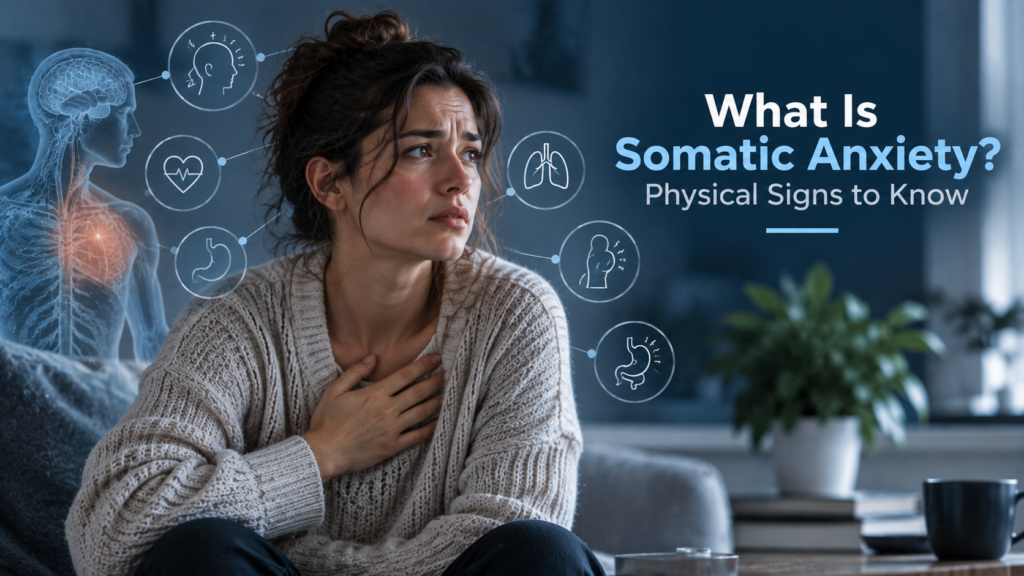
Somatic anxiety is anxiety that shows up strongly in the body. Instead of feeling worried only in your thoughts, you may notice a racing heart, tight muscles, sweating, nausea, dizziness, or trouble breathing. These physical symptoms can feel intense and sometimes scary.
For some people, somatic anxiety may also develop after stressful or traumatic experiences. Learning about trauma therapy in Orange County can help explain how stress, trauma, and the nervous system may affect both the mind and body.
Somatic anxiety is real. The symptoms are not imagined. Anxiety can trigger real changes in the nervous system, muscles, heart rate, breathing, and digestive system.
What Is Somatic Anxiety?
Somatic anxiety describes anxiety that causes noticeable physical symptoms.
The word somatic refers to the body. When anxiety becomes somatic, emotional stress may appear as bodily sensations.
A person may feel:
- A pounding or racing heart
- Chest tightness
- Muscle tension
- Shaking
- Sweating
- Shortness of breath
- Stomach pain
- Nausea
- Headaches
- Dizziness
- Tingling
- Fatigue
Some people notice these physical signs before they even realize they feel anxious.
Somatic anxiety can happen during short periods of stress. It may also occur with ongoing anxiety disorders, panic attacks, trauma-related conditions, or chronic stress.
Why Does Anxiety Cause Physical Symptoms?
Anxiety affects both the brain and the body.
When the brain believes something may be dangerous, it can activate the body’s stress response. This response prepares you to protect yourself.
The sympathetic nervous system plays a major role in this process.
The Fight-or-Flight Response
During anxiety, the body may enter the fight-or-flight response.
Stress hormones such as adrenaline can be released. These chemicals prepare the body to act quickly.
As a result:
- Heart rate may increase
- Breathing may become faster
- Muscles may tighten
- Sweating may increase
- Digestion may slow down
- Blood flow may shift toward major muscles
These changes can be useful during a real threat. However, they may feel uncomfortable when there is no immediate physical danger.
A work meeting, difficult memory, crowded room, health concern, or stressful thought can sometimes activate the same body response.
What Are the Most Common Physical Signs of Somatic Anxiety?
Somatic anxiety can affect many areas of the body. Symptoms may be mild for one person and much stronger for another.
Racing Heart or Heart Palpitations
A fast heartbeat is one of the most common physical anxiety symptoms.
You may notice:
- Pounding in your chest
- Fluttering
- A skipped-beat feeling
- A sudden increase in heart rate
Anxiety can make you more aware of your heartbeat. Paying close attention to it may then create even more worry.
Chest Tightness
Some people feel pressure or tightness across the chest during anxiety.
Muscle tension and changes in breathing can contribute to this feeling.
Chest pain should not automatically be blamed on anxiety. New, severe, or unusual chest pain should be medically evaluated.
Shortness of Breath
Anxiety can cause fast or shallow breathing.
You may feel like you cannot take a full breath even when your oxygen level is normal.
Rapid breathing may also cause:
- Lightheadedness
- Tingling in the hands
- Tingling around the mouth
- Chest discomfort
- A feeling of losing control
Slower breathing can sometimes help the nervous system settle.
Muscle Tension
Stress can cause muscles to tighten without you noticing.
Common areas of tension include:
- Neck
- Shoulders
- Jaw
- Back
- Chest
- Legs
Long-term muscle tension may contribute to headaches, soreness, jaw pain, or fatigue.
Stomach Problems
The brain and digestive system are closely connected through what is often called the gut-brain connection.
Anxiety may cause:
- Nausea
- Stomach pain
- Diarrhea
- Constipation
- Loss of appetite
- Increased appetite
- A “butterflies” feeling
Some people notice digestive problems during stressful situations even when they do not feel mentally anxious.
Dizziness or Lightheadedness
Anxiety may make you feel dizzy, weak, or unsteady.
This can happen because of:
- Rapid breathing
- Muscle tension
- Stress hormones
- Changes in breathing patterns
Fear of dizziness may then cause more anxiety, creating a cycle.
Sweating and Hot Flashes
Anxiety can activate sweat glands.
You may notice sweating on the:
- Hands
- Face
- Forehead
- Chest
- Underarms
Some people also feel suddenly hot or flushed.
Shaking or Trembling
Adrenaline may cause shaking during stressful moments.
Your hands, legs, voice, or entire body may tremble.
This can happen during panic attacks, public speaking, conflict, or other situations that create strong anxiety.
Headaches
Muscle tension and stress can contribute to headaches.
Tension headaches may feel like pressure around the forehead, temples, or back of the head.
People who frequently clench their jaw may also develop headaches.
Numbness or Tingling
Somatic anxiety can sometimes cause tingling sensations.
These sensations may appear in the:
- Hands
- Feet
- Face
- Arms
- Legs
Changes in breathing can contribute to these symptoms, especially during panic or hyperventilation.
Fatigue
Anxiety may make the body feel like it is always “on.”
Remaining in a constant state of alert can be exhausting.
People with ongoing somatic anxiety may feel tired even after sleeping. Anxiety may also make it harder to fall asleep or stay asleep.
Somatic Anxiety vs Regular Stress
Stress and somatic anxiety can look similar, but they are not always the same.
Normal stress often happens in response to a clear problem. For example, you may feel tense before a test or job interview. The symptoms usually improve once the stressful event ends.
Somatic anxiety may continue even when the threat is unclear or has passed.
A person may keep noticing:
- Muscle tension
- Heart palpitations
- Stomach problems
- Shortness of breath
- Dizziness
- Physical restlessness
The body may remain on alert even when the person wants to relax.
Can Somatic Anxiety Cause Panic Attacks?
Yes. Strong physical anxiety symptoms can sometimes be part of a panic attack.
A panic attack is a sudden period of intense fear or discomfort. Symptoms may peak quickly.
Common signs include:
- Racing heart
- Sweating
- Shaking
- Chest tightness
- Shortness of breath
- Dizziness
- Nausea
- Chills
- Hot flashes
- Fear of losing control
Physical sensations themselves may become a trigger.
For example, someone may notice their heart beating faster. They may become afraid something is wrong. That fear may make the heart beat even faster, creating a panic cycle.
How Trauma Can Affect Somatic Anxiety
Trauma can change how the nervous system responds to stress.
After a frightening or overwhelming experience, the brain may become more sensitive to signs of danger.
A person may develop physical reactions to:
- Certain sounds
- Crowded spaces
- Conflict
- Memories
- Smells
- Places
- Social situations
The body may react before the person fully understands what triggered the response.
Trauma-related anxiety may involve hyperarousal, which means the nervous system stays highly alert.
Signs may include:
- Startling easily
- Trouble relaxing
- Muscle tension
- Fast heartbeat
- Trouble sleeping
- Irritability
- Feeling constantly “on edge”
These responses can be part of the nervous system’s attempt to protect the person from future danger.
Can Somatic Anxiety Feel Like a Medical Problem?
Yes. Somatic anxiety can sometimes feel similar to a physical health condition.
For example, anxiety may cause chest pressure, dizziness, rapid heartbeat, stomach pain, or breathing changes.
However, physical symptoms should not automatically be assumed to come from anxiety.
A healthcare professional may need to rule out other possible causes, especially when symptoms are new, severe, worsening, or unusual.
Medical conditions affecting the heart, lungs, thyroid, nervous system, or digestive system may sometimes produce symptoms that resemble anxiety.
A proper evaluation can help determine what is causing the symptoms.
What Can Make Somatic Anxiety Worse?
Several factors may increase physical anxiety symptoms.
Too Much Caffeine
Caffeine is a stimulant. It can increase heart rate, shaking, sweating, and nervousness.
For people who are sensitive to anxiety, high amounts of caffeine may make somatic symptoms stronger.
Poor Sleep
Sleep helps regulate the nervous system.
When you do not sleep enough, the brain may become more reactive to stress. Physical anxiety symptoms may then feel stronger.
Chronic Stress
Long periods of stress can keep the body’s alarm system active.
Stress related to work, relationships, money, caregiving, or major life changes can contribute to ongoing physical tension.
Avoidance
Avoiding situations that cause anxiety may provide short-term relief.
Over time, avoidance can teach the brain that the situation really is dangerous. This may increase anxiety when the situation appears again.
Focusing Constantly on Body Sensations
Checking your pulse, breathing, stomach, or other body sensations repeatedly can sometimes increase anxiety.
The more attention a sensation receives, the stronger it may seem.
How Is Somatic Anxiety Treated?
Treatment depends on the cause and severity of the symptoms.
Many people improve through therapy, stress-management skills, lifestyle changes, or a combination of approaches.
Cognitive Behavioral Therapy
Cognitive behavioral therapy, often called CBT, can help people understand the connection between thoughts, emotions, behaviors, and physical symptoms.
A therapist may help identify patterns that increase anxiety.
For example:
Physical sensation → fearful thought → increased anxiety → stronger physical sensation
Learning to interrupt this pattern may reduce symptoms over time.
Trauma-Focused Therapy
When physical anxiety symptoms are connected to traumatic experiences, trauma-focused treatment may help.
Therapy may focus on helping the nervous system respond differently to memories, triggers, and stress.
Breathing Exercises
Slow breathing may help reduce the body’s stress response.
A simple method is to breathe in slowly through your nose and breathe out slightly longer than you breathe in.
The goal is not to force anxiety away. It is to send the body a signal that it can begin slowing down.
Grounding Techniques
Grounding helps bring attention back to the present moment.
One method is the 5-4-3-2-1 exercise.
Notice:
- 5 things you can see
- 4 things you can touch
- 3 things you can hear
- 2 things you can smell
- 1 thing you can taste
Grounding may be helpful when physical anxiety feels overwhelming.
Regular Movement
Walking, stretching, yoga, strength training, and other forms of movement may help release muscle tension and improve stress regulation.
Exercise can also support sleep and overall mood.
When Should You Get Help for Somatic Anxiety?
It may be time to seek support when physical anxiety symptoms begin affecting daily life.
Warning signs may include:
- Avoiding work or school
- Avoiding social situations
- Frequent panic attacks
- Trouble sleeping
- Constant health worries
- Trouble leaving home
- Ongoing physical tension
- Difficulty concentrating
- Feeling overwhelmed by normal tasks
Treatment may help identify the cause of these symptoms and build healthier ways to respond to stress.
Revival Mental Health can help people understand how anxiety, trauma, and nervous system responses may affect everyday life.
Frequently Asked Questions About Somatic Anxiety
What does somatic anxiety feel like?
Somatic anxiety can feel like a racing heart, tight chest, shaking, dizziness, stomach pain, sweating, muscle tension, or shortness of breath. Some people notice physical symptoms before they recognize anxious thoughts.
Is somatic anxiety a real physical response?
Yes. Anxiety can create real physical changes in the nervous system, breathing, muscles, heart rate, and digestion. The symptoms are not imagined.
Can somatic anxiety happen without anxious thoughts?
Yes. Some people experience strong physical anxiety symptoms without feeling consciously worried. The nervous system may react to stress before the person recognizes an emotional trigger.
How long can somatic anxiety symptoms last?
Symptoms may last a few minutes during short periods of stress or continue for hours or longer when anxiety remains active. Chronic anxiety may cause recurring physical symptoms over longer periods.
Can therapy help with somatic anxiety?
Yes. Therapy may help people understand triggers, reduce fear of physical sensations, improve stress regulation, and learn coping skills. CBT, trauma-focused therapy, grounding, and nervous system regulation techniques may all be useful depending on the person’s needs.
Understanding the Mind-Body Connection
Somatic anxiety is a clear example of how closely the mind and body work together.
Anxiety can affect breathing, heart rate, digestion, muscles, sleep, and energy levels. These physical symptoms may feel frightening, but understanding the body’s stress response can make them easier to recognize.
Physical symptoms should also be taken seriously. A medical evaluation can help rule out other health conditions, while mental health treatment can help address anxiety when stress or trauma is contributing to the symptoms.
With the right support, people can learn to recognize physical anxiety signals earlier, calm the nervous system, and respond to stress in healthier ways.