
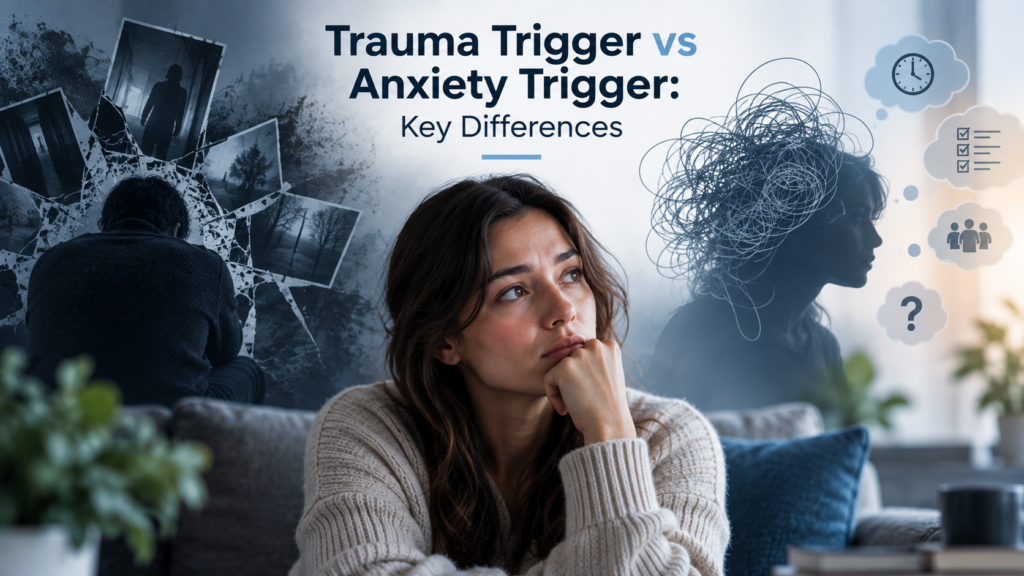
A trauma trigger and an anxiety trigger can feel very similar. Both may cause fear, a racing heart, tense muscles, or a strong urge to escape. However, they do not always come from the same place.
Understanding the difference between a trauma trigger vs anxiety trigger can help you better understand your emotional reactions. People dealing with trauma-related symptoms may also benefit from learning more about trauma therapy in Orange County and how trauma can affect the nervous system.
A trauma trigger is usually connected to a past frightening or painful event. An anxiety trigger is more often connected to fear about what may happen now or in the future.
What Is a Trauma Trigger?
A trauma trigger is something that reminds the brain or body of a past traumatic experience.
The trigger may be easy to notice, such as seeing a place connected to a frightening event. Other times, the person may not understand why they suddenly feel afraid, angry, frozen, or overwhelmed.
Trauma triggers can come from sights, sounds, smells, people, places, thoughts, dates, or physical sensations.
Why Trauma Triggers Happen
Trauma can change the way the brain responds to possible danger.
During a traumatic experience, the brain may connect certain details with the threat. Later, those details can activate the body’s alarm system even when the original danger is gone.
The amygdala is one part of the brain involved in detecting possible threats. The nervous system may then create a fight, flight, freeze, or fawn response.
For example, someone who was involved in a serious car accident may feel intense fear after hearing tires screech. The sound can remind the brain of the original event.
Common Trauma Trigger Examples
Trauma triggers are different for every person. Common examples may include:
- Loud noises
- Yelling or arguments
- Certain smells
- Crowded spaces
- Being touched unexpectedly
- Specific songs
- Certain dates or anniversaries
- Medical settings
- Driving
- Being around someone who looks or acts like a person from the past
A trauma trigger does not have to make logical sense to another person. The brain may react based on the connection it formed during the traumatic experience.
What Is an Anxiety Trigger?
An anxiety trigger is a situation, thought, feeling, or event that causes anxiety symptoms.
Unlike trauma triggers, anxiety triggers do not have to be connected to a past traumatic event.
Instead, they are often linked to worry, uncertainty, stress, or fear about something that could happen.
Why Anxiety Triggers Happen
Anxiety is part of the body’s natural warning system.
It can help people prepare for danger. However, anxiety may become intense when the brain starts treating everyday stress as a serious threat.
A person may begin thinking about worst-case outcomes even when there is little immediate danger.
For example, someone may feel anxious before a job interview because they are worried about saying the wrong thing or being rejected.
Common Anxiety Trigger Examples
Anxiety triggers may include:
- Public speaking
- Work deadlines
- Social situations
- Financial worries
- Health concerns
- School tests
- Relationship problems
- Large crowds
- Changes in routine
- Fear of making mistakes
- Waiting for important news
- Uncertainty about the future
An anxiety trigger usually creates fear about what could happen rather than bringing the person back to a past traumatic event.
Trauma Trigger vs Anxiety Trigger: What Is the Main Difference?
The main difference between a trauma trigger vs anxiety trigger is where the fear comes from.
A trauma trigger is usually tied to a past experience. An anxiety trigger is often tied to a current worry or future possibility.
For example, imagine two people who feel nervous when driving.
One person may panic while driving because they survived a serious car accident. That reaction could be connected to trauma.
Another person may feel anxious because they are worried they might get into an accident even though they have never experienced one.
The symptoms can look similar, but the emotional source may be different.
How Trauma Triggers Feel
A trauma response can feel sudden and powerful.
The person may feel as if the past event is happening again, even though they know they are currently safe.
Emotional Signs of a Trauma Trigger
Emotional symptoms may include:
- Sudden fear
- Anger
- Shame
- Sadness
- Feeling helpless
- Feeling trapped
- Emotional numbness
- Feeling disconnected from reality
Some people also experience intrusive memories or flashbacks.
Physical Signs of a Trauma Trigger
Physical symptoms may include:
- Racing heartbeat
- Sweating
- Shaking
- Fast breathing
- Muscle tension
- Nausea
- Dizziness
- Feeling frozen
- Feeling unable to speak
These symptoms come from the body’s survival response.
How Anxiety Triggers Feel
Anxiety triggers can also cause strong emotional and physical symptoms.
However, the experience is often focused on worry or fear about something that may happen.
Emotional Signs of an Anxiety Trigger
Common symptoms include:
- Excessive worry
- Fear of failure
- Fear of embarrassment
- Trouble concentrating
- Irritability
- Restlessness
- Feeling overwhelmed
A person may spend a lot of time asking “What if?” questions in their mind.
Physical Signs of an Anxiety Trigger
Physical symptoms can include:
- Fast heartbeat
- Sweating
- Tight chest
- Shortness of breath
- Upset stomach
- Headaches
- Muscle tension
- Trouble sleeping
These symptoms can happen even when there is no immediate physical danger.
Can Trauma Triggers and Anxiety Triggers Overlap?
Yes. Trauma triggers and anxiety triggers can overlap.
A past traumatic experience may make a person more anxious about similar situations in the future.
For example, someone who experienced a serious medical emergency may later feel anxious before medical appointments.
The appointment itself may become an anxiety trigger. Certain sounds, smells, or medical equipment may also act as trauma triggers.
This is one reason it can be difficult to tell the difference between trauma and anxiety without looking at the full situation.
Is a Panic Attack a Trauma Trigger or Anxiety Trigger?
A panic attack can happen with either trauma or anxiety.
A trauma trigger may cause a sudden panic response when something reminds the person of a past event.
An anxiety trigger may also lead to panic when worry becomes very intense.
During a panic attack, a person may experience:
- Racing heart
- Chest discomfort
- Shortness of breath
- Dizziness
- Shaking
- Sweating
- Fear of losing control
- Fear that something terrible is happening
The symptoms alone do not always reveal what caused the panic attack.
Understanding what happened before the symptoms started may provide more clues.
What Happens in the Nervous System?
Both trauma and anxiety can activate the sympathetic nervous system.
This is the part of the nervous system involved in the fight-or-flight response.
When the brain senses danger, hormones such as adrenaline can increase heart rate, breathing, and alertness.
The Fight Response
A person may become angry, defensive, or ready to confront the threat.
The Flight Response
A person may feel a strong need to escape or avoid the situation.
The Freeze Response
The body may feel stuck, numb, or unable to move.
The Fawn Response
Some people may try to please or calm another person to avoid conflict or danger.
These survival responses are especially common in people with unresolved trauma, but they may also appear during intense anxiety.
How to Identify Your Triggers
Learning what triggers your symptoms can help you notice patterns.
Start by paying attention to what happens before you feel overwhelmed.
You may ask yourself:
- Where was I?
- Who was with me?
- What was I thinking about?
- What did I see or hear?
- Did something remind me of the past?
- Was I worried about something happening in the future?
- What did I feel in my body?
Writing these details down can sometimes make patterns easier to see.
How to Respond to a Trauma Trigger
Trauma triggers can make the brain feel as if an old danger is happening again.
Grounding techniques may help bring attention back to the present moment.
Remind Yourself Where You Are
Look around the room and notice what is happening right now.
You may remind yourself of the current date, your location, and the fact that the past event is not happening at this moment.
Use the Five Senses
Notice things you can see, hear, feel, smell, and taste.
This can help the brain focus on the present environment.
Slow Your Breathing
Try taking slow breaths with a longer exhale.
Slow breathing may help signal to the nervous system that immediate danger has passed.
How to Respond to an Anxiety Trigger
When anxiety is driven by future worry, it may help to separate facts from fearful predictions.
Name the Worry
Identify exactly what you are afraid might happen.
Turning a vague fear into a clear thought can sometimes make it easier to examine.
Focus on What You Can Control
Ask yourself what action you can take right now.
For example, someone worried about a work presentation may practice the presentation instead of repeatedly imagining failure.
Challenge Worst-Case Thinking
Anxiety often makes the worst possible outcome feel like the most likely outcome.
Ask yourself whether there are other possible results.
When Should You Consider Professional Support?
Triggers can become a larger concern when they interfere with daily life.
Consider speaking with a qualified mental health professional if fear or trauma symptoms make it hard to:
- Work
- Attend school
- Sleep
- Maintain relationships
- Drive
- Leave home
- Visit certain places
- Complete daily tasks
Professional treatment may also be helpful when a person experiences frequent panic attacks, flashbacks, nightmares, emotional numbness, or intense avoidance.
Mental health professionals may use different forms of therapy depending on the symptoms and diagnosis.
How Trauma Therapy May Help
Trauma therapy can help people understand how past experiences affect present thoughts, feelings, and physical reactions.
Treatment may focus on reducing the intensity of trauma responses while helping the nervous system recognize that the original danger has ended.
Depending on the person’s needs, treatment may include trauma-focused psychotherapy, cognitive behavioral approaches, grounding skills, emotional regulation strategies, or other evidence-based methods.
At Revival Mental Health, treatment planning can focus on the person’s symptoms, history, safety needs, and level of daily functioning.
Trauma Trigger vs Anxiety Trigger: Key Takeaway
The difference between a trauma trigger vs anxiety trigger usually comes down to the source of the fear.
A trauma trigger is commonly linked to a past traumatic event. It may make the body react as if that danger is happening again.
An anxiety trigger is more often linked to present stress or fear about something that could happen in the future.
Both can cause similar symptoms, including a racing heart, sweating, tense muscles, fear, and avoidance.
Some people experience both trauma and anxiety triggers at the same time. Understanding the pattern behind your symptoms can make it easier to find coping strategies and the right type of mental health support.
Frequently Asked Questions
Can anxiety triggers come from trauma?
Yes. Trauma can increase anxiety about situations that remind a person of the original event. A situation may become both a trauma trigger and an anxiety trigger.
How do I know if something is a trauma trigger?
A trigger may be related to trauma if it causes a strong emotional or physical reaction connected to a past frightening experience. Flashbacks, intrusive memories, freezing, or feeling suddenly unsafe may also occur.
Can you have trauma triggers without PTSD?
Yes. A person can experience trauma-related reactions without meeting all of the diagnostic criteria for post-traumatic stress disorder, or PTSD. A licensed mental health professional can help evaluate symptoms.
Why do triggers sometimes seem random?
The brain may remember small details from stressful experiences, such as sounds, smells, facial expressions, or body sensations. You may not immediately realize that one of these details is connected to a past experience.
Can trauma and anxiety triggers get better?
Yes. Many people learn to reduce the intensity of their reactions with coping skills, therapy, emotional regulation techniques, and greater understanding of their triggers. The right approach depends on the person’s symptoms and needs.