
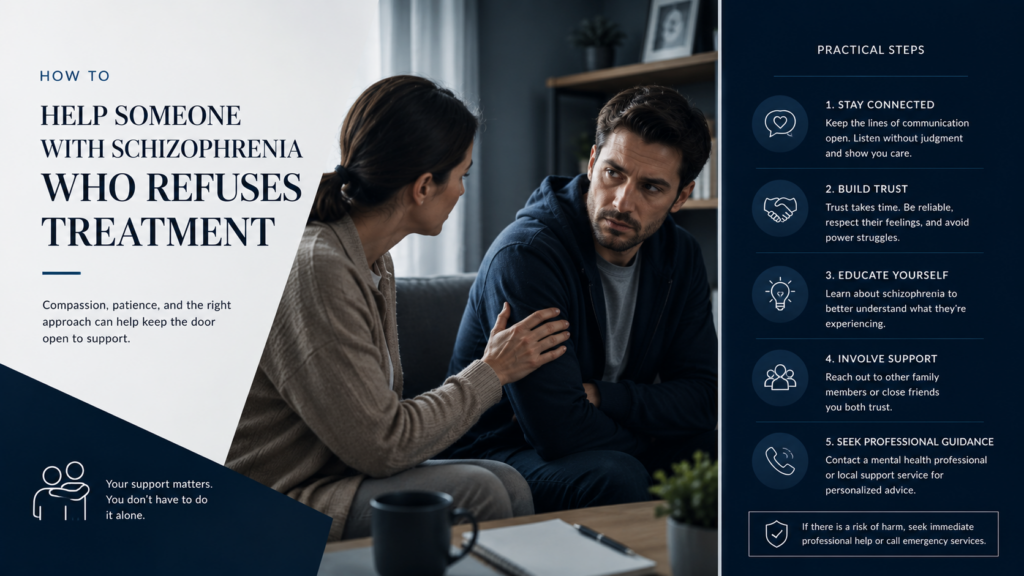
Learning how to help someone with schizophrenia who refuses treatment can feel scary, sad, and confusing. You may love this person and want them to get better, but they may not see that they are ill. If your loved one is showing signs of schizophrenia, Revival Mental Health offers schizophrenia treatment in Orange County for people who need real support.
Schizophrenia is a serious mental illness. It can change how a person thinks, feels, talks, sleeps, works, and sees reality. Some people with schizophrenia may hear voices, believe things that are not true, or feel very afraid. These symptoms are not a character flaw. They are signs of an illness.
When a loved one refuses treatment, family members may feel stuck. You may wonder if you should talk, wait, push, or call for help. The goal is to offer support, keep safety first, and help the person accept treatment when possible.
Why Someone With Schizophrenia May Refuse Treatment
A person may refuse treatment for many reasons. It does not always mean they are trying to be hard to deal with. Many people with schizophrenia are afraid, confused, or unaware that they need help.
They May Not Know They Are Ill
Some people with schizophrenia have a symptom called anosognosia. This means they may be unable to realize they have a mental illness. To them, their thoughts and fears may feel real.
This is not the same as denial. Denial means a person knows something may be wrong but does not want to face it. Anosognosia means the brain may not let the person see the illness clearly.
This is why saying, “You are sick,” or “You are wrong,” may not help. It may make the person feel attacked.
They May Be Afraid of Treatment
Your loved one may be afraid of medication, therapy, hospitals, doctors, or the mental health care system. They may think treatment means losing control. They may worry they will be forced into inpatient mental health care or judged by others.
Stigma can also stop a person from seeking treatment. Some people believe mental health issues are a weakness. That is not true. Schizophrenia is a disease, and treatment can help.
Their Symptoms May Make Trust Hard
Delusions, paranoia, anxiety, and other symptoms can make it hard for a person to trust family, friends, doctors, or mental health facilities. They may think people are trying to harm them, control them, or take away their life.
This is why calm support matters. The way you talk can either build trust or break it.
What Not to Do When a Loved One Refuses Treatment
When you are scared, it is easy to react fast. But some actions can make things worse.
Do Not Argue About Reality
If your loved one says something that does not make sense, try not to fight about it. Do not say, “That is not real,” over and over. This can make them more upset.
Instead, focus on feelings. You can say, “That sounds really scary,” or “I can see this is hard for you.” You are not agreeing with the delusion. You are showing care.
Do Not Shame or Blame Them
Do not call them lazy, crazy, broken, or difficult. Schizophrenia is not a character flaw. It is an illness that affects the brain.
Shame can make a person hide symptoms and avoid help. Kind words can make support feel safer.
Do Not Try to Force Treatment Unless There Is Danger
Involuntary treatment is a legal process. Most states have laws about when a person can be taken for emergency care. In general, force is only used when someone may be a danger to self, a danger to others, or unable to meet basic needs.
If there is an emergency, call local crisis services or 911. If there is no emergency, focus on trust, safety, and small steps toward care.
How to Talk to Someone With Schizophrenia Who Refuses Treatment
The right words can help lower fear. The goal is not to win a debate. The goal is to keep the relationship strong enough so the person may accept help later.
Listen First
Let the person talk in their own words. Try not to interrupt. Ask simple questions like:
“What has this been like for you?”
“What would help you feel safer?”
“What feels hardest right now?”
Listening does not mean you agree with every belief. It means you care about their pain.
Use Calm and Simple Words
A person in psychosis may feel overwhelmed. Long talks can be too much. Use short, clear words. Keep your voice calm.
You can say:
“I care about you.”
“I want to help you feel safe.”
“You do not have to do this alone.”
“Would you be open to talking with a doctor about sleep or stress?”
Focus on Their Goals
Many people refuse treatment when the talk is only about illness. Instead, focus on what they want.
Maybe they want better sleep. Maybe they want a job. Maybe they want less fear. Maybe they want family members to stop arguing with them.
You can connect treatment to their goal. For example, “A doctor may be able to help with sleep,” or “Therapy may help lower anxiety.”
Strategies to Help a Loved One Accept Treatment
Helping someone accept treatment may take time. Progress may be slow. Small steps still matter.
Offer Choices
Choices help a person feel more in control. You can ask:
“Would you rather talk to a doctor by phone or in person?”
“Would you like me to go with you or wait outside?”
“Do you want to start with therapy, a support group, or a checkup?”
Choice can lower fear and make treatment feel less forced.
Start With One Symptom
If your loved one does not accept the word schizophrenia, start with one symptom they do accept. They may admit they are not sleeping. They may admit they feel afraid. They may say they feel watched or stressed.
You can say, “You do not have to agree with me about everything. But I wonder if we can get help for sleep.”
Involve a Trusted Person
A friend or family member they trust may be able to help. Sometimes another voice makes the process feel safer. Other family members should stay calm and give the same message.
Avoid having a big group confront the person. That can feel scary. Pick one or two trusted people.
Ask About Medication With Care
Medication can help many people with schizophrenia, but the topic may be sensitive. If your loved one is taking medication and wants to stop, ask what bothers them.
They may dislike side effects. They may feel tired. They may feel like the medication changes who they are. These concerns matter.
Encourage them to speak with a doctor before stopping or changing medication. A doctor may adjust the dose, change the medication, or help manage side effects.
When Inpatient Mental Health Care May Be Needed
Sometimes outpatient therapy is not enough. Inpatient mental health care may be needed when symptoms are severe or safety is at risk.
Warning Signs to Take Seriously
Seek urgent help if your loved one is:
Talking about suicide or self-harm
Threatening to hurt someone else
Unable to eat, drink, sleep, or take care of basic needs
Very confused or out of touch with reality
Acting in a dangerous way
Hearing voices telling them to harm self or others
Showing signs of severe fear, agitation, or risky behavior
If this is happening, it may be time to call emergency services or a local crisis line.
What Involuntary Treatment Means
Involuntary treatment means a person may receive care even if they refuse. This is serious and must follow the legal process in your state. Most states have rules that protect the patient and the family.
This process can feel hard, but it may save a life when someone is in danger. If you are unsure, ask a local crisis team, doctor, or mental health care system worker for advice.
How Family Members Can Offer Support
Schizophrenia affects the whole family. Family members often carry fear, stress, and grief. You can support your loved one and still take care of yourself.
Learn About the Illness
Education helps lower fear. Learn about schizophrenia, psychotic disorders, other psychotic disorders, medication, therapy, crisis care, and recovery. The more aware you are, the better you can respond.
Learning also helps you see that symptoms are part of an illness. Your loved one is not choosing to be ill.
Create a Safety Plan
A safety plan can help before a crisis happens. Write down:
Warning signs
Emergency contacts
Doctor or therapist names
Current medication
Past hospital stays
What helps calm the person
What makes symptoms worse
Local mental health facilities
Steps to take if danger happens
Keep this plan easy to find.
Join a Support Group
A support group can help family members feel less alone. You can learn from people who have been through the same process. You can also get advice on boundaries, communication, self care, and local resources.
Support for you matters. You cannot pour from an empty cup.
How to Take Care of Yourself While Helping
Dealing with a loved one’s mental illness can be painful. You may feel anger, guilt, sadness, fear, or hope all in the same day. These feelings are normal.
Set Healthy Boundaries
Support does not mean saying yes to everything. You can be kind and still have limits.
You may need boundaries around yelling, money, housing, unsafe behavior, or drug and alcohol use. Boundaries help protect your life and the family.
Do Not Do This Alone
Talk to a therapist, doctor, support group, or trusted friends. Ask other family members to share the load. One person should not have to carry everything.
If you are unable to sleep, focus, work, or take care of yourself, you may need support too.
Keep Hope in the Process
Recovery can happen. Many people with schizophrenia improve with treatment, support, medication, therapy, stable sleep, and a safe home. Recovery may not mean life is perfect. It means symptoms can be managed and the person can build a better life.
Hope is not the same as pretending everything is fine. Hope means you believe help is possible.
How Revival Mental Health Can Help
Revival Mental Health supports people with schizophrenia and other mental health issues. Care may include therapy, medication support, family education, safety planning, and help finding the right level of treatment.
If your loved one refuses treatment, you can still reach out for guidance. A mental health team can help you understand options, plan next steps, and know when urgent care is needed.
Treatment Can Help the Person and the Family
Schizophrenia can affect sleep, work, school, relationships, and daily life. Treatment can help lower symptoms and improve stability. Family support can also help the person feel less alone.
The goal is not to control your loved one. The goal is to help them receive treatment, feel safer, and have a better chance at recovery.
Final Thoughts on Helping Someone Who Refuses Treatment
Knowing how to help someone with schizophrenia who refuses treatment starts with patience, safety, and trust. Your loved one may not accept help right away. They may be afraid, unaware, or stuck in symptoms that feel real.
Stay calm. Listen. Speak with respect. Focus on one small step. Get support for yourself. Know when to seek emergency help. With the right strategies, education, and care, healing can begin.
FAQs
What should I do first if someone with schizophrenia refuses treatment?
Start by staying calm and listening. Do not argue about delusions or try to force them to agree with you. Ask what they need, focus on safety, and offer support. If there is danger, call emergency services or a local crisis team.
Can I force my loved one to get schizophrenia treatment?
In most states, involuntary treatment must follow a legal process. It is usually only used when a person is a danger to self, a danger to others, or unable to meet basic needs. If you are unsure, contact a local crisis service for advice.
Why does my loved one not realize they are ill?
Some people with schizophrenia have a symptom called anosognosia. This means the brain may not let them see that they have an illness. It is not a character flaw, and it is not always simple denial.
How can I talk to someone who is having delusions?
Do not argue or say, “That is not real,” again and again. Instead, respond to the feeling. You can say, “That sounds scary,” or “I want to help you feel safe.” Keep your voice calm and your words simple.
Can people with schizophrenia recover?
Yes, many people with schizophrenia can improve with treatment, medication, therapy, support, and stable daily care. Recovery looks different for each person, but treatment can help reduce symptoms and improve life.