

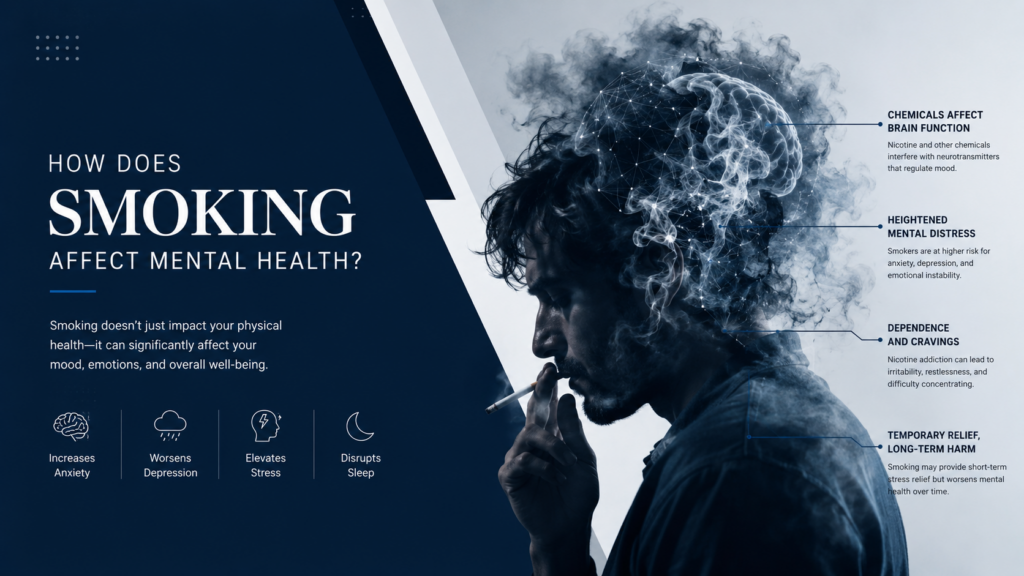
Many people know that smoking can harm the lungs and heart, but fewer people understand how does smoking affect mental health. Smoking and mental health are closely connected. While some people feel that smoking helps them relax, research shows that smoking can actually make many mental health problems worse over time.
People living with a mental health condition, anxiety, depression, or other behavioral health conditions are more likely to smoke than the general population. Many believe that smoking helps reduce stress. However, the relief is often temporary and is linked to nicotine addiction rather than true stress reduction.
If you are struggling with smoking and emotional wellness, professional mental health support can help. At Revival Mental Health, treatment focuses on improving both physical and mental health so individuals can build healthier lives.
Understanding the Connection Between Smoking and Mental Health
The relationship between smoking and mental health is complex. Nicotine changes how the brain works. When someone smokes, nicotine stimulates the release of chemicals like dopamine. This creates short-term feelings of pleasure and a positive mood.
Over time, the brain begins depending on nicotine. When the nicotine level drops, a person may experience withdrawal symptoms, irritability, sadness, and increased anxiety. This cycle can make it seem like smoking helps, even though it may be creating the problem.
Research from the National Institute on Drug Abuse and other health organizations has found a strong association between smoking and many mental disorders.
What Happens in the Brain?
Nicotine affects several brain chemicals.
These include:
Dopamine
Serotonin
Norepinephrine
The brain starts relying on nicotine for its dopamine supply. Over time, the brain reduces its natural process of making dopamine. This can lead to mood changes when a person is not smoking.
As nicotine levels fall, the body’s nicotine supply decreases, leading to cravings and emotional discomfort.
Why People With Mental Health Conditions Smoke More Often
Studies show that people with a mental health condition are more likely to engage in tobacco use than the general population.
Common conditions linked with higher smoking rates include:
Depression
Schizophrenia
Post traumatic stress disorder
Other psychiatric disorders
Many people use smoking as a form of self medication. They may feel temporary relief from symptoms. However, smoking does not treat the underlying mental health condition.
Smoking and Anxiety
Many people with anxiety believe smoking helps calm their nerves.
The truth is different.
Nicotine creates a short-term calming effect. Soon afterward, nicotine withdrawal begins. This causes:
Restlessness
Worry
Irritability
Increased anxiety
This cycle repeats throughout the day. Research suggests that people who quit smoking often experience lower anxiety levels over time.
Smoking and Depression
There is a strong connection between smoking and depression.
People with major depression are more likely to smoke. Smoking may provide temporary relief, but it can also increase the risk of worsening symptoms.
Several studies and a systematic review have found that individuals who quit smoking often report:
Better mood
Less depression
Reduced stress
Greater emotional stability
Smoking can make recovery from a mental health condition more difficult because nicotine affects brain chemistry.
Smoking and Serious Mental Illness
People living with serious mental illness often have some of the highest smoking prevalence rates.
Conditions may include:
Schizophrenia
Severe depression
Bipolar disorder
In some cases, smoking affects how antipsychotic medicines work in the body. People who smoke may require higher doses of certain antipsychotic medicines because cigarette smoke changes how medications are processed.
When someone decides to stop smoking, healthcare providers may need to adjust medication levels.
The Impact of Nicotine Dependence
Many smokers become nicotine dependent without realizing it.
What Is Nicotine Dependency?
Nicotine dependency occurs when the body and brain become dependent on nicotine.
Over time, people may develop nicotine dependence, causing:
Strong cravings
Mood changes
Difficulty concentrating
Sleep problems
Emotional distress
This addiction can make quit smoking efforts challenging.
Nicotine Withdrawal Symptoms
When someone tries to stop smoking, nicotine withdrawal symptoms may appear.
Common symptoms include:
Cravings
Increased anxiety
Irritability
Sadness
Trouble sleeping
Difficulty focusing
Some people experience more severe withdrawal symptoms depending on how much they smoke.
Others may have severe withdrawal symptoms that require professional support.
The good news is that these symptoms improve with time.
How Smoking Affects Physical and Mental Health
Smoking impacts both physical health and emotional wellness.
The overall health impact includes:
Physical Health Risks
Smoking increases the risk of:
Heart disease
Stroke
Respiratory diseases
Lung disease
Cancer
These conditions can lower quality of life and contribute to emotional distress.
Mental Health Risks
Smoking is linked to:
Increased anxiety
Depression
Mood swings
Greater risk of mental health problems
Reduced emotional resilience
Because smoking affects both physical and mental health, treatment often works best when both areas are addressed together.
Smoking, Substance Abuse, and Behavioral Health
Smoking often occurs alongside other forms of substance abuse.
Research shows that people receiving substance abuse treatment may also struggle with:
Alcohol use
Drug use
Nicotine addiction
Many treatment programs now include smoking cessation interventions because quitting smoking can support long-term recovery.
Behavioral Health Conditions and Tobacco Use
Many behavioral health conditions are connected to higher rates of tobacco use.
Examples include:
Depression
Anxiety disorders
Trauma-related disorders
Attention difficulties
Addressing smoking alongside other behavioral health conditions can improve recovery outcomes.
Does Smoking Help With Stress?
One of the most common myths is that smoking helps reduce stress.
The reality is that nicotine addiction creates stress.
When nicotine levels drop, the brain signals discomfort. Smoking relieves this discomfort temporarily, making it seem helpful.
However, studies show that people who quit smoking often experience:
Less stress
Better emotional control
Improved concentration
Better sleep
Many people report feeling calmer after they fully recover from nicotine withdrawal.
E-Cigarettes and Mental Health
Some people switch to e cigarettes when trying to quit smoking.
While some individuals use e cigarettes as a transition tool, many still contain nicotine.
This means they can continue:
Nicotine addiction
Cravings
Dependence
Withdrawal cycles
More research is needed to fully understand how e cigarettes affect long-term mental health.
Public Health Concerns About Smoking
Smoking remains a major public health concern worldwide.
Organizations focused on disease control, health promotion, and tobacco control continue working to reduce smoking rates.
According to behavioral health statistics, people with behavioral health conditions account for a significant portion of tobacco consumption.
Efforts such as:
Education
Treatment programs
Smoke free policies
Prevention programs
help reduce smoking-related harm.
Smoking Initiation at an Earlier Age
Many smokers begin smoking at an earlier age.
Early smoking initiation increases the risk of:
Long-term addiction
Future mental health issues
Chronic disease
Greater nicotine dependence
Preventing youth smoking remains an important goal in public health.
Benefits When You Stop Smoking
Deciding to stop smoking can improve nearly every part of life.
Mental Health Benefits
People who quit smoking often notice:
Reduced anxiety
Better mood
More stable emotions
Improved confidence
Better coping skills
Physical Benefits
When you stop smoking, benefits include:
Better breathing
Improved heart health
Lower risk of lung disease
Increased energy
Financial Benefits
Many people discover they have more money after they quit smoking because they are no longer spending money on cigarettes and other tobacco products.
Treatments That Can Help You Quit Smoking
Quitting smoking is difficult, but effective help is available.
Nicotine Replacement Therapy
Nicotine replacement therapy helps reduce cravings by providing controlled nicotine without cigarette smoke.
Common options include:
Patches
Gum
Lozenges
Inhalers
Many people use nicotine replacement therapy while learning new coping skills.
Counseling and Mental Health Support
Counseling can help people manage:
Anxiety
Depression
Stress
Triggers
This is especially important for individuals with a mental health condition or behavioral health conditions.
Medication Options
Healthcare providers may recommend:
Anti depressants
Other medications for smoking cessation
Some individuals may need monitoring if they take antipsychotic medicines, especially when they stop smoking.
What Research Says About Smoking and Mental Health
Research published in journals such as BMC Public Health and findings from organizations like the Mental Health Services Administration continue to show a strong connection between smoking and emotional wellness.
Evidence suggests:
Smoking increases the risk of mental health problems
Quitting can improve mood
People with mental illness can successfully quit
Recovery improves with proper treatment
The Mental Health Services Administration, National Institute researchers, and experts in disease control all support integrated treatment approaches that address both smoking and mental wellness.
Getting the Right Support
Quitting smoking is not just about breaking a habit. It is about improving your whole life.
Whether you live with anxiety, depression, bipolar disorder, post traumatic stress disorder, or another mental health condition, getting the right support can make a major difference.
With professional care, healthy coping skills, and effective treatment options, many people successfully quit smoking and improve their overall well-being.
FAQs
How does smoking affect mental health?
Smoking changes brain chemicals and can increase anxiety, depression, and other mental health problems over time. While it may provide temporary relief, long-term smoking often worsens mental health symptoms.
Can quitting smoking improve anxiety?
Yes. Many studies show that people who quit smoking experience lower anxiety levels after they move through nicotine withdrawal and recovery.
Why do people with mental illness smoke more often?
Many people use smoking as a coping tool or form of self medication. However, smoking does not treat mental illness and can make symptoms worse over time.
What are common nicotine withdrawal symptoms?
Common symptoms include cravings, irritability, anxiety, trouble sleeping, mood changes, and difficulty concentrating.
Is nicotine replacement therapy effective?
Yes. Nicotine replacement therapy can reduce cravings and withdrawal symptoms, making it easier for many people to quit smoking successfully.