

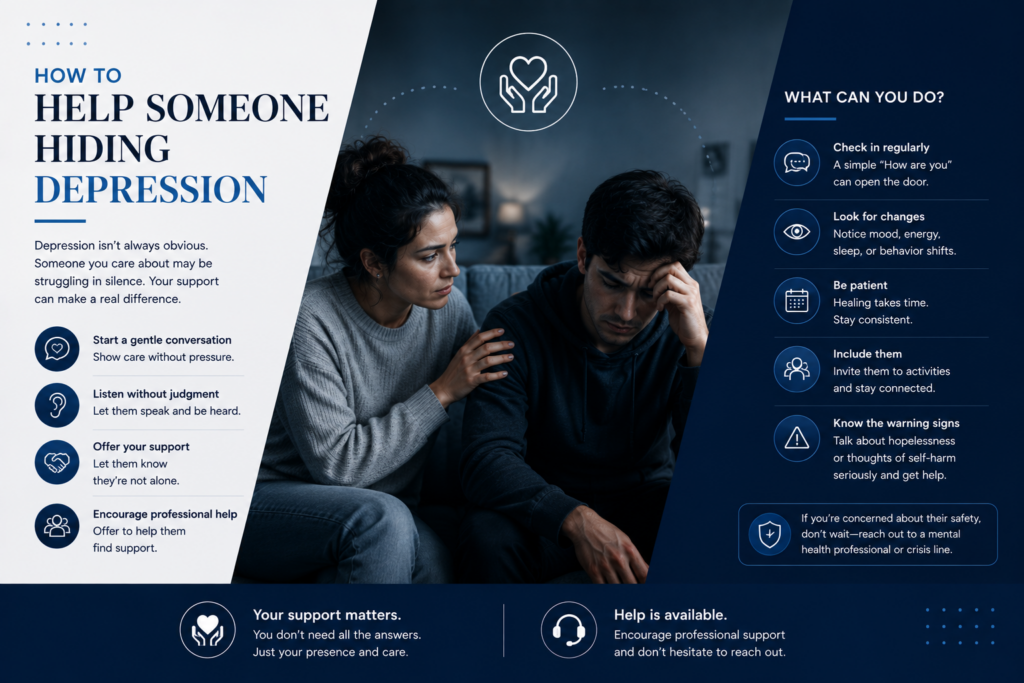
A person can seem happy, busy, or successful while hiding deep emotional pain. Learning how to help someone hiding depression starts with noticing small changes and responding with care. Depression is a real mental health condition, not a weakness or bad attitude. If your loved one needs more support, professional depression treatment may help them understand their symptoms and begin healing.
You do not need to have all the answers. Your job is to listen, stay calm, and help the person connect with the right support.
What Does It Mean to Hide Depression?
Hidden depression is not a formal medical diagnosis. It is a common phrase used when someone has depression symptoms but tries to keep them private.
The person may smile, go to work, care for family members, or spend time with friends. Others may think they are doing well. Inside, however, they may feel sad, empty, hopeless, tired, or disconnected.
Some people hide depression because they:
-
Feel ashamed of their symptoms
-
Fear being judged
-
Do not want to worry loved ones
-
Think they should handle it alone
-
Have had a bad experience asking for help
-
Do not understand what they are feeling
-
Worry that treatment will affect work or family life
-
Believe others have more serious problems
A person who hides depression may become skilled at covering emotional pain. This is why changes in daily habits can matter as much as visible sadness.
What Are the Signs of Hidden Depression?
Depression does not look the same in every person. Some people cry or talk about feeling sad. Others become angry, quiet, busy, or emotionally distant.
Federal mental health guidance lists common depression symptoms such as hopelessness, irritability, loss of interest, low energy, trouble focusing, sleep changes, appetite changes, physical pain, and thoughts of death or suicide. A person does not need to show every symptom to need help.
They Pull Away From Other People
A person hiding depression may slowly stop answering calls or messages. They may cancel plans, avoid family events, or spend more time alone.
They may offer simple reasons such as:
-
“I’m tired.”
-
“I’m too busy.”
-
“Maybe next time.”
-
“I just need some space.”
Everyone needs time alone at times. The concern grows when isolation is new, lasts for weeks, or happens along with other emotional changes.
They Lose Interest in Things They Enjoyed
Depression may reduce a person’s ability to feel joy. Someone who loved music, sports, cooking, travel, or spending time with family may stop caring about those activities.
They may still attend events but seem distant or distracted. They may say that nothing sounds fun or worth the effort.
Their Sleep Habits Change
A person may sleep much more than usual or have trouble sleeping. They might stay awake late, wake very early, or appear tired even after spending many hours in bed.
Some people hide sleep problems by drinking more caffeine, working late, or keeping a packed schedule.
Their Eating Habits Change
Depression can affect appetite. A person may eat very little, skip meals, or lose weight without trying. Others may eat more than usual for comfort.
Changes in food alone do not prove that someone has depression. Look for a pattern that includes mood, sleep, energy, or behavior changes.
They Seem More Angry or Irritable
Hidden depression may appear as anger, frustration, or impatience. The person may snap over small problems or become upset more easily.
They may not say, “I feel depressed.” Instead, they might say:
-
“Everything is annoying.”
-
“I can’t deal with people.”
-
“Nothing ever works out.”
-
“I’m tired of all of this.”
Try to look beyond the angry response. Anger may be covering sadness, fear, shame, or emotional exhaustion.
They Stay Constantly Busy
Some people use work, school, exercise, cleaning, or social events to avoid difficult feelings. Being productive is not a depression symptom by itself.
However, nonstop activity may be a warning sign when the person becomes anxious or upset during quiet moments. They may be using a full schedule to prevent others—or themselves—from noticing their emotional pain.
They Make Negative or Hopeless Comments
Pay attention to repeated statements about worthlessness, guilt, failure, or hopelessness.
Examples include:
-
“I’m a burden.”
-
“Everyone would be better without me.”
-
“Nothing is going to change.”
-
“I ruin everything.”
-
“There is no point.”
-
“I don’t care what happens anymore.”
Do not dismiss these statements as drama or attention-seeking. They may be signs that the person is in serious distress.
They Use Alcohol or Drugs More Often
Some people use alcohol or drugs to numb sadness, anxiety, loneliness, or painful thoughts. You may notice more frequent drinking, secretive substance use, missed duties, risky choices, or mood swings.
Substances may make depression symptoms worse. They can also increase impulsive behavior and safety risks.
They Complain About Physical Pain
Depression may appear through headaches, stomach problems, muscle pain, low energy, or other physical symptoms. The person may visit doctors often without finding a clear cause.
Physical symptoms are real and should not be ignored. A medical provider can check for health conditions and discuss whether stress or depression may be playing a role.
How Do You Start a Conversation About Depression?
Choose a calm, private time. Avoid starting the talk during an argument, family event, or rushed moment.
Use simple words. Focus on what you have noticed instead of telling the person what they feel.
You might say:
“I care about you. I have noticed that you seem tired and have been spending more time alone. How have you been feeling?”
Another option is:
“You do not seem like yourself lately. I’m not here to judge you. I want to understand what you are going through.”
Then pause and give the person time to respond.
Ask Open Questions
Questions that need more than a yes-or-no answer can help the person share at their own pace.
Try asking:
-
“What has been hardest for you lately?”
-
“How long have you felt this way?”
-
“What do your days feel like right now?”
-
“What kind of support would feel helpful?”
-
“Is there anything you have been afraid to tell someone?”
Do not ask many questions all at once. One caring question followed by patient listening may be more helpful.
Listen Without Trying to Fix Everything
You may want to offer advice right away. However, the person may first need to feel heard.
Helpful responses include:
-
“That sounds very painful.”
-
“Thank you for telling me.”
-
“You do not have to face this alone.”
-
“I’m here with you.”
-
“Your feelings matter.”
-
“We can take this one step at a time.”
Listening without judgment can make it easier for someone to accept further support. Federal guidance also recommends showing concern, being patient, and helping the person connect with professional care.
What Should You Avoid Saying?
Even kind people can say things that make a depressed person feel blamed or misunderstood.
Avoid statements such as:
-
“Just cheer up.”
-
“Other people have it worse.”
-
“You have so much to be happy about.”
-
“You need to think positive.”
-
“Stop feeling sorry for yourself.”
-
“You are being lazy.”
-
“This is all in your head.”
-
“You do not look depressed.”
Depression is not a choice. A person cannot simply decide to stop having symptoms.
You should also avoid giving a long speech about what the person needs to do. Keep the focus on listening, safety, and the next useful step.
What If the Person Denies Being Depressed?
A person may say they are fine, even when you notice clear changes. Do not argue or try to force a confession.
You can respond by saying:
“I understand that you may not want to talk right now. I care about you, and I will keep checking in.”
Respecting their space does not mean disappearing. Continue offering small and steady support.
You might:
-
Send a short text
-
Invite them on a walk
-
Bring them a meal
-
Help with a basic task
-
Sit with them without pushing them to talk
-
Ask again a few days later
Consistent care can show the person that your concern is real and that they are not a burden.
How Can You Encourage Professional Help?
Depression can affect motivation, focus, memory, and decision-making. Even making a phone call may feel overwhelming.
Instead of saying, “You need therapy,” offer clear and practical help.
You could say:
“I think talking with a mental health professional could help. Would you like me to help you find someone?”
You may also offer to:
-
Research treatment options
-
Help check insurance coverage
-
Make a list of questions
-
Sit nearby during the first phone call
-
Drive them to an appointment
-
Join a family meeting when appropriate
-
Help arrange child care or transportation
-
Follow up after the appointment
Depression treatment may include psychotherapy, medication, structured mental health programs, or a mix of services. The right level of care depends on the person’s symptoms, safety, health, and daily needs.
Avoid making threats unless there is an immediate safety concern. Treatment often works best when the person feels involved in the decision.
How Can You Help With Daily Life?
Small tasks can feel very hard during depression. Helpful support should reduce stress without taking away the person’s independence.
Ask before stepping in. You might offer to:
-
Prepare a simple meal
-
Take a short walk together
-
Help clean one room
-
Pick up groceries
-
Attend an appointment
-
Create a basic sleep routine
-
Spend quiet time together
-
Help divide a large task into small steps
Do not expect quick results. Recovery may include good days and difficult days. Continue noticing effort, not just outcomes.
How Do You Ask About Suicide?
If the person talks about death, hopelessness, being a burden, or having no reason to live, ask a direct question:
“Are you thinking about suicide?”
Asking about suicide does not place the idea in someone’s mind. Research-based guidance states that asking directly can begin an important conversation and does not increase suicidal thoughts or actions.
You can also ask:
-
“Have you thought about hurting yourself?”
-
“Do you have a plan?”
-
“Do you have access to anything you could use?”
-
“Do you feel able to stay safe right now?”
Stay calm. Do not show anger or shock.
What Should You Do During an Immediate Crisis?
Take the situation seriously if the person has a suicide plan, access to a deadly method, has made an attempt, or cannot stay safe.
Do not leave the person alone. Remove dangerous items when you can do so safely. Call or text 988 in the United States to reach the Suicide & Crisis Lifeline. The service is available at all hours for people experiencing emotional distress and for those helping someone else.
Call 911 or go to the nearest emergency room when there is immediate physical danger, an attempt is in progress, or urgent medical care is needed.
Do not promise to keep suicidal thoughts secret. Safety is more important than secrecy.
Warning signs that need prompt action may include talking about wanting to die, feeling trapped, saying there is no reason to live, looking for a way to die, giving away important items, saying goodbye, using more alcohol or drugs, or showing sudden and extreme mood changes.
How Can You Support Long-Term Recovery?
Support should continue after the first conversation or appointment.
Check in with specific questions such as:
-
“How did today feel?”
-
“Did you sleep last night?”
-
“Would you like company?”
-
“Do you need help getting to your appointment?”
-
“What would make this week easier?”
Encourage the person to follow their treatment plan, but do not control them. Praise honest effort. Recovery from depression may take time, and treatment may need to be adjusted.
You can also help the person create a support list with trusted relatives, friends, providers, crisis services, and safe places they can contact during difficult moments.
How Do You Care for Yourself While Helping?
Supporting a person with depression can be tiring and painful. You may feel scared, frustrated, guilty, or unsure of what to do.
Remember that you cannot be the person’s only source of support. You are not responsible for curing their depression.
Protect your own well-being by:
-
Setting healthy limits
-
Getting enough sleep
-
Speaking with a counselor
-
Staying connected with trusted people
-
Taking breaks when the person is safe
-
Learning about depression
-
Asking other family members to help
Caring for yourself allows you to offer steadier support without becoming overwhelmed.
When Is Depression Treatment Needed?
Professional care should be considered when symptoms last for two weeks or longer, interfere with daily life, or cause changes in sleep, eating, work, relationships, or personal safety.
Do not wait for symptoms to become severe. Early support may help the person understand what is happening and find a safe path forward.
Revival Mental Health provides structured support for adults experiencing depression and related mental health concerns. A professional assessment can help identify the person’s needs and recommend an appropriate level of care.
Frequently Asked Questions
Can someone have depression and still seem happy?
Yes. A person may smile, work, socialize, and meet daily duties while hiding depression symptoms. Watch for changes in energy, sleep, interest, isolation, irritability, substance use, and hopeless statements.
How do I help someone who will not admit they are depressed?
Do not argue or force them to use the word “depression.” Share the changes you have noticed, express care, listen, and keep checking in. Offer practical help with finding a mental health professional.
Should I give someone with depression space?
Some space may be helpful, but complete isolation can make depression harder. Respect their limits while staying connected through short calls, messages, meals, walks, or quiet visits.
What is the best thing to say to someone hiding depression?
Say something honest and caring, such as, “I have noticed that you have not seemed like yourself. I care about you, and I am here to listen without judging you.”
When should I call 988 for someone else?
Call or text 988 when someone is thinking about suicide, talking about death, feeling unable to stay safe, or experiencing a serious emotional crisis. You can also contact 988 when you are worried about someone and need guidance on what to do next.