
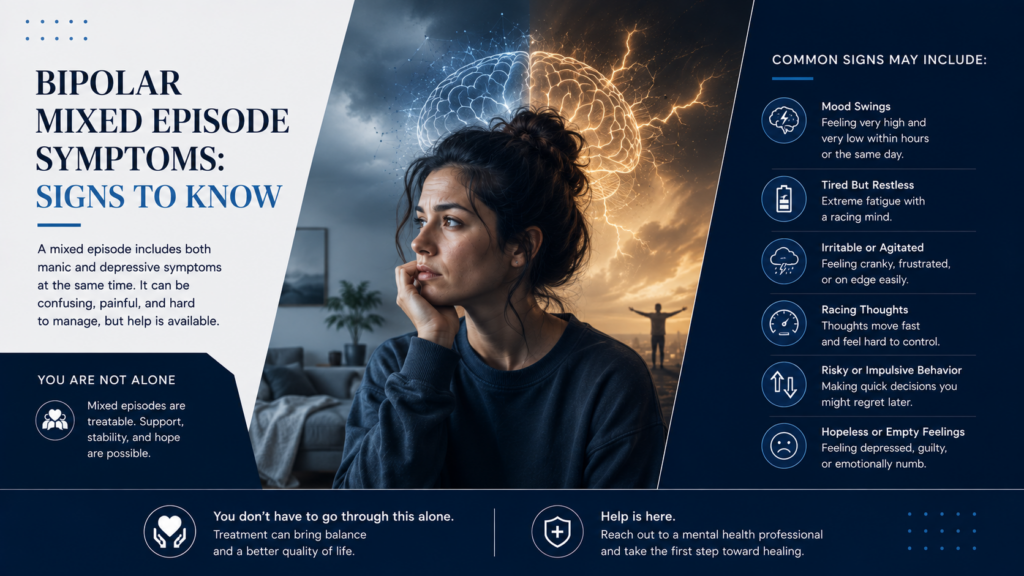
Bipolar mixed episode symptoms can feel confusing because signs of depression and mania can happen at the same time. A person may feel hopeless but full of energy. They may feel tired yet unable to sleep. Racing thoughts, agitation, sadness, impulsive choices, and anxiety can all happen together.
If these changes are making daily life hard, learning about bipolar disorder treatment in Orange County can help you understand what professional care may look like.
Mixed symptoms can be serious. Knowing the signs may help a person or family member recognize when it is time to seek professional support.
What Are Bipolar Mixed Episode Symptoms?
Bipolar mixed episode symptoms are signs of depression and mania or hypomania that occur during the same mood episode.
Today, mental health professionals often use the term “mixed features” instead of “mixed episode.” A person may have a manic or hypomanic episode with depressive symptoms. They may also have a depressive episode with some manic or hypomanic symptoms.
This can create feelings that seem like they should not happen together.
For example, someone might feel:
- Very sad but extremely restless
- Hopeless but full of physical energy
- Exhausted but unable to sleep
- Depressed while having racing thoughts
- Irritable and emotionally overwhelmed
- Worthless while acting impulsively
- Anxious while talking very quickly
- Emotionally low but unusually active
Bipolar disorder affects more than mood. It can also change a person’s energy, activity, sleep, behavior, judgment, and ability to function.
What Does a Bipolar Mixed Episode Feel Like?
A bipolar episode with mixed features can feel like the mind and body are moving in different directions.
Imagine feeling deeply sad while your thoughts are moving very fast. You may want to rest, but your body feels restless. You might feel hopeless about your life while also having enough energy to act quickly without thinking about the results.
This mix can be distressing.
Some people describe feeling emotionally overwhelmed or unable to slow their minds down. Others become angry, tense, anxious, or easily irritated.
A mixed state does not look exactly the same in every person. The symptoms and their severity can change from one episode to another.
Common Bipolar Mixed Episode Symptoms
Several symptoms may appear when depression and manic or hypomanic features overlap.
Depression and Sadness
A person may feel deeply sad, empty, or emotionally numb.
They may lose interest in friends, hobbies, work, or activities they normally enjoy. Even while their energy is high, their mood may remain very low.
Depressive symptoms can also include feelings of guilt, worthlessness, hopelessness, trouble concentrating, and thoughts about death.
Racing Thoughts
Racing thoughts are common during mania and hypomania.
Thoughts may move quickly from one idea to another. It can become difficult to focus on a single task or conversation.
During mixed features, these fast thoughts may not feel happy or creative. Instead, they can center on worry, anger, guilt, fear, or hopelessness.
This may make the person feel mentally trapped or overwhelmed.
Agitation and Restlessness
Agitation is another important sign to watch for.
A person may pace around the house, constantly move their hands or legs, feel unable to sit still, or become easily frustrated.
They may feel like they need to do something but cannot figure out what to do.
This can be especially difficult when agitation happens along with a depressed mood.
Insomnia and Decreased Need for Sleep
Sleep changes are common in bipolar disorder.
During mania or hypomania, a person may sleep much less than usual and still feel energetic. During depression, a person may sleep too much, have trouble falling asleep, or wake up too early.
Mixed features can make sleep especially confusing.
Someone might feel exhausted but still be unable to slow down enough to sleep. Another person may sleep only a few hours while feeling emotionally depressed.
Major changes in sleep are important symptoms to discuss with a mental health professional.
High Energy With a Low Mood
One of the clearest examples of mixed bipolar symptoms is having high energy at the same time as a low mood.
The person may clean the house for hours, start several projects, talk rapidly, exercise excessively, or constantly move while still feeling sad or hopeless.
This is different from a typical depressive episode, where low mood often occurs with very low energy.
Irritability and Anger
Mania does not always look like extreme happiness.
Some people become highly irritable instead. They may argue more often, become impatient, react strongly to small problems, or feel like everyone around them is moving too slowly.
Irritability can become even more intense when depression, anxiety, or poor sleep are also present. Manic episodes can include an unusually irritable or touchy mood as well as increased activity and energy.
Impulsive or Risky Behavior
Bipolar mixed episode symptoms may also affect judgment.
A person might suddenly spend large amounts of money, drive recklessly, use drugs or alcohol, make unsafe sexual choices, quit a job without planning, start arguments, or make other major decisions without thinking through the results.
Risky behavior and poor judgment are recognized symptoms that can occur during mania.
The combination of impulsivity and severe emotional distress can make mixed symptoms especially important to take seriously.
Depression and Mania Can Happen Together
People sometimes think bipolar disorder always follows a simple pattern:
Mania → normal mood → depression.
It does not always work that way.
Some people experience symptoms from both sides at once. Current diagnostic guidance recognizes mood episodes with mixed features.
For example, a person may experience:
Depressive symptoms:
Sadness, guilt, hopelessness, loss of pleasure, trouble concentrating, or thoughts about death.
At the same time, they may experience:
Manic symptoms:
Racing thoughts, increased energy, decreased need for sleep, rapid speech, increased activity, or unusually elevated self-confidence.
This overlap is one reason bipolar disorder should be evaluated by a qualified mental health professional rather than diagnosed from symptoms alone.
Mixed Episode vs Mania
A manic episode mainly involves a clear increase in mood, energy, or activity.
Common manic symptoms include:
- Very high or irritable mood
- Increased activity
- Racing thoughts
- Fast speech
- Less need for sleep
- Feeling unusually powerful or important
- Risky behavior
- Poor judgment
A mood episode with mixed features includes symptoms from the opposite mood state as well.
For example, someone experiencing mania may also feel hopeless, lose pleasure in activities, feel worthless, or have repeated thoughts about death.
Bipolar I disorder can involve manic episodes, depressive episodes, and episodes with mixed features.
Mixed Episode vs Bipolar Depression
Bipolar depression often causes low energy, sadness, loss of interest, trouble thinking, sleep changes, and hopelessness.
Mixed features can add symptoms such as:
- Increased energy
- Racing thoughts
- Less need for sleep
- Increased activity
- Rapid speech
- Elevated mood
- Inflated self-confidence
A person may therefore look very active while still experiencing serious depression.
That combination can make the episode harder for friends and family members to recognize.
Why Mixed Bipolar Symptoms Can Be Serious
Mixed bipolar symptoms should not be ignored.
Depression may create hopeless or painful thoughts while manic symptoms may increase energy, agitation, and impulsivity. Bipolar disorder can also involve thoughts of death or suicide, and severe symptoms may interfere with relationships, work, school, finances, and personal safety.
Seek urgent help when a person:
- Talks about wanting to die or hurt themselves
- Threatens to hurt another person
- Is acting dangerously or recklessly
- Has severe confusion
- Cannot care for basic needs
- Is experiencing hallucinations or delusions
- Has gone without meaningful sleep and is becoming increasingly unstable
If there is an immediate danger, contact local emergency services or go to the nearest emergency department.
What Can Trigger Bipolar Mixed Symptoms?
There may not always be one clear cause for a mood episode.
However, several factors can affect mood stability.
Lack of Sleep
Changes in sleep can be closely connected with bipolar mood symptoms.
A person who begins sleeping far less than normal should pay attention to other changes in energy, thoughts, speech, behavior, and mood.
Stress
Major stress can affect emotional health.
Relationship problems, job loss, financial pressure, grief, major life changes, and other stressful events may make symptoms harder to manage.
Drugs and Alcohol
Substance use can complicate bipolar symptoms.
Stimulants can create symptoms that resemble mania, while withdrawal from some substances can produce depression-like symptoms. Substance use can therefore make diagnosis and treatment more complex.
A mental health professional should know about any alcohol, recreational drug, prescription drug, or supplement use when evaluating symptoms.
Changes in Medication
Medication changes should be discussed with the prescribing clinician.
People should not suddenly start, stop, increase, or decrease psychiatric medication on their own. A clinician can review symptoms, side effects, sleep, medications, and other health factors before recommending changes.
How Are Bipolar Mixed Features Diagnosed?
There is no simple home test that can confirm bipolar disorder.
A mental health professional may ask about:
- Current mood symptoms
- Past manic or hypomanic symptoms
- Depression
- Sleep patterns
- Changes in energy
- Risky or impulsive behavior
- Family mental health history
- Alcohol or drug use
- Prescription medications
- How symptoms affect work and relationships
Clinicians may also need to consider whether another medical condition, medication, or substance could explain the symptoms.
The term mixed features is important because a person does not have to meet every symptom of both full mania and full depression at the same time. Current diagnostic criteria allow clinicians to identify a main mood episode that also includes significant symptoms from the opposite mood state.
How Are Bipolar Mixed Episodes Treated?
Treatment depends on the person’s symptoms, diagnosis, medical history, current medications, safety needs, and level of care required.
A treatment plan may include several forms of support.
Psychiatric Care
A psychiatric provider can assess mood symptoms and decide whether medication may be appropriate.
Medication choices should be individualized because bipolar disorder is complex, especially when manic and depressive symptoms overlap.
Therapy
Therapy can help people learn to recognize mood changes, manage stress, build healthier routines, improve relationships, and respond to warning signs earlier.
Family involvement may also be useful because loved ones often notice changes in sleep, speech, spending, activity, or behavior before the person recognizes them.
A Stable Daily Routine
Regular sleep, meals, medications, exercise, and appointments may support mood stability.
Keeping a simple mood and sleep record can also help a treatment provider see patterns over time.
Higher Levels of Mental Health Care
Some people need more structure than weekly outpatient appointments provide.
Depending on symptom severity, a person may benefit from intensive outpatient care, partial hospitalization, residential mental health treatment, or inpatient psychiatric care.
The right level of treatment depends on safety, functioning, symptom severity, and the amount of daily support needed.
When Should You Seek Help?
Consider talking with a mental health professional when mood changes begin affecting sleep, work, school, relationships, judgment, or personal safety.
Do not wait for every possible bipolar symptom to appear.
Signs worth discussing with a professional include:
- Sleeping much less than normal
- Racing thoughts
- Major increases in energy
- Depression and agitation happening together
- Sudden risky behavior
- Intense irritability
- Rapid speech
- Hopelessness
- Large changes in activity
- Symptoms that others say are unusual for you
Early evaluation may help identify what is happening and determine the right next step.
Getting Support for Bipolar Disorder at Revival Mental Health
Bipolar mixed episode symptoms can be difficult to understand because high energy and severe emotional pain may exist at the same time.
Revival Mental Health provides structured mental health support for adults who are dealing with bipolar disorder and other complex mental health symptoms.
Treatment can focus on understanding mood patterns, improving daily stability, building coping skills, managing symptoms, and creating a plan for continued care.
If racing thoughts, insomnia, depression, agitation, impulsivity, or major changes in energy are making everyday life difficult, a professional evaluation can help determine what type of support may be appropriate.
FAQs About Bipolar Mixed Episode Symptoms
What are the most common bipolar mixed episode symptoms?
Common bipolar mixed episode symptoms can include depression, racing thoughts, increased energy, agitation, irritability, decreased need for sleep, impulsive behavior, hopelessness, and rapid speech. Symptoms of mania or hypomania and depression occur during the same mood episode.
Can you be manic and depressed at the same time?
Yes. A person can experience a mood episode with mixed features, meaning symptoms associated with mania or hypomania occur along with depressive symptoms. For example, someone may feel hopeless while also having racing thoughts and unusually high energy.
Can a mixed bipolar episode cause insomnia?
Yes. Sleep problems can occur during bipolar mood episodes. Mania and hypomania may cause a decreased need for sleep, while depression can cause trouble sleeping, waking early, or sleeping too much.
How long do bipolar mixed symptoms last?
The length varies from person to person and depends on the type and severity of the mood episode. Bipolar mood episodes may last days to weeks or longer, and symptoms can occur during much of the day. A mental health professional can evaluate whether a person’s symptoms meet criteria for a specific mood episode.
Are bipolar mixed episodes dangerous?
They can be serious, especially when hopelessness or thoughts about death occur along with agitation, high energy, poor judgment, or impulsive behavior. Seek urgent professional help if someone may harm themselves or another person, cannot care for themselves, or is experiencing severe or rapidly worsening symptoms.