

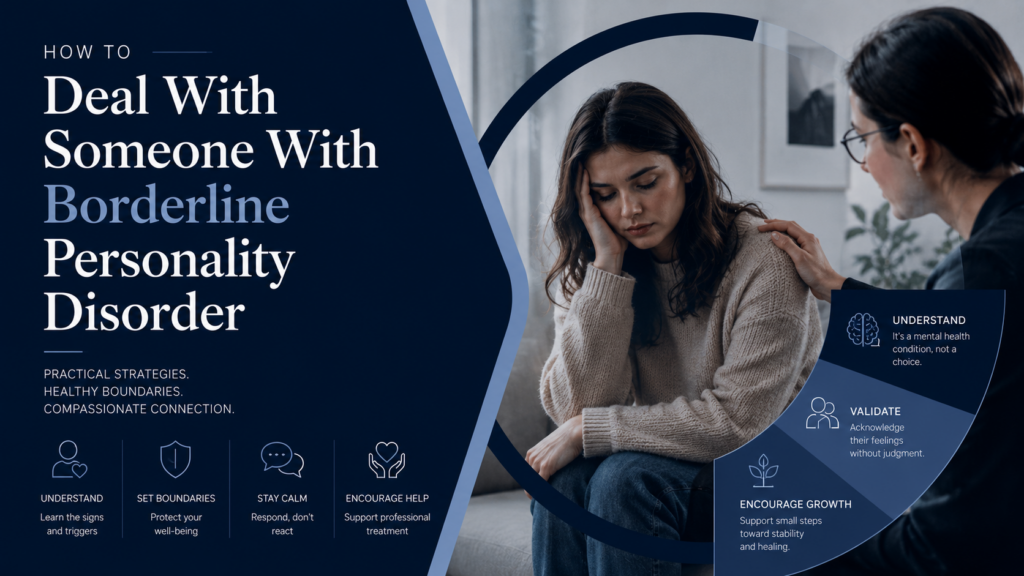
Learning how to deal with someone with borderline personality disorder can be challenging. If you have a friend or family member living with this condition, you may feel confused, overwhelmed, or unsure about what to do. At the same time, it is important to remember that borderline personality disorder (BPD) is a real mental illness that affects a person’s emotions, relationships, and behavior.
People with borderline personality disorder often experience intense emotions, emotional instability, and unstable relationships. They may struggle with self image, fear of abandonment, and difficulty managing feelings. With the right support, professional help, and treatment, many people with BPD can improve their quality of life.
If you are looking for help for a loved one, learning more about personality disorders and seeking guidance through personality disorder treatment can be an important first step.
What Is Borderline Personality Disorder?
Borderline personality disorder, also called borderline personality disorder BPD, is one of several personality disorders recognized by the Diagnostic and Statistical Manual published by the American Psychiatric Association.
BPD is a mental health condition that affects the way a person thinks, feels, and interacts with others. It can create serious challenges in personal life, work, school, and interpersonal relationships.
Research suggests that people with BPD often experience:
Intense emotions
Extreme mood swings
Emotional instability
Unstable relationships
Negative thoughts
Intense anger
Difficulty controlling anger transient episodes
Impulsive behaviors
Self destructive behavior
Self harm
Fear of abandonment
Not everyone with BPD experiences the same symptoms. The condition affects each person differently.
Understanding Borderline Personality Disorder Symptoms
Recognizing borderline personality disorder symptoms can help loved ones respond with compassion and understanding.
Common BPD Symptoms
Some of the most common BPD symptoms include:
Frantic efforts to avoid real or imagined abandonment
Persistently unstable self image
Impulsive behaviors
Self impulsivity
Angry outbursts
Intense anger
Feelings of emptiness inappropriate to the situation
Marked reactivity in mood
Unstable relationships
Stress related paranoid ideation
Severe dissociative symptoms
Self destructive behavior
Potentially self damaging behaviors
These symptoms can make daily life difficult for both the person living with BPD and their loved ones.
Why Symptoms Can Change Quickly
A person with BPD may seem happy one moment and deeply upset the next. These extreme mood swings are often triggered by fears of rejection, criticism, or abandonment.
This rapid shift in emotions can create interpersonal difficulties and make healthy relationships harder to maintain.
How to Deal With Someone With Borderline Personality Disorder
When learning how to deal with someone with borderline personality disorder, patience and understanding are important.
Listen Actively
One of the best ways to support someone with BPD is to listen actively.
Try to:
Stay calm
Avoid interrupting
Validate their feelings
Show empathy
Focus on understanding rather than judging
Even when you disagree, acknowledging their emotions can help reduce conflict.
Openly Talk About Concerns
Healthy communication is essential.
When problems arise:
Openly talk about your concerns
Use calm language
Avoid blaming statements
Focus on solutions
Encourage honest conversations
People with BPD often feel misunderstood. Respectful communication can strengthen trust.
Stay Consistent
Consistency helps create emotional safety.
Try to:
Keep promises
Follow through on commitments
Be reliable
Avoid mixed messages
Predictability can reduce anxiety and help someone with BPD feel more secure.
Set Healthy Boundaries
Supporting someone with BPD does not mean accepting harmful behavior.
Why Healthy Boundaries Matter
Healthy boundaries protect both people in the relationship.
Without boundaries, you may:
Feel emotionally exhausted
Feel guilty all the time
Neglect your own needs
Experience increased stress
Setting limits allows you to maintain your own mental health while still offering support.
How to Set Healthy Boundaries
To set healthy boundaries:
Clearly explain expectations
Stay calm and respectful
Be consistent
Follow through on consequences
Avoid making threats
Learning to set healthy boundaries can improve healthy relationships and reduce conflict.
Understand the Emotional Struggles Behind BPD
People with BPD often experience emotional pain that others cannot easily see.
Fear of Abandonment
One of the most common features of BPD is a strong fear of being abandoned.
This fear may lead to:
Clingy behavior
Repeated reassurance seeking
Emotional reactions
Frantic efforts to keep people close
Understanding this fear can help you respond with compassion.
Problems With Self Image
Many individuals with BPD struggle with self image and identity.
The diagnostic criteria include persistently unstable self image, which can cause a person to:
Change goals frequently
Feel unsure of who they are
Experience low self-worth
Seek validation from others
Supporting positive self-esteem can be helpful.
Avoid Taking Everything Personally
During moments of emotional distress, someone with BPD may say hurtful things.
They may:
Express intense anger
Have angry outbursts
Make accusations
React strongly to small events
Remember that these reactions are often connected to emotional instability rather than a desire to hurt others.
This does not excuse harmful behavior, but it can help you respond more effectively.
Encourage Professional Help
Professional help is often necessary for managing severe symptoms.
Why Treatment Matters
Without treatment, BPD can increase the risk of:
Self harm
Substance abuse
Eating disorders
Depression
Relationship difficulties
Some people may also develop major depressive disorder or other mental health conditions alongside BPD.
Seeking treatment early can improve long-term outcomes.
Finding the Right Treatment
An accurate diagnosis from mental health professionals is important.
Many mental health conditions share similar symptoms. For example, BPD can sometimes be confused with bipolar disorder because both may involve mood changes.
An accurate diagnosis helps create the right treatment plan.
Effective Treatment Options for BPD
The good news is that BPD is treatable.
Dialectical Behavior Therapy
Dialectical behavior therapy is considered the main treatment for BPD.
This evidence-based therapy helps people:
Manage emotions
Reduce self destructive behavior
Improve relationships
Build coping skills
Handle stress more effectively
Many experts consider dialectical behavior therapy the gold standard for treating BPD.
Transference Focused Psychotherapy
Transference focused psychotherapy is another effective treatment.
This therapy helps individuals:
Understand relationship patterns
Improve emotional awareness
Build healthier interpersonal relationships
Reduce interpersonal difficulties
Group Therapy
Group therapy can also be beneficial.
It allows people with BPD to:
Practice social skills
Receive support
Learn from others
Improve communication
Group therapy is often included in a comprehensive treatment plan.
Watch for Higher-Risk Behaviors
Some individuals with BPD may engage in potentially self damaging activities.
These can include:
Reckless driving
Risky sexual behavior
Substance abuse
Self harm
Impulsive spending
Not everyone with BPD will engage in these behaviors, but recognizing warning signs can help protect safety.
Because BPD people may experience strong emotional distress, professional intervention may be necessary during crises.
Take Care of Yourself Too
Supporting someone with BPD can be emotionally demanding.
Practice Self Care
Self care is not selfish.
Helpful self care strategies include:
Regular exercise
Healthy sleep habits
Spending time with supportive people
Relaxation techniques
Counseling if needed
Your well-being matters.
Seek Support for Yourself
Loved ones often benefit from support groups, therapy, or education about BPD.
Learning about mental disorders can help you feel more confident and prepared.
What Causes Borderline Personality Disorder?
Experts believe BPD develops from a combination of factors.
Adverse Childhood Experiences
Many people with BPD report adverse childhood experiences, such as:
Trauma
Abuse
Neglect
Family instability
These experiences may affect emotional development.
Biological Factors
Brain differences and genetics may also play a role.
Like many mental health conditions, BPD likely develops through a mix of environmental and biological influences.
Can People With BPD Get Better?
Yes. With the right treatment, many people with BPD experience significant improvement.
Research suggests that many individuals see reduced symptoms over time, especially when they seek treatment and remain engaged in therapy.
Recovery does not happen overnight, but progress is possible.
The combination of professional help, therapy, support, healthy boundaries, and effective treatment can help people build healthier lives and stronger relationships.
When to Seek Immediate Help
Seek emergency assistance if someone is:
Threatening self harm
Talking about suicide
Experiencing severe symptoms
Engaging in dangerous behaviors
Prompt treatment can save lives and provide needed support.
Conclusion
Learning how to deal with someone with borderline personality disorder requires patience, understanding, and education. Borderline personality disorder can affect emotions, relationships, self image, and behavior, but recovery is possible. By listening actively, setting healthy boundaries, encouraging treatment, and practicing self care, loved ones can provide meaningful support while protecting their own mental health.
With the right treatment plan, professional help, and evidence-based therapies such as dialectical behavior therapy and transference focused psychotherapy, many people living with BPD can develop healthier relationships and improve their quality of life.
Frequently Asked Questions
How do you deal with someone with borderline personality disorder?
The best approach is to listen actively, communicate clearly, set healthy boundaries, encourage treatment, and remain consistent while offering support.
What is the main treatment for BPD?
Dialectical behavior therapy is considered the main treatment for borderline personality disorder and helps people manage emotions and improve relationships.
Can someone with BPD have healthy relationships?
Yes. With therapy, support, and self-awareness, many people with BPD can build and maintain healthy relationships.
Is borderline personality disorder the same as bipolar disorder?
No. While both conditions involve mood changes, they are different mental health conditions with separate diagnostic criteria and treatment approaches.
Should family members seek support too?
Yes. Family members and loved ones often benefit from therapy, education, and support groups to better understand BPD and manage stress.