

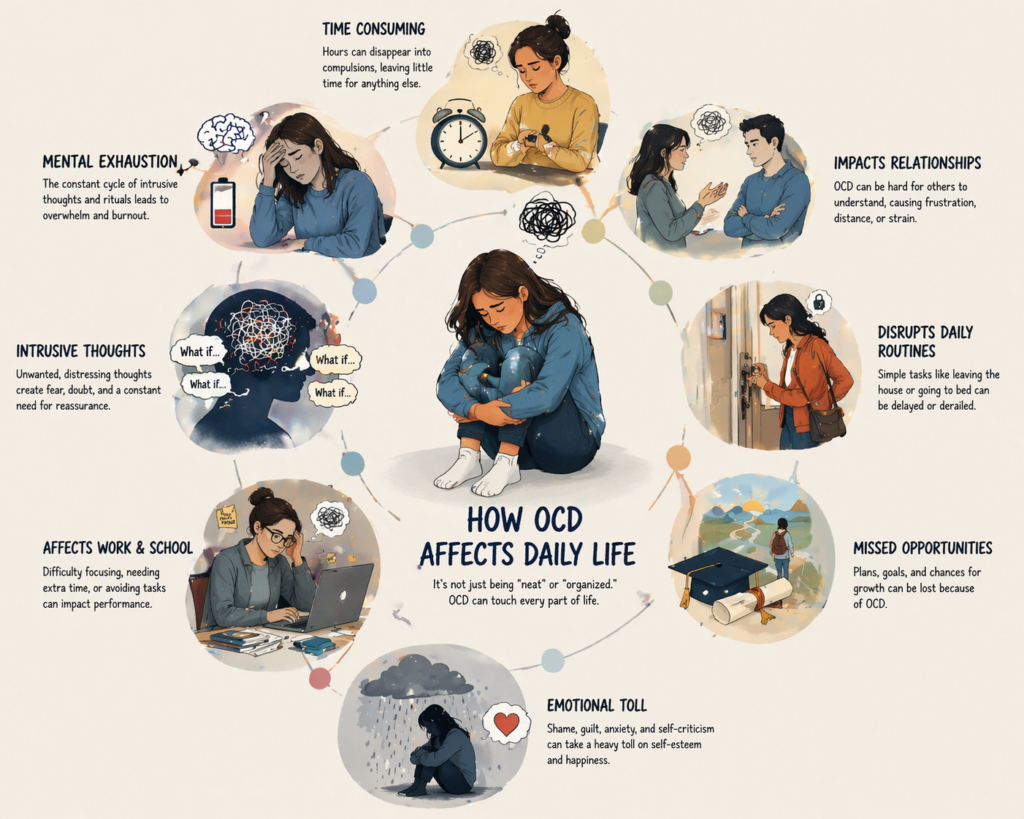
How OCD Affects Daily Life
Obsessive compulsive disorder (OCD) is a serious mental health disorder that can affect many parts of daily life. If you are searching for how OCD affects daily life, you are not alone. Many people struggle with obsessive thoughts and compulsive behaviors every day.
OCD is more than just habits. It is a type of anxiety disorder listed in the Diagnostic and Statistical Manual by the American Psychiatric Association. It can take over your time, energy, and emotions.
If you or a loved one is struggling, learning about OCD treatment can be the first step toward healing and regaining control.
What Is Obsessive Compulsive Disorder (OCD)?
Understanding OCD
Obsessive compulsive disorder OCD is a mental health condition where people experience:
- Obsessive thoughts (unwanted intrusive thoughts)
- Compulsive behaviors (repetitive actions or mental acts)
These obsessions and compulsions are often time consuming and can take up more than an hour each day.
What Are Obsessions?
Obsessions are:
- Intrusive thoughts
- Mental images
- Urges that feel scary or unwanted
Common obsessions include:
- Fear of germs or contamination
- Fear of harming others
- Excessive concern about mistakes
- Losing control
These thoughts cause obsessional anxiety and significant distress.
What Are Compulsions?
Compulsions are actions done to reduce anxiety or prevent a feared outcome.
Common compulsions include:
- Excessive hand washing
- Excessive cleaning
- Checking locks or stoves
- Counting or repeating phrases
- Mental rituals
Even though people know these actions may not make sense, they feel unable to stop.
How OCD Affects Daily Life
Daily Routines Become Hard
One of the biggest ways OCD affects daily life is by making simple tasks take much longer.
- Getting dressed can take hours
- Brushing teeth may need to be repeated many times
- Leaving the house can feel impossible
Many people must redo tasks until they feel “just right.”
Time Is Consumed by Repetitive Behaviors
OCD rituals can take up a lot of time.
- Checking things again and again
- Repeating actions
- Performing mental acts
These repetitive behaviors can cause people to be late to work or school.
Difficulty Concentrating
Intrusive thoughts can make it hard to focus.
- Trouble finishing tasks
- Missed deadlines
- Poor performance at work or school
The brain involved in OCD struggles with emotional regulation and attention.
Physical Effects of OCD
Harm to the Body
Compulsive actions can cause real physical harm.
- Skin damage from excessive hand washing
- Injuries from repetitive actions
- Raw or irritated skin
Some people develop eczema or wounds from constant cleaning.
Exhaustion and Sleep Problems
OCD can lead to:
- Difficulty sleeping
- Extreme tiredness
- Mental fatigue
Constantly fighting unwanted intrusive thoughts can be draining.
Emotional Impact of OCD
Constant Anxiety and Stress
OCD creates ongoing anxiety.
- Fear of something bad happening
- Feeling stuck in a loop
- Stress from trying to control thoughts
This can lead to generalized anxiety disorder or other mental health conditions.
Low Self-Esteem
Living with OCD can affect how someone feels about themselves.
- Shame and embarrassment
- Feeling different from others
- Losing confidence
Many people know their compulsive thoughts are not logical but still feel trapped.
How OCD Affects Relationships
Strain on Family Members
OCD can impact loved ones.
- Asking for reassurance
- Involving others in rituals
- Avoidance behaviors
Family members may feel confused or frustrated.
Social Isolation
People with OCD may avoid situations that trigger symptoms.
- Avoiding public places
- Staying home more often
- Difficulty maintaining friendships
This can lead to loneliness and sadness.
OCD and Other Mental Health Conditions
OCD often happens along with other mental disorders, such as:
- Major depressive disorder
- Body dysmorphic disorder
- Hoarding disorder
- Substance abuse
These related disorders can make symptoms worse and harder to manage.
Causes and Risk Factors of OCD
What Causes OCD?
The exact cause is not fully known, but research suggests:
- Genetics (it can run in families)
- Brain networks and brain circuits
- Stressful life events
The National Institute and other groups continue studying OCD.
Brain Involvement
OCD is linked to certain brain areas that control:
- Habits
- Fear responses
- Decision-making
Emerging research shows overactivity in these brain networks.
How OCD Is Diagnosed
Clinical Diagnosis
A mental health professional will:
- Review medical history
- Look at symptoms
- Compare with DSM criteria
The statistical manual helps guide accurate diagnosis.
Key Signs for Diagnosis
- Obsessions or compulsions present
- Symptoms cause significant distress
- Time consuming (more than an hour daily)
- Interfere with daily life
Early treatment is important for better outcomes.
Treating OCD
Psychological Treatment
The most effective therapy is cognitive behavioral therapy (CBT).
Exposure and Response Prevention (ERP)
ERP is a key part of treatment.
- Face fears slowly
- Avoid doing compulsions
- Learn to reduce anxiety
This helps people regain control over time.
Medication Options
Doctors may prescribe:
- Selective serotonin reuptake inhibitors (SSRIs)
- Higher doses than other anxiety disorders
These medications help reduce obsessive compulsive symptoms.
Advanced Treatments
Transcranial Magnetic Stimulation (TMS)
TMS is a non-invasive therapy that uses magnetic pulses to target brain areas involved in OCD, depression, and anxiety.
- Helps regulate brain circuits
- Supports emotional regulation
- Reduces symptom severity over time
Deep TMS (dTMS) is FDA-approved for OCD treatment.
Deep Brain Stimulation (DBS)
DBS is used in severe cases when other treatments fail.
- Targets specific brain regions
- Helps control obsessive compulsive symptoms
- Response rates can range from 40% to 70%
What Happens Without Treatment?
Untreated OCD can:
- Take over daily life
- Lead to depression
- Increase anxiety
- Cause relationship problems
People may also turn to unhealthy coping methods like substance abuse.
How to Regain Control
Steps Toward Recovery
- Seek help from a mental health professional
- Follow a treatment plan
- Practice therapy skills daily
- Stay consistent with treatment
Hope for Successful Treatment
With the right care:
- Symptoms can improve
- Anxiety can decrease
- People can regain control of their lives
FAQs About How OCD Affects Daily Life
What is OCD and how does it affect daily life?
OCD is a mental health disorder with obsessions and compulsions. It affects daily life by making simple tasks time consuming and stressful.
Can OCD make everyday tasks difficult?
Yes, OCD can make tasks like getting dressed or leaving the house take much longer due to repetitive behaviors and mental rituals.
Does OCD affect relationships?
Yes, OCD can strain relationships because of reassurance-seeking, avoidance behaviors, and involving others in compulsions.
Can OCD cause physical harm?
Yes, compulsions like excessive hand washing can lead to skin damage, injuries, and other physical problems.
Is OCD treatable?
Yes, OCD treatment includes therapy like CBT and ERP, medications, and advanced options like TMS or DBS in severe cases.