
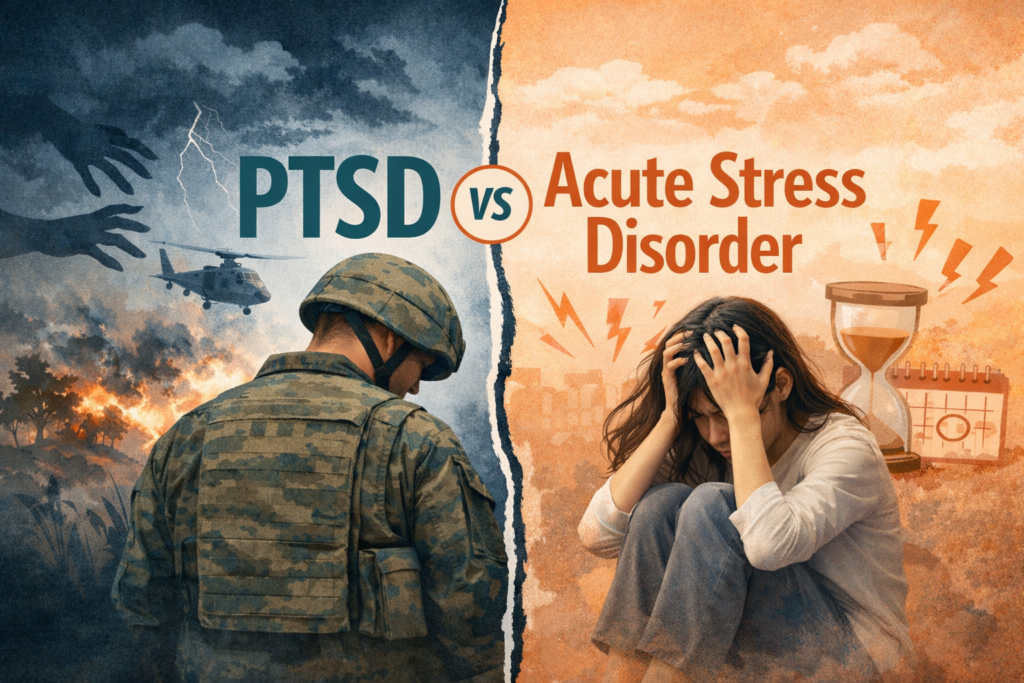
PTSD vs Acute Stress Disorder
Trauma can affect the mind, behavior, and mental health in many ways. After a scary or painful event, some people develop a mental disorder related to stress. Two common conditions are Post-Traumatic Stress Disorder (PTSD) and Acute Stress Disorder (ASD).
Both conditions can happen after trauma, such as abuse, violence, accidents, or a natural disaster. They can cause strong fear, anxiety, sleep problems, and mental distress. However, PTSD and ASD are not the same.
Understanding PTSD vs Acute Stress Disorder can help people know when to seek help. If trauma symptoms do not go away, working with a mental health professional may improve health and quality of life. People who struggle with symptoms of trauma may benefit from professional care like PTSD treatment at Revival Mental Health, where compassionate care focuses on healing the mind and improving daily life. Learn more about available support through PTSD treatment in Orange County.
Understanding Trauma and Stress Disorders
Trauma happens when a person experiences or witnesses something very frightening or harmful. This may include:
- Car accidents
- Physical or emotional abuse
- Military combat
- Serious injuries
- Natural disasters
- Violent events
Trauma can cause strong stress, fear, and emotional pain. The brain tries to protect itself, but sometimes the response becomes overwhelming.
Both PTSD and Acute Stress Disorder (ASD) are trauma-related conditions. They affect memory, behavior, emotions, and cognition.
These conditions are recognized by the Diagnostic and Statistical Manual of Mental Disorders (DSM-5) and are considered serious mental health disorders.
What Is Acute Stress Disorder (ASD)?
Acute Stress Disorder (ASD) is a short-term reaction to trauma. Symptoms begin soon after the traumatic event.
ASD usually occurs within the first three days to one month after trauma.
Common Symptoms of Acute Stress Disorder
People with ASD may experience:
- Strong anxiety and fear
- Intrusive memory of the traumatic event
- Sleep problems
- Emotional numbness
- Trouble focusing or thinking clearly
- Dissociation, feeling detached from reality
- Increased arousal or alertness
- Avoiding reminders of the trauma
These symptoms can cause serious mental distress. The person may feel overwhelmed or unsafe even when the danger is gone.
Why ASD Happens
ASD occurs when the mind and nervous system respond strongly to trauma. The brain stays on high alert because it believes danger may return.
This can lead to:
- High stress hormones
- Changes in cognition and memory
- Increased fear and anxiety
For some people, ASD symptoms improve as the brain begins to recover from the event.
What Is Post-Traumatic Stress Disorder (PTSD)?
Post-Traumatic Stress Disorder (PTSD) is a longer-term trauma condition. It occurs when symptoms continue for more than one month after the traumatic event.
PTSD can affect many areas of life, including work, relationships, and mental health.
Common Symptoms of PTSD
Symptoms often fall into four groups:
Intrusive Memories
People may have:
- Flashbacks of the trauma
- Repeated distressing memory or nightmares
- Strong emotional reactions to reminders
Avoidance Behavior
Many people try to avoid:
- Places linked to trauma
- Conversations about the event
- Thoughts that trigger painful feelings
Negative Changes in Thinking
Trauma can affect cognition and mood, causing:
- Persistent sadness or depression
- Negative beliefs about the world
- Feeling disconnected from others
- Loss of interest in activities
Hyperarousal Symptoms
The body may stay in a constant fight-or-flight state, leading to:
- Difficulty with sleep
- Irritability or anger
- High anxiety
- Startling easily
These symptoms can greatly impact a person’s quality of life.
PTSD vs Acute Stress Disorder: Key Differences
While PTSD and ASD are similar, there are important differences.
Length of Symptoms
The biggest difference is how long symptoms last.
- ASD: Symptoms occur within 3 days to 1 month after trauma.
- PTSD: Symptoms last longer than 1 month and may continue for years.
Timing of Diagnosis
A mental health professional usually diagnoses ASD shortly after trauma.
PTSD is diagnosed when symptoms persist and interfere with daily functioning.
Severity and Long-Term Impact
ASD is often temporary. However, it can increase the risk of developing PTSD if symptoms continue.
PTSD may require longer treatment and support.
Causes and Risk Factors
Not everyone who experiences trauma develops a trauma disorder. Several factors may increase the risk.
Trauma Severity
Events that involve extreme danger or harm increase risk, including:
- Combat exposure
- Violent abuse
- Serious accidents
- Natural disasters
Mental Health History
People with previous anxiety disorders, depression, or generalized anxiety disorder may be more vulnerable.
Substance Use
Using drugs or alcohol to cope with trauma may lead to substance abuse, which can worsen symptoms.
Lack of Support
Limited emotional support after trauma can make recovery harder.
How Trauma Affects the Brain and Mind
Trauma changes how the brain processes fear, memory, and stress.
Changes in Memory Processing
Trauma memories may feel very real and vivid. The brain stores the event in a way that makes it easy to trigger.
This is why reminders of trauma can cause strong reactions.
Hyperactive Stress Response
The brain’s amygdala controls fear and danger responses. After trauma, it can stay overactive.
This leads to:
- High arousal
- Constant alertness
- Trouble relaxing
Cognitive Effects
Trauma can affect cognition, making it hard to concentrate or make decisions.
Many people also struggle with negative thoughts about themselves or the world.
Diagnosis by a Mental Health Professional
A mental health professional or health professional evaluates symptoms to determine the correct diagnosis.
This process may include:
- Talking about the traumatic event
- Reviewing symptoms
- Assessing emotional and physical health
The goal is to understand how trauma affects the patient’s mind and behavior.
Early diagnosis can lead to faster recovery.
Treatment Options for Trauma Disorders
Both PTSD and ASD can improve with the right treatment. A mental health professional may recommend different forms of therapy.
Trauma-Focused Therapy
Trauma therapy helps patients process painful memories in a safe environment.
This may include:
- Cognitive Behavioral Therapy (CBT)
- Trauma-focused counseling
- Stress management techniques
Exposure Therapy
Exposure therapy gradually helps patients face trauma reminders in a controlled way.
This process may include desensitization, allowing the brain to learn that the danger is no longer present.
Over time, exposure therapy can reduce fear, anxiety, and avoidance behavior.
Medication
In some cases, a doctor may prescribe medication such as an antidepressant.
These medications may help with:
- Depression
- Severe anxiety
- Sleep problems
Medication is often combined with therapy for better results.
Healthy Coping Strategies
Many people improve by learning new coping skills.
Healthy coping methods include:
- Meditation
- Deep breathing
- Exercise
- Talking with supportive people
- Building a daily routine
These habits help regulate stress and emotional responses.
When to Seek Help
It is normal to feel upset after trauma. However, ongoing symptoms may signal a trauma disorder.
Consider speaking with a mental health professional if you experience:
- Persistent anxiety or fear
- Nightmares or flashbacks
- Avoiding everyday situations
- Difficulty with sleep
- Emotional numbness or dissociation
Getting help early can prevent symptoms from worsening.
Living With and Recovering From Trauma
Recovery from trauma is possible. Many patients improve with therapy, support, and time.
Healing may involve:
- Understanding trauma responses
- Practicing coping skills
- Rebuilding a sense of safety
Over time, treatment can reduce mental distress and improve quality of life.
Mental health care can help people regain control over their mind, behavior, and emotions after trauma.
FAQs About PTSD vs Acute Stress Disorder
What is the difference between PTSD and Acute Stress Disorder?
The main difference is how long symptoms last. Acute Stress Disorder occurs within one month after trauma, while PTSD is diagnosed when symptoms continue for longer than one month.
Can Acute Stress Disorder turn into PTSD?
Yes. Some people with ASD develop PTSD if symptoms do not improve. Early therapy and support may reduce this risk.
What causes PTSD or Acute Stress Disorder?
Both conditions develop after trauma, such as accidents, violence, abuse, or natural disasters. These events trigger intense stress and fear in the brain.
How are PTSD and ASD treated?
Treatment often includes therapy, such as exposure therapy, and sometimes medication like an antidepressant. Coping skills like meditation and stress management may also help.
Should I see a mental health professional for trauma symptoms?
Yes. If trauma symptoms affect daily life, a mental health professional can provide evaluation, diagnosis, and treatment to support recovery.